
(Mount Vernon, Va.)
At a time when the President of the United States orders the Smithsonian Institution to post signs at exhibits reflecting his own distorted view of American history it is important to be cognizant of what really occurred in the past, its significance, and not allow a misrepresentation of what America has experienced because of the whims of one man. We must do our best to present history in an objective and factual manner and allow people to make up their own minds when thinking about our history. Describing museums, national parks, and other representations of American history and culture as woke, whatever that means, is devious and has no place in our lexicon as we celebrate our country’s 250th anniversary. In our current bifurcated political environment, it is important for historians to present our history in a meaningful and honest way a task that Yale University historian Beverly Gage and author of a phenomenal biography of J. Edgar Hoover has done with her latest work, THIS LAND IS YOUR LAND: A ROAD TRIP THROUGH US HISTORY.
Gage presents a historical travelogue encompassing thirteen sites she visited as she traveled across America. She describes it as “a guide for anyone who wants to get out there and see the American past for themselves.” Gage follows her own advice and offers a description of places on her itinerary and for each site, character, or important historical event she revisits she offers a concise historical background, an explanation of any controversies involved in the presentation of where she is visiting, and insightful commentary. Gage encourages the reader to explore our imperfect past despite the pressures to downplay the “negative aspects” of our history and put forth the courage and intellectual curiosity to ask important questions and reach their own conclusions.
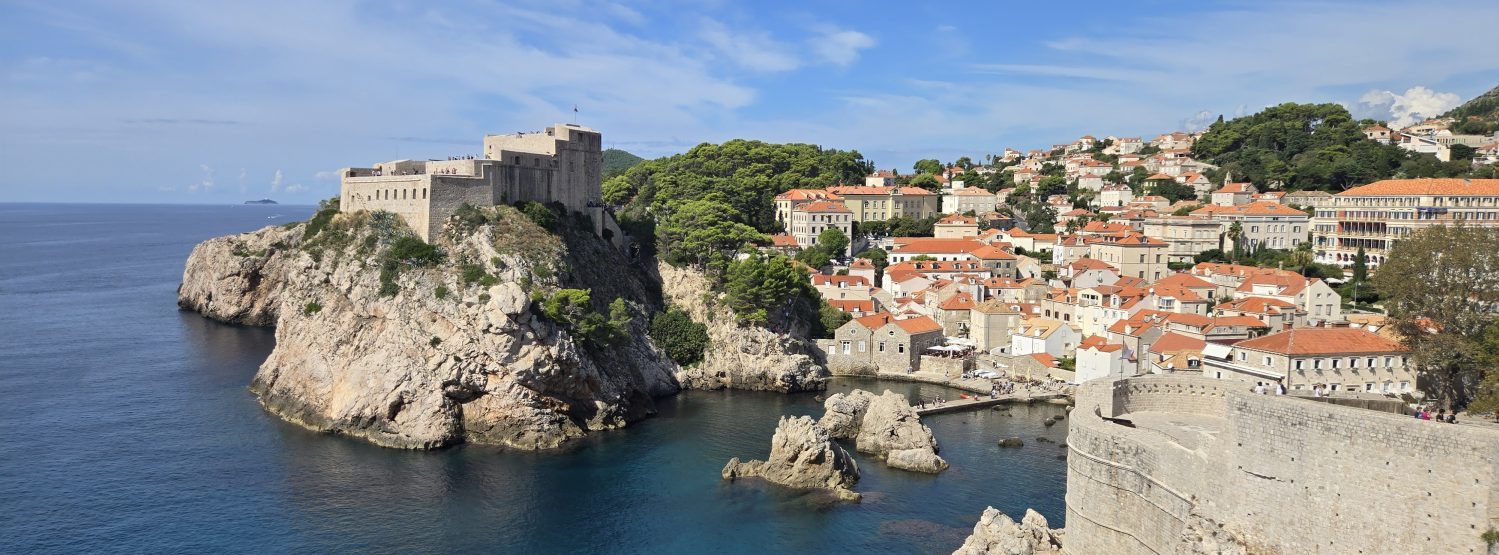
The breadth of Gage’s coverage takes the reader to sites pertaining to the American Revolution and the role of George Washington, a man who personally believed that he was the unifying force to unite the states after the revolution. Gage is correct in stating that he would become the great “living symbol of America.” The reader will pass through Philadelphia, Mount Vernon, Monticello, the Hermitage, the Alamo, through the Midwest, culminating in Disneyland. Along the way she offers important commentary along with lending a personal touch to her observations. One of the major themes of the book is how these sites have been transformed to reflect the vision of certain historical figures and the myths they created in order to foster their own vision of history. The Alamo is a case in point. A major defeat for Texas and a stunning victory for Mexican General Santa Ana it was quickly transformed from a military route to an inspiring myth that stresses how the Texas Revolution brought men from a dozen states and many nations to fight for democracy making no mention of racial slavery or indigenous land rights. Gage correctly argues how the history following “Remember the Alamo” leads to the Mexican War and the Treaty of Guadalupe Hidalgo and created the first anti-war movement in American history led by Abraham Linclon’s Spot Resolution and the work of Henry David Thoreau. The Mexican War produced numerous states exemplifying the extension of slavery and imperial conquest.

(The Hermitage, Nashville, TN)
Henry Ford, George Pullman, and Walt Disney are presented as men who wanted to create their own myths associated with their work. Gage presents brief biographies of all three, as she does with most important characters she explores, and goes on to describe each person’s vision of what the past or the future would look like. Ford does so in his Museum of American Innovation and Greenfield Village in Dearborn, Michigan; the Pullman National Historical Park located on the South Side of Chicago, Illinois. Established in the 1880s, it preserves America’s first planned industrial company town, the site of the 1894 Pullman Strike, and key manufacturing grounds for the Pullman Palace Car Company, lastly Disneyland with its vision of the past and future in a series of grouped theme parks.
Despite the commentary of certain politicians slavery is ingrained in our history and cannot be shuffled to the side negating its impact. Gage integrates the history of slavery through a major portion of her monograph as she explores the role of Charleston, South Carolina, the work of John C. Calhoun, the abolitionist movement, John Brown’s Raid and other important components of this aspect of our history. The controversies centering around Civil War monuments and statues to southern heroes are analyzed in terms of their meaning for local populations in addition to the people who are still negatively affected by their presence.
Another negative aspect of our history that is explored is that of Native Americans and their plight in dealing with removal from areas sought by white men seeking new territory for slavery, mining interests, ranching, and a host of others. The lives and sites devoted to accomplishing their removal is fraught with massacres and forced removal under the auspices of men like President Andrew Jackson. Further, General George Armstrong Custer and Little Big Horn are visited and are another example of myth this time perpetrated by Custer’s widow, Libbie who set out to make her dead husband an American hero.

(Greenfield Village, Dearborn, MI)
The west plays an important role in American history. After delving into Theodore Roosevelt, the Badlands, and Mount Rushmore, Gage points out that the idea that “the west is America and America is the west” dominates historical sites in the region. Further she points out that Buffalo Bill Cody did his best to ensure the meaning and identity of American history through his traveling expositions depicting a bygone era. A place Gage briefly mentions is Cody, Wyoming which houses the Smithsonian’s Buffalo Bill Center of the West, a group of five separate museums that focus on different aspects of Native American culture, America’s gun culture and other topics. Further, if you drive a few miles out of town you can visit the Heart Mountain Relocation Center, a World War II Japanese Internment camp.
/https://tf-cmsv2-smithsonianmag-media.s3.amazonaws.com/filer/Mount-Rushmore-South-Dakota-631.jpg)
(Mount Rushmore, Rapid City SD)
Perhaps my favorite aspect of Gage’s travels is her description of the importance of upstate New York intellectually and economically in the 19th century. Her travels along the Erie Canal route and its impact are forgotten in most textbooks. In addition, Gage focuses on the work of Frederick Douglass, Harriet Tubman, Elizabeth Cady Stanton, Susan B. Anthony, among others, which produced the Underground Railroad and the Seneca Falls Convention. Interestingly as compared to sites in Virginia and Texas, sites in upstate New York are more modest.
At the end of the book Gage delves into Orange County, California and the role of Richard Nixon and Ronald Reagan’s presidential libraries. Nixon is important, in part because of Watergate, but more so because of our contemporary political world as he forged a republican coalition that took advantage of the Sunbelt’s booming population while drawing in disaffected white southern and northern working classes. He stressed limited government and also had an enemies list and voiced a great deal of hatred for intellectuals and anyone who crossed him. Though his popularity would collapse after he left office in 1974 his political coalition outlasted him and his mantle was in part taken by President Trump.
Today as we celebrate our 250th anniversary as a nation it is rather disingenuous for the Trump administration to cut funding and chastise the very programs and institutions that preserve our heritage be it the National Park Service, the National Archives, the National Endowment for the Humanities and many others – when I thought the government was supposed to make history accessible. The key as Gage concludes is that “much of the task of celebrating the 250th will fall to the rest of us…ordinary citizens who will have to do what we can with what we’ve got where we are,” because it appears there are forces who would like is to disregard facts and just follow along to go along.
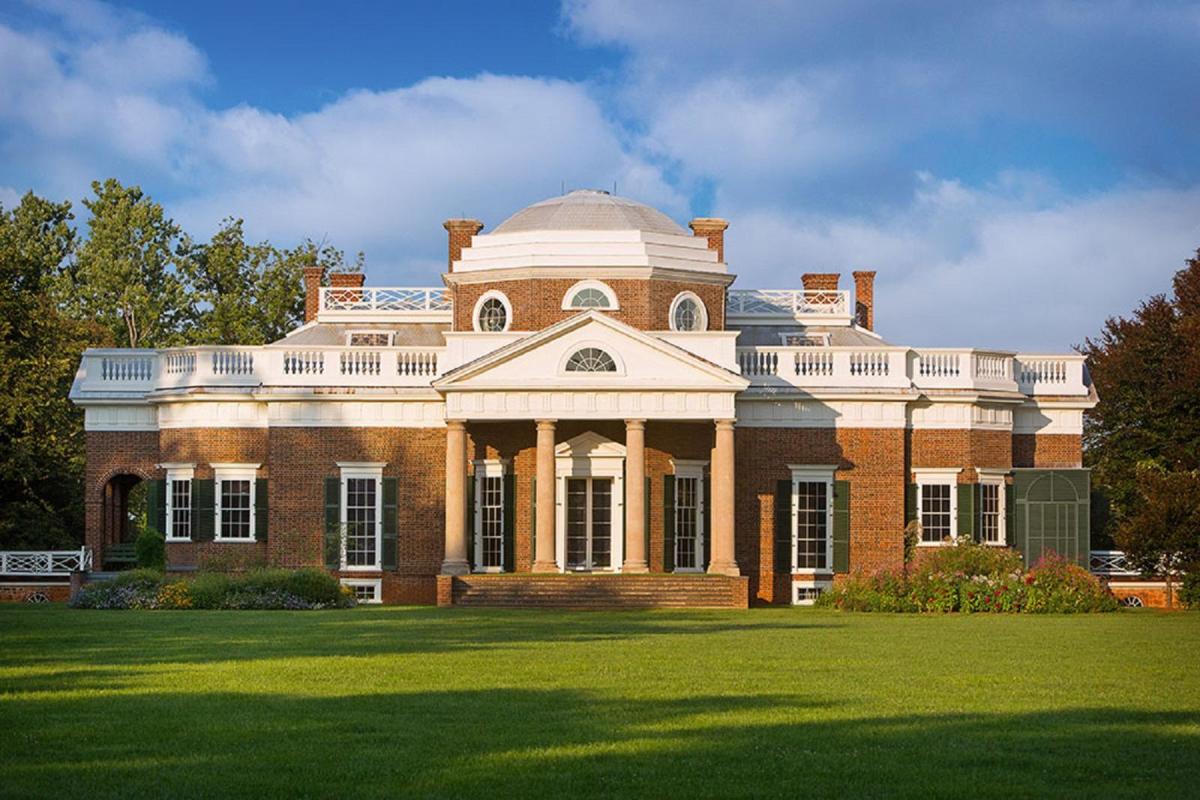
(Monticello, Charlottesville, Va.)

