THANK YOU FOR YOUR SERVITUDE: DONALD TRUMP’S WASHINGTON AND THE PRICE OF SUBMISSION by Mark Leibovitch

The Trump International Hotel Washington, D.C.

To date there have been countless books written about Donald Trump’s machinations.  They seem to cover all aspects of his presidency, personality, and private life.  They range from psychological profiles, the women he has been involved with, his career in business, his election in 2016, his presidency, and finally his defeat in 2020 and its ramifications for the American people.  The books are written mostly by reporters who have covered Trump, acolytes, family members, and people that Trump has used.  Most are well written and are supported by author’s research in addition to the facts and reality of living with the MAGA world.  No matter how important each book may be in their own right, none can compare with Mark Leibovich’s new book, THANK YOU FOR YOUR SERVITUDE: DONALD’S TRUMP’S WASHINGTON AND THE PRICE OF SUBMISSION.  What sets Leibovich’s work apart from others is his writing style, which is humorous, sarcastic, caustic, and in its own way analytical.  Leibovich’s narrative encompasses much of the same material as others, but it is in his presentation that makes another rehash of the Trump years palatable.

As he has done in his bestseller, THIS TOWN which dissected the current political culture in Washington, his latest focuses and confronts the leadership of the Republican Party and their minions and appley describes the type of power hungry individuals who have ridden roughshod over the former principles of the GOP and latched onto Donald Trump to maintain their own self-interest and political office. In his entertaining account Leibovich zeroes in on Senators Marco Rubio, Lindsay Graham, Ted Cruz, along with other characters like Rudy Giuliani, Chris Christie, Reince Priebus, among others who seem to dominate Trump’s circle, despite the fact that most previously chronicled their distaste for Trump.  What all of these personages have in common is that they sold their souls to the devil, in the name of the “Donald.”

Leibovich’s profile has a locus that seems to be the Trump International Hotel in Washington, DC.  After reading Leibovich’s account it is hard to distinguish between the importance of the Hotel and the White House.  It is clear that the hotel is the center of power where acolytes, notable members of society, Trump supporters, and administration colleagues gather to make policy and plan what is best for Donald Trump and America in general.  

Unlike many of the new books on Trump, personal memoirs by individuals who have seen the light and analyze how the MAGA world has altered American politics, Leibovich zeroes in on the creation of a dangerous culture of submission within the GOP and the nihilism and cynicism that has resulted.  At times Leibovich’s humor and sarcasm dominates the narrative, but in reality his narrative is based on factual information, and it is a serious analysis of what Trump and his MAGA converts have done to America.

Leibovich’s purpose in authoring the book is not to rehash events and personalities that have dominated the news for the last seven years but to tell the story of the ordeal Trump has put this country through – “the supplicant fanboys who permitted Donald Trump’s depravity to be infected on the rest of us.”

Leibovich is correct that the key to Trump’s support in 2016 and 2020 was that his followers saw him as a truth teller, despite the fact he was a habitual liar.   Further, Trump’s appeal in the MAGA world is clear – “Trump’s spool of personal grievances had become their own.  In effect, his narcissism did, too.”  From the outset Trump presented an alternative reality that was supported by the likes of Sean Spicer, Kellyanne Conway, Hope Hicks, Vice President Pence. Mark Meadows, Reince Priebus and a host of many other enablers.  Leibovitch takes the reader through each of these individuals and their role in dealing with Trump, be it the size of the 2016 inauguration crowd, the cabinet meeting when Trump’s appointee kowtowed to their leader, to the clearing of Lafayette Park by the military in order for Trump to have a photo op in front of a church holding a bible.  Leibovich’s commentary is priceless as he describes Hicks – “She has the distinct superpower in her ability to manage Trump, not unlike how a care provider might have a special knack for managing a particular toddler.”

Leibovich has the ability to put on paper exactly what mature  people were thinking in response to Trump’s latest scheming.  Mitch McConnell comes under Leibovich’s lens as the political operator and power hungry person that he exhibits each day.  It is a fundamental problem, but Leibovich makes it acceptable as he describes McConnell’s “zombie walk – stony faced, owlish, and keep walking” approach to responding to the most egregious actions taken by Trump.  McConnell is not the only person to be skewered by Leibovich.  Lindsay Graham is a special target particularly his relationship with Senator John McCain, supposedly his friend and accomplice in the senate.  But his true nature is front and center when McCain passes away and Graham “sucks up” to Trump as he knew how to stroke the president’s erogenous zones, i.e., undoing Obama’s accomplishments and restoring America to greatness.  In a sense McCain’s death was liberating for Graham as he could now be out in the open about what type of person he really is.
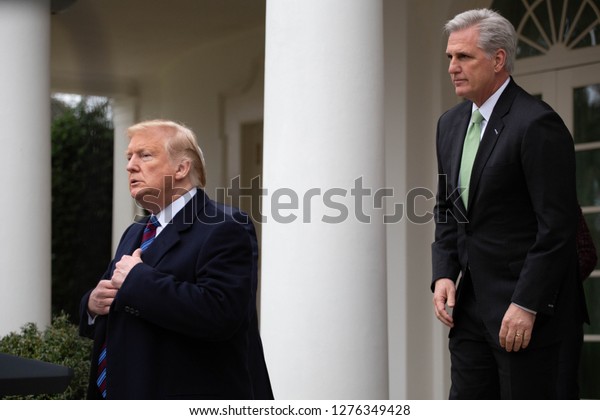
Washington, D.C., January 4 2019: President Donald Trump enters the Rose Garden at the White House after meeting with Democratic leadership to discuss the ongoing partial government shutdown.
(President Trump and Congressman Kevin McCarthy)

Trump converted many lemmings such as Ron DeSantis and Devin Nunes who experienced non-descript careers before attaching themselves to Trump.  Trump had a gift in knowing how to draw in disaffected characters.  Leibovich is correct that in a sense that Trumpism was like “group therapy for conservatives who feel alienated from, and hostile toward, the progressive consensus…Trumpism is, at heart, not a philosophy, but an enemies list.”  Republicans had the remarkable ability to “suspend belief” when it came to impeachment and other issues and illegalities.  They had to or else the Trump smear brigade of Fox News and co, plus supporters would have made their lives miserable.

(Congresswoman Elizabteh Cheney)

Leibovich tries hard to find heroes in the Republican Party.  He praises Mitt Romney for voting for impeachment and other comments, but in the end Romney can not overcome his past, just look at his actions in dealing with the “Big Dig” in Boston when he was Massachusetts governor. Perhaps the topic that is most disturbing which even Leibovich’s sarcasm and humor cannot overcome is the rehashing of January 6, 2021.  It is here that the author describes the “land the plane” strategy pursued by the GOP leadership to get the country to January 20th and Joe Biden’s inauguration.  Along the way Leibovitch drills down into the duplicitous and hypocritic Speaker of the House hopeful, Kevin McCarthy.  There is no need to trace his anger at Trump for January 6th to his visit to Mar-a-Lago a few weeks later when he realized he could not be Speaker without Trump.  So off he went to kiss the ring and kowtow once again.  What is most disturbing is that January 6th underscores how extreme Trump’s one way loyalty really is and the contempt he has for those most devoted to him.

If there is a pseudo hero in Leibovitch’s account it is Liz Cheney who despite her conservative credentials and voting record (93% with Trump) is being drummed out of the GOP because of her stand for constitutional principles and democracy.  Be that as it may, we as Americans are stuck.  Even if Donald Trump passed from the scene, Trumpism is embedded in the GOP and almost half the country.  It will be interesting if Attorney General Merrick Garland decides to prosecute Trump, Trump declares for the GOP nomination for 2024, or any matter of things that could rip our country further apart.  One thing is clear in that the Trump acolytes will continue to serve his interests because they correspond with their own need for power and recognition.

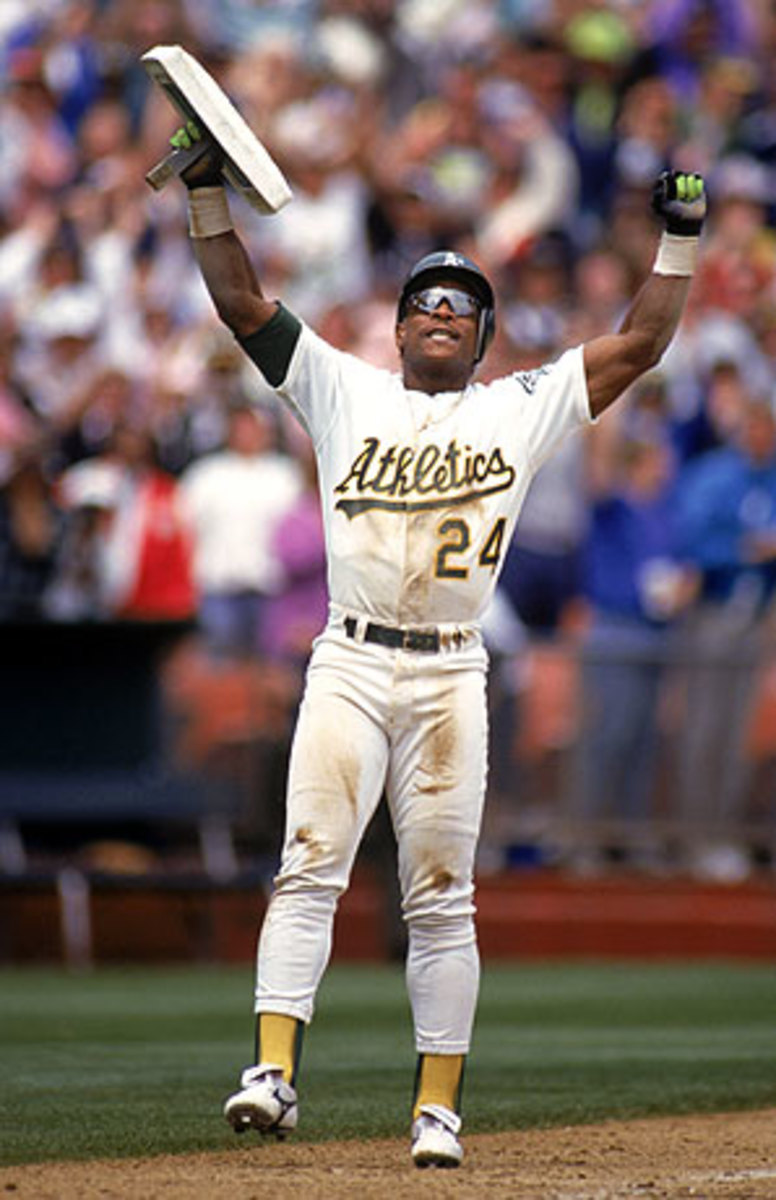
RICKEY: THE LIFE AND LEGEND OF AN AMERICAN ORIGINAL by Howard Bryant

rickey-henderson-getty3.jpg
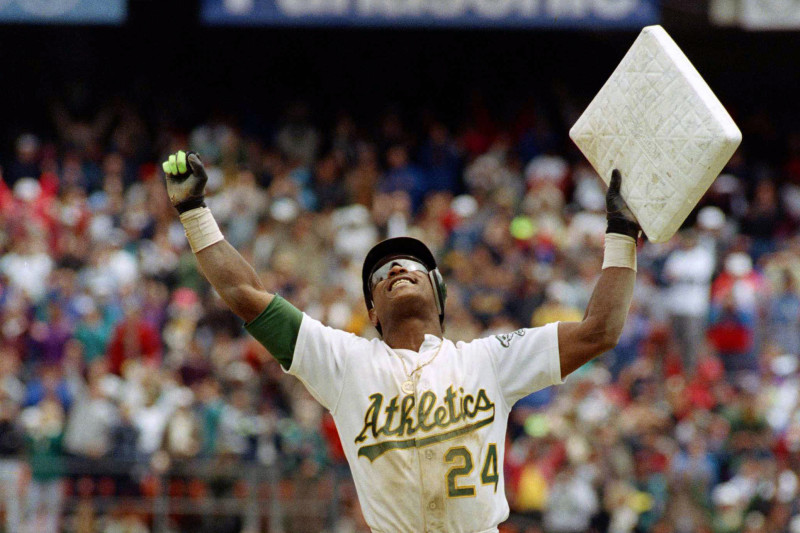
(Rickey Henderson after he broke Lou Brock’s alltime base stealing record)

There are few more talented and interesting characters in baseball history than the enigmatic Rickey Henderson.  Be it his personality or ego which dominated a number of clubhouses or his play on the baseball diamond one accurate description emerges, unchallenged talent and a desire to be the greatest or one of the greatest in baseball history.  Henderson set the record for the most stolen baseball in a season, the most career runs scored, walks, the most lead off home runs, 3000 hits, earning a series of gold gloves and was a force in of himself.  All of these accomplishments are captured by Howard Bryant in his latest book, RICKEY: THE LIFE AND LEGEND OF AN AMERICAN ORIGINAL, which is an apt title for his biography.  Bryant has written a number of deeply researched and insightful books dealing with baseball and racism in American society.  His JUICING THE GAME: DRUGS, POWER, AND THE FIGHT FOR THE SOUL OF MAJOR LEAGUE BASEBALL is a superb recounting and expose dealing with the steroid era in baseball; SHUT OUT: A STORY OF RACE AND BASEBALL IN BOSTON zeroes in on the Yawkey family and their role in making the Red Sox one of the most racist franchises in baseball history; FULL DISSIDENCE: NOTES FROM AN UNEVEN PLAYING FIELD uses baseball as a meditation on the idea that we are living in a post-racial America which he easily destroys; and  THE HERO: A LIFE OF HENRY AARON which explores the life story of a different type of person and player than Henderson.  Unlike Henderson, Aaron was not as flamboyant or controversial and was beloved for his dedication to his craft and “played baseball the right way,” not rubbing his peers the wrong way despite his talent and on field performance.  In his latest effort, Bryant has prepared an intimate portrait of “the man of steal” discussing all aspects of his background, career, and life after many of his skills had eroded.  What emerges is a very complex portrait of a man who thrilled baseball fans on a daily basis for over two decades.

As in all of his books Bryant places his subject in the context of the civil rights movement and racism in sports.  RICKEY is no exception as he presents Henderson’s early  life story within the framework of white backlash against integration as he grew up in Pine Bluffs, AK, 45 minutes from Little Rock amidst the “Crisis at Central High School” in 1957 to Oakland, CA which became central to the black exodus from the south following World War II – in a sense the city was the black Ellis Island.  In 1940 Oakland was 2.8% black and by 1950 81% of blacks living in the city were born in the south and followed the concept of “chain migration.”  Bryant’s approach is a thoughtful one as he recounts why so many blacks migrated to Oakland.  The lure of jobs at the docks and defense industry as World War II commenced became a lifeline for southern blacks to escape violence, murder, lynching’s and all the “accoutrements” of living in the racist south.  It is fascinating to realize the baseball talent that accrued to Oakland as southern black families arrived.  Hall of Fame sports figures such as Frank Robinson, Vada Pinson, Joe Morgan, Curt Flood, Bill Russell, and Paul Silas all seemed to have the same migration background.

MLB Photos Archive
(New York Yankee manager, Billy Martin)

Bryant’s methodology toward sports biography is different than most.  His portrayals are steeped in American history, especially white racism, the rise of the Civil Rights Movement, and the forces in American society and uses Oakland as a microcosm for white racism and the plight of the black community.  It should not be a surprise that the Black Panther Movement of the 1960s and leaders such as Bobby Seale and Huey Newton hailed from Oakland.  In the 1940s and 50s Oakland was 90% segregated and it is in this climate that the 10 year old Rickey Henderson arrived from Arkansas in 1969.

Bryant carefully traces Rickey’s early years and his path to the major leagues.  Along the way we meet important personages like Charles O. Finley, the controversial and innovative owner of the Oakland A’s, Billy Martin, the abusive, racist, and brilliant manager of the team, Mike Norris, a pitcher who became Rickey’s best friend along with numerous characters that dominated baseball during Rickey’s career.  Rickey was all about himself – what was his worth, and his overall goal of becoming the greatest base stealer of all time breaking Ty Cobb and Lou Brock’s records.

Rickey’s life story reflects the lack of education due to segregation to the point that Henderson never really learned how to read in school as with many black athlete’s teachers would pass them on despite not mastering basic reading and writing skills as long as they could perform on the field or the arena.  Bryant explains this is why Rickey refused certain obligations knowing he could not read well and feared embarrassment and humiliation.  “Rickey speaks,” or “Rickey being Rickey” was a reputation he acquired in large part because of his own inferiority when it came to private interaction or activities involving public speaking or reading. 

Oakland Athletics
(Mike Norris)

According to Bryant Rickey burned to be great, but he was often a singular character, someone set apart from the rest.  He was not one of the guys in the clubhouse and he showed none of the deference veterans expected.  His lack of reverence was possibly a by-product of football being his number one choice as an athlete.  Another reason was his belief in his own ability.  He did not walk into the clubhouse in awe of everything baseball as many young players did.  Thirdly, Rickey never forgot the day he was drafted and who was drafted ahead of him.  He was chosen in the 4th round and believed he was a $100,000 ballplayer, not the $10,000 he signed for.

Billy Martin played an outsized role in Rickey’s development.  Perhaps because they both hailed from Oakland and had a similar view of baseball they would get along except that Martin was a control freak who refused to give Rickey the “green light” to steal at will.  Everything needed Martin’s approval, but it was under his managerial tenure that Rickey excelled and would break numerous records, which brought about Rickey’s resentment as his manager took a great deal of credit for his accomplishments.  In the end it did not matter who his manager was, Rickey was fueled by his obsession with greatness.

Rickey Henderson Field Dedication
(Rickey Henderson, his wife Pamela and their children)

Importantly, Bryant discusses Rickey’s “crouch” in the batter’s box which reduced his strike zone leading to increasing numbers of walks and steals as it forced pitchers to throw directly into his power.  Outfielder Billy Sample described Rickey’s strike zone as that “of a matchbox.” Opposing players, umpires, particularly pitchers and catchers complained in vain, and Bryant’s vignettes are priceless.  Rickey’s “style” made catchers look bad, increasing their hostility toward Rickey.  When he slid into home they hit him hard, when pitchers tried to pick him off first basemen would slap on a tag to make him feel as uncomfortable as possible – but nothing stopped him.  Rickey’s reputation as a “hot dog,” i.e., the development of his “snatch catch” was part of what he termed his “styling” something he had done since he was a kid, but according to Bryant many reporters evaluated his performance with a racial tone.

Bryant deftly places Henderson’s career and personality in the milieu of baseball history and carefully compares and contrasts him with others, contemporary and in the past.  Stories about Joe DiMaggio, Lou Brock, Willie Wilson provide insights into Rickey’s approach to baseball and his amazing accomplishments.  Different from others in his approach to his sport Rickey seemed to me in his own world.  He would talk to himself in the batter’s box, he would stroll slowly to the plate, and had so many eccentric habits that a Yankee executive, Woody Woodward described him by saying, “I’ve never seen a guy look so fast in slow motion.”

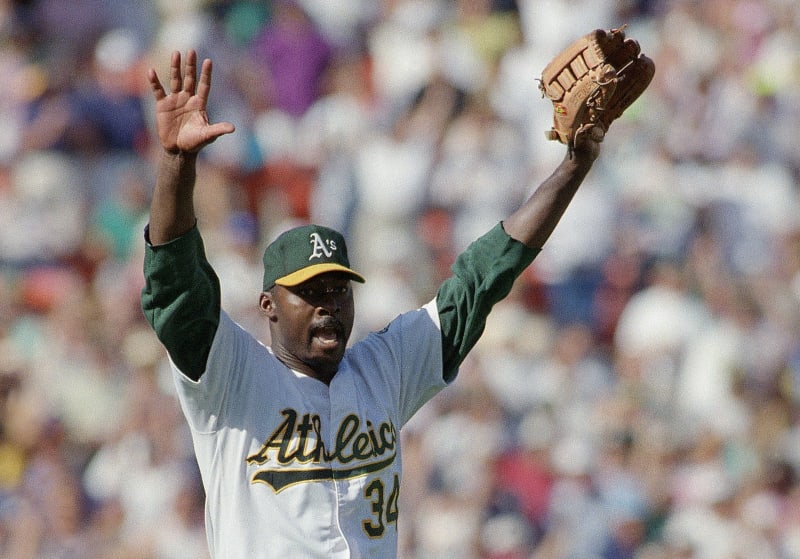
FILE - Oakland Athletics pitcher Dave Stewart celebrates the team's 6-2 victory over the Toronto Blue Jays in Game 5 of baseball's AL Championship Series on Oct. 12, 1992, in Oakland, Calif. Stewart is still waiting for his number retirement ceremony. Stewart, now 65, found out in August 2019 the club planned to retire his No. 34 jersey, then it didnt happen during the pandemic-shortened 2020 season or last year. The former World Series MVP and four-time 20-game winner posted on his Twitter account this week some frustration with his hometown team. (AP Photo/Eric Risberg, File)
(Dave Stewart)

For Rickey, the “unwritten rules of baseball” should never have been written!  He went by a different drummer where his personal statistics were paramount.  Bryant compares Rickey’s accomplishments with contemporaries like Tim Raines, Willie Wilson and James Lofton and despite their success they came up short.   Rickey always measured himself against the accomplishments of others, particularly those he felt were a threat and these three individuals appear repeatedly in Bryant’s narrative.

At times Bryant digresses but does a wonderful job discussing Rickey’s relationship with managers such as Tony La Russa, who always believed and still does that he is the smartest man in the room, Buck Showalter, his New York Yankee manager who was considered a hard nosed manager, Bobby Valentine, the New York Mets Manager who Rickey held in disdain.  Of course, Yankee owner George Steinbrenner appears, Dave Stewart, one of his closest friends, Jose Canseco, a home run hitter who Rickey saw as a buffoon, Reggie Jackson, a teammate in Oakland with an outsized ego, and Don Mattingly, a Yankee teammate who he admired among many portraits that are depicted. Bryant’s work is extremely entertaining and satisfying.  It is well written as all of Bryant’s books and provides evidence for Rickey’s place in baseball history.  The book is a great read just for all the “Rickey stories” and “Rickeyisms” he quotes.  As his career evolved his reputation changed from a self-absorbed record seeker who in his late thirties became a beloved person whose feats and numbers spoke for themselves.  Playing at a time when players were beginning to flex their  legal muscle entering the age of free agency as owners could no longer control them for life, Rickey’s performance on the diamond cannot be challenged.  An excellent read.

** FILE ** In this May 1, 1991, file photo, Oakland Athletics' Rickey Henderson celebrates and raises third base after setting the all-time stolen base record during the Athletics' baseball game in Oakland, Calif., against the New York Yankees. The stolen base was Henderson's 939th, moving him past Lou Brock. Henderson was voted into baseball's Hall of Fame on Monday, Jan. 12, 2009. (AP Photo/Eric Risberg, File)

ASHTON HALL by Lauren Belfer

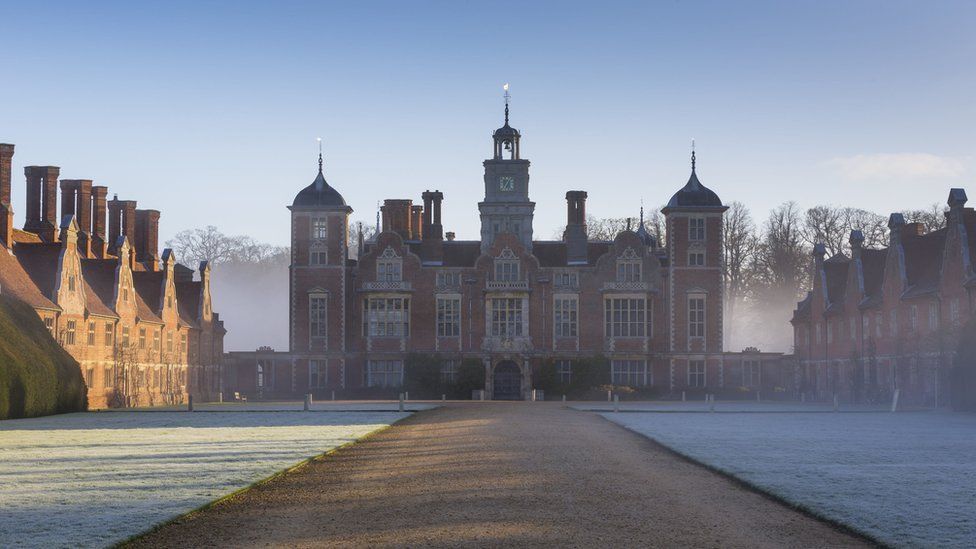
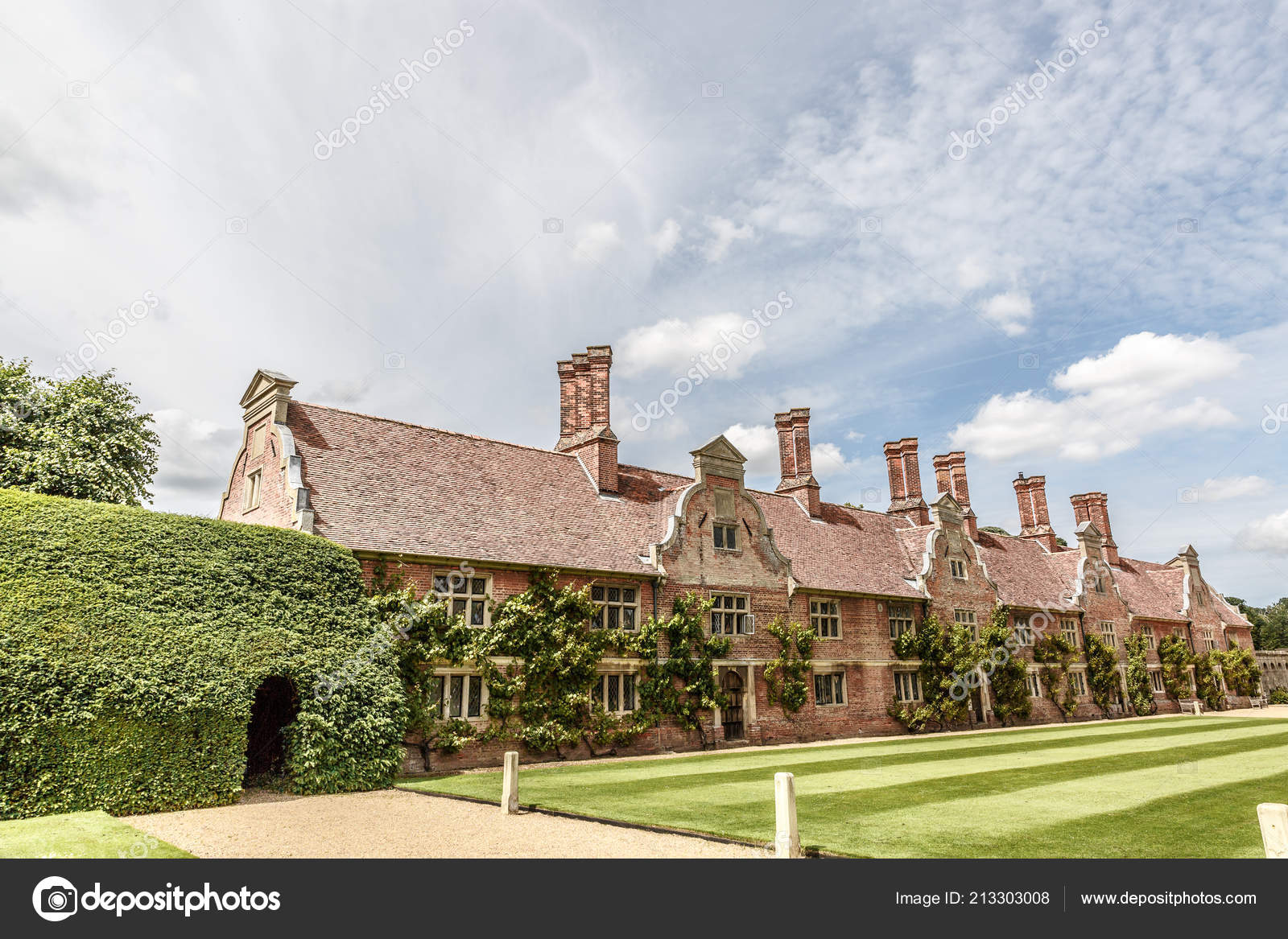
The Parterre Garden at Blickling Estate, Norfolk. Blickling is a turreted red-brick Jacobean mansion, sitting within beautiful gardens and parkland.
(Bickling Hall, York, United Kingdom)

From the outset I must point out that Lauren Belfer is one of my favorite authors.  That opinion is predicated on a series of wonderful historical novels that she has written since 2003.  The first, CITY OF LIGHT, Belfer a New York Times bestselling author delves into turn of the century Buffalo, NY and evidence of a murder tied to the city’s cathedral-like power plant at nearby Niagara Falls.  She then authored the NPR Mystery of the Year, A FIERCE RADIANCE, a story centered around the uncertain days following Pearl Harbor, and the clinical testing of a new medication at the renowned Rockefeller Institute in New York. Belfer  follows with perhaps her finest work, AND AFTER THE FIRE: A NOVEL a story inspired by historical events—about two women, one European and one American, and the mysterious choral masterpiece by Johann Sebastian Bach that changes both their lives.  In her latest effort, ASHTON HALL Belfer pursues a different approach as for the first time her novel takes place in the present and does not focus totally on the past.  She still creates a strong evocative story which focuses on Hannah Larson, a frustrated academic who decides to leave New York City as she is dealing with a problematic marriage and takes her nine year old son, Nicky to Cambridge, England for a summer at a historic manor house.  She will soon be exposed to a discovery that will alter her life – her son Nicky finds the skeletal remains of a woman walled into a forgotten part of the manor.

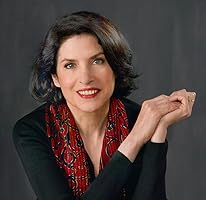
An image posted by the author.
(Lauren Belfer)

Hannah had been working on her Ph. D in Greek art when her son Nicky was born.  She decided to put off her graduate education and take care of her son full time and relied on her husband, Kevin for support.  As Nicky grew he developed certain emotional and behavioral issues that seem to border on autism, but in the novel it is labeled “neurodiversity in children.”  Nicky is prone to violent and angry episodes at times which he cannot control.  Hannah is at a crossroads.  She wants to complete her dissertation, provide a new experience for her son, and after learning that her husband is bi-sexual decide what to do about her marriage – the offer to stay with her uncle Christopher who is dying of cancer at Ashton Hall seems like a fortuitous opportunity to recalibrate and experience the life she thought she should have, not the one she was living.

Once she arrives and gets settled at the mansion Nicky makes the skeletal discovery and the focus of the novel shifts.  Belfer has constructed a story that runs on parallel tracks.  First, we have Hannah’s personal quest to change her life’s path.  In conversations between characters, we learn a great deal about Hannah.  She comes from a family that survived the Holocaust with a self-willed and independent mother with no father to speak of.  Nicky becomes the core of her existence, but she is trying to ameliorate her situation by turning to her past to rekindle a new avocation.  Second, Belfer uses the discovery of the skeletal remains to pursue another story line and a historical character that Hannah can relate to and to whom she will develop a deep attachment.  Third, she begins to develop a relationship with Professor Matthew Varet, a Cambridge University archeologist who is assisting in trying to identify who the skeleton was and in what time period.

The model for Ashton Hall was Bickling Hall in York, England, a national trust historical mansion.  Legend holds that Anne Boleyn was born at the site and each year she haunts the estate on the anniversary of her execution.  Years ago, Belfer had visited the mansion and stayed at a nearby cottage and after years of deliberation decided to use it as a model for her current work.

Ashton Hall

Belfer carefully unravels the research process that will identify the skeleton as Isabella Cresham who lived in the latter part of the 16th century.  Hannah identifies with Isabella in a number of ways, and it seems the two women are linked across the centuries.  By going through the books Cresham has read in the mansion’s library Hannah learns of their mutual interest in art and from genetic testing she learns that the woman is between 35-45 years old, is physically healthy, is of a high social class, has reddish hair and never gave birth to a child.  Hannah is clearly haunted by the discovery of Cresham, and she sees parallels between their lives with a nagging question: did Cresham choose this life, or was she locked away?   The undercurrent for the Cresham discovery was the reappearance of plague, and the religious conflict between Protestantism and Catholicism in England during her lifetime, a theme that continues to reappear throughout the novel, and evidence that points to Cresham’s devotion to Catholicism.  Intolerance, murder, death, and violence, characteristic of Elizabethan England has similarities for Hannah because of her families’ experiences during World War II.

The physical structure of Ashton Hall is on full display with moats and priest holes along with the architecture  of the castle.  Different personages from the period, i.e., Mary Queen of Scots, Henry VII, and VIII among a number of historical personalities appear.  Belfer employs account registers, library records and key 16th century documents to provide Professor Varet and his academic partner, Dr. Martha Tingley’s tools research in reconstructing Cresham’s life.  Belfer writes with a light touch and digs up fascinating details of the period.  For example, the role of mothers in 16th century England included that of a medical practitioner applying various herbal remedies.  For instance, during his reign Henry VIII suffered from gout and used the homeopathic remedy, colchicum, a remedy that is still used today by homeopathic practitioners and some MDs.

ASHTON HALL is a well crafted novel and draws the reader into the story in a slow careful manner.  Though Belfer’s approach may be different from previous novels, in the end it is a success as one is drawn into the two parallel lives.  The story abounds with comparisons of what it is to be British, and what it is to be American.  The differences and similarities are interesting and point to Belfer’s astute observations. In the end, if you fancy Tudor England, historical fiction, the history pertaining to libraries, and a story that is a struggle for self-identity and discovery you should enjoy the story.

Blickling Hall in Norfolk

THE ESCAPE ARTIST: THE MAN WHO BROKE OUT OF AUSCHWITZ TO WARN THE WORLD by Jonathan Freedland

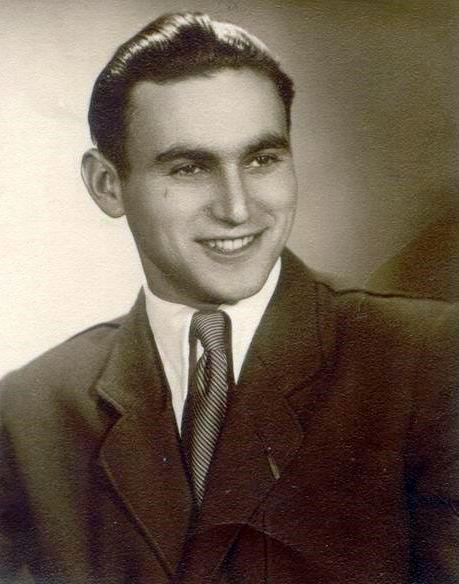
Rudolf Vrba
(Rudi Vrba)

Two words dominate Jonathan Freedland’s new book, THE ESCAPE ARTIST: THE MAN WHO BROKE OUT OF AUSCHWITZ TO WARN THE WORLD; trust and escape.  These terms would dominate the life of Walter Rosenberg, a Slovakian Jew who along with three others would escape from Auschwitz in 1944.  Only seventeen in February 1942, Rosenberg was rounded up by the Nazis which would begin a horrible journey that would culminate in being deported with his family to Poland.  Passing through Novaky, a Slovak transit camp, he would wind up in Majdanek and then on to Auschwitz by June 1942 where he would remain until April 1944 when he and his compatriot, Fred Wetzler would become the first Jews to escape “the crowning achievement of Nazi extermination.”

From that point on Walter Rosenberg, who would change his name to Rudi Vrba would dedicate his existence to gathering evidence of Nazi atrocities in order to warn Jews of what they could expect once they were deported to Auschwitz.  It was his hope that once warned, Jews would put up as much resistance as possible apart from marching docilly to their deaths.

Freedland’s gripping book sets out to bring Vrba to prominence as a name to be mentioned in the same category as Primo Levi, Elie Wiesel, Oskar Schindler, and Anne Frank.  In telling his story Freedland focuses on Vrba’s prodigious memory as he mentally catalogued what he witnessed each day in the camp.  At the outset he may not have realized it but thanks to a series of arbitrary events and lucky breaks Vrba had acquired an unusually comprehensive expertise in the workings of Auschwitz.  Freedland writes that “he had lived or worked in the main camp, at Birkenau and at Bu8na; Auschwitz I, II, III.  He had worked in the gravel pits, the DAW factory, and in Kanada.  He had been an intimate witness of the selection process that preceded the organized murder of thousands….He knew the precise layout of the camp and believed he had a good idea as to how many had entered Auschwitz by train, and how many left via chimney.  And he had committed it all to memory.”

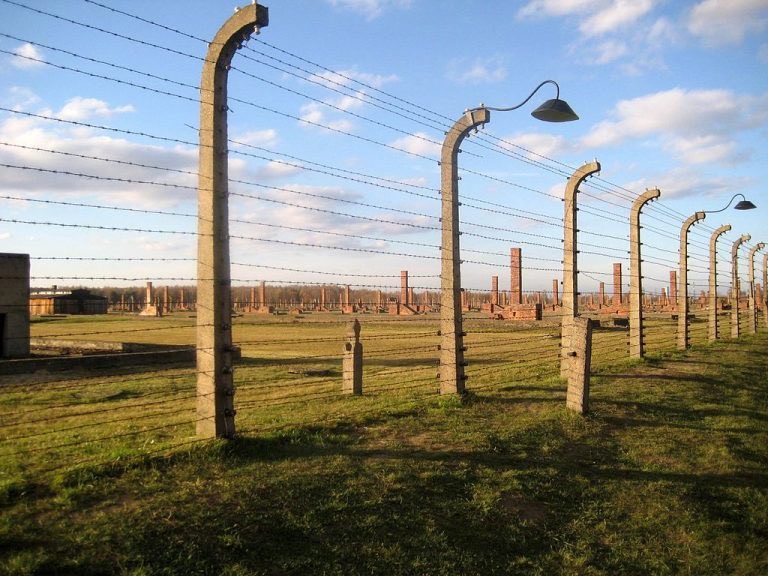
auschwitz-photos-fence
(Birkeneau)

Freeland describes Vrba’s experiences with a keen eye and his ability to process what he experienced as preparation for his escape to warn his fellow Jews.  Freeland relies on the work of two prominent Holocaust historians, David Cesarini and Nikolaus Wachsmann in his retelling of the Final Solution and integrating those events into Vrba’s story.  Freeland’s chapter entitled, “Kanada,” provides insights into Vrba’s methodology as he was assigned to an area where he would separate and quantify the possessions of prisoners upon their arrival at the camp.  Later, he would be assigned to greet and assist in separating arrivals as they exited the cattle cars.  Freeland’s detail is remarkable as even toothpaste tubes were used to hide diamonds.  These experiences helped him master the numbers  that Nazi extermination produced.

Freeland’s overriding theme rests on Vrba’s obsessive drive to escape.  No matter where he found himself or what condition he was in he was always thinking and plotting.  Once Freeland turns to April 1944 and Vrba’s tortuous journey out of the camp we see a young man wise beyond his years realize his dream of warning Jews that deportation to Auschwitz meant death.  He had watched the SS decide who was to live and die with a flick of the finger, now after witnessing so much he decided he could sound the warning that obviated the process.

Freeland describes how observant Vrba was and focuses on the idea that no one could be trusted, even the few he felt comfortable with.  He partnered with Fred Wetzler, another Slovakian Jew and two others in planning and carrying out their departure and what emerges is an amazing story that provides many insights into the resistance to the Holocaust and how difficult it became to educate Jews as to what their fate would become.

Interestingly, Vrba took a course in “escapology” from Dimitri Volkov, a Russian POW who had escaped from Sachsenhausen, another Nazi concentration camp.  The key was to carry no money or food and live off the land.  Further, a watch was needed, as was a knife which could be used for suicide because capture meant torture and death.  Salt and matches were also needed and most importantly, trust no one.

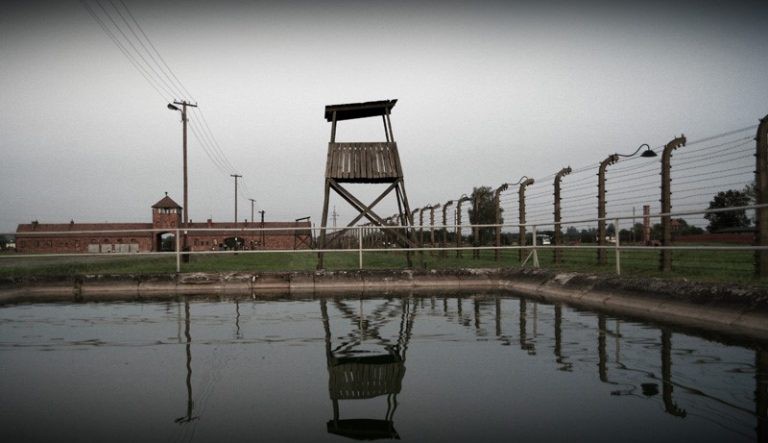
 auschwitz-photos-wagon

As Vrba’s journey evolved he develops a deep resentment towards the Jewish Councils that had cooperated with the Nazis and facilitated their methodology in deporting Jews to the death camps.  Freeland notes that Vrba would carry these feelings for the rest of his life particularly involving the actions of Rezso Kasztner, the controversial head of the Budapest Jewish Council who blocked the dissemination of Vrba and Wetzler’s report of what transpired in Auschwitz.

Once the escape proved successful Vrba’s mission was to prepare a report that would support newspaper and eyewitness accounts of what transpired in the death camps.  This discussion is one of the most important aspects of the book as the report is retyped, translated, and printed and eventually reaches the desks of Franklin Roosevelt, Winston Churchill, and a series of high Vatican officials.  Freeland analyzes this process as to why little or nothing was done, concluding that politics, anti-Semitism, and years of denigrating Jews by church officials was responsible.

Freeland’s rendering of Vrba’s life continues after the war as he lived in Israel, London, and eventually settled in Vancouver.  He became a successful research scientist, married twice, and had two daughters.  Despite professional success following the war he was haunted by bouts of paranoia, anger, lack of trust, and an inability to gain true acceptancefor what he tried to achieve during the war.  As the years passed on he never wavered in his belief that the Jews knew nothing of Auschwitz, despite evidence to the contrary.  Despite this in the end his report was pivotal in saving 200,000 Budapest Jews from extermination as President Roosevelt warned the Hungarian government in late 1944 as to the consequences if more jews were slaughtered.  But this only occurred after a frustrated Vrba and Wetzler decides to print and disseminate their report by themselves when others would not cooperate.

According to Blake Morrison in his The Guardian review of 8 June 2022, “Vrba had three core beliefs about Auschwitz: that the outside world didn’t know about the “final solution”; that once they did know, the allies would intervene; and that once Jews knew, they would refuse to board those fateful trains. Without in the least diminishing Vrba, Freedland disproves all three. Word of the Nazis’ “cold-blooded extermination” had got out at least 18 months before his escape. Allied policy was inhibited by inertia and antisemitism (“In my opinion a disproportionate amount of time of the Office is wasted on dealing with these wailing Jews”, wrote someone in the Foreign Office in London). And whereas younger Jews believed Vrba, the majority were with philosopher Raymond Aron, who said: “I knew but I didn’t believe it. And because I didn’t believe it, I didn’t know.”

Freedland has written a remarkable account combining the history of the Holocaust with the life experiences of a young man, who will emerge emotionally damaged from the war suffering from PTSD.  Despite Vrba’s flaws as a person his commitment to warn Hungary’s Jews stands as a tremendous accomplishment despite the negative opinions of a number of Holocaust historians toward his work.  The book is well written, an absorbing read, and an important contribution to the literature of the Holocaust.

No photo description available.
(Rudi Vrba)

THE POPE AT WAR: THE SECRET HISTORY OF PIUS XII, MUSSOLINI, AND HITLER by David I. Kertzer

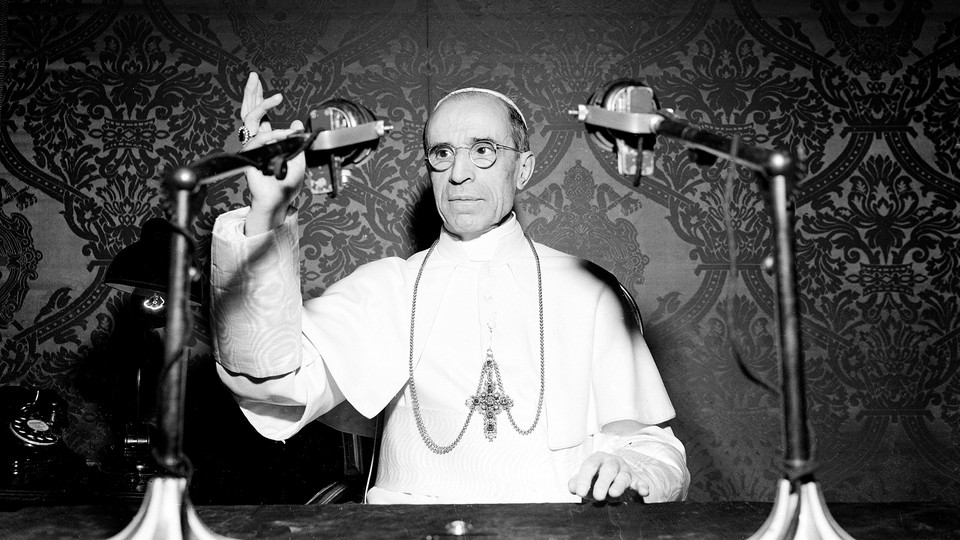
Pope Pius XII
(Pope Pius XII)

For many, one of the most polarizing figures of the Second World War was Pope Pius XII.  Up until 2019 the Vatican archives did not allow access to most of the documents related to Pius XII’s actions before and during the war.  Under the current leadership of Pope Francis, the archive has been made available to historians and has brought about a reassessment of Pius XII’s relationship with Italian dictator Benito Mussolini and Nazi leader Adolf Hitler in addition to his attitude toward the Holocaust. 

Until the opening of the archive, historians were of two minds; either Pius XII was too close to Mussolini and Hitler and did not confront them publicly concerning their murderous atrocities and said and did little in relation to the genocide of European Jewry or he did as much as he could in balancing the protection of the Catholic clergy in Germany and working behind the scenes to assist Europe’s Jews.  It is understood that Pius XII was in a very difficult position and Pulitzer Prize winning historian, David I. Kertzer, the author of THE POPE AND MUSSOLINI: THE SECRET HISTORY OF PIUS XI AND THE RISE OF FASCISM IN EUROPE has availed himself of the opportunity to consult newly released documentation and has written what should be considered the definitive source  in dealing with Pius XII in his latest work, THE POPE AT WAR: THE SECRET HISTORY OF PIUS XII, MUSSOLINI, AND HITLER.  Kertzer’s book documents the private decision-making that led Pope Pius XII to stay essentially silent about Hitler’s genocide and argues that the Pope’s impact on the war is underestimated – and not in a positive fashion.  As David M. Shribman writes in the Boston Globe, for Pius XII “silence was easier, safer, more prudent.  Silence was deadly.”*

Kertzer’s presentation is excellent as it is grounded in his previous research and his recent access to the newly opened Vatican archive.  The book is clearly written and tells a story that many have heard before, however it is cogently argued, and he has unearthed new material which may change or reinforce deeply held opinions by many when it comes to Pius XII.  Kertzer makes the case that Pius XII’s obsessive fear of Communism, his belief  that the Germans would win the war, and his goal of protecting church interests motivated him to avoid angering Mussolini and Hitler.  The Pope was also concerned as the book highlights, that opposing Hitler would alienate millions of German Catholics.

Kertzer does an excellent job tracing Pius XII’s relationship with Mussolini; the evolution of Italy’s military failures which negatively impacted Hitler’s plans, i.e.; Italy’s failed invasion of Greece; and Hitler’s growing dissatisfaction with Mussolini.  Kertzer relies heavily on the comments and diaries associated with foreign ambassadors to the Vatican, particularly those of England and France and their negative commentary related to the Papacy.  The descriptions of these ambassadors focused on Pius XII’s lack of action, periodic support for the war effort in Italy, and obsession with German power.  Further, Kertzer focuses on Pius XI’s opposition to Mussolini’s adoption of racial laws targeting Italian Jews.  Despite this opposition, Pius XII would not comment on the increase in Italy’s oppression of Jews and racial laws in general.

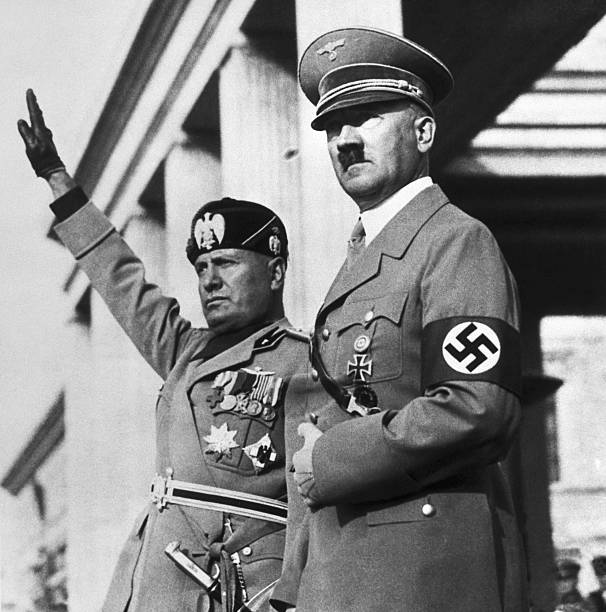
Benito Mussolini and Adolf Hitler watch a Nazi parade staged for the Italian dictators's visit to Germany.

(Benito Mussolini and Adolf Hitler)

Pius XII’s predecessor, Pius XI had been somewhat of a thorn in the side of fascist dictators.  He saw Mussolini as a “buffoon,” and believed that Hitler was a danger to all of Europe.  Both dictators feared he was preparing an encyclical denouncing Nazi racism and anti-Semitism and feared that the Vatican Secretary of State, Cardinal Eugenio Pacelli who would succeed him as Pontiff would try and talk him out of it, as well as any other anti-fascist comments.  When he died a few days before he could release his encyclical, Mussolini and Hitler experienced a great deal of relief.

Kertzer correctly points out that Mussolini never felt comfortable around priests and complained bitterly about Pius XI barbs.  He was worried as he was aware that Hitler viewed him as a role model and did not want the Pope’s commentary to ruin their relationship.  Once Pius XI died and was replaced by Cardinal Pacelli criticism was reduced and if any were made it was done in private.  Hitler’s main complaint concerned articles in the Vatican’s daily newspaper, Osservatore Romano that focused on Nazi anti-Catholic policies from arresting and beating Catholic priests to closing Catholic schools in Germany.  Pius XII immediately made overtures to Hitler to relax the pressure on German Catholicism and refused to comment publicly on Hitler’s seizure of Czechoslovakia in March 1939, in addition to remaining quiet as Hitler’s pressure on Catholic Poland over Danzig escalated.

Mussolini resented Pius XII’s diplomacy as his ego would not allow anyone to detract from his role as the dominant figure in Italian politics.  Kertzer’s comments concerning Mussolini, his son-in-law Count Galeazzo Ciano, the Italian Foreign Minister, Joachim von Ribbentrop, the Nazi Foreign Minister, and countless other figures is insightful and at times entertaining, but it does not detract from the danger and derangement of these individuals.

In a very important chapter, Kertzer provides details of secret meetings between the Papacy and Germany before and after the war began.  The conduit for Germany was Prince Philip von Hessen whose goal was to bring about an accommodation with the Papacy and keep the Pope out of politics.  Hitler resented the clergy’s meddling in German domestic politics and wanted the Pope to refrain from comments on Nazi racial policy.  Pius XII’s, his main goal was to protect the German clergy and Catholicism in general, but he expressed the belief that an honorable religious peace was achievable, and in all instances talks should be held in secret.

Mussolini Speaking in Public
(Benito Mussolini)

Once the war began Pius XII refused to break his silence concerning Nazi aggression arguing he would not endanger the church’s situation in Germany.  This argument was repeated throughout the war, but he promised he would pray for the Polish people or whatever nationality was endangered by a Nazi onslaught.  Morality, rights, honor, justice were always met with methods, practicality, tradition, and statistics on the part of the Vatican.  When priests were sent to concentration camps Pius XII did nothing, no statements, no audiences with the Pope in Rome etc.  The only diplomacy Pius II seemed to engage in was to try and talk Mussolini out of following in Hitler’s footsteps as it was clear, even to Il Duce, that Italy was totally unprepared for war.

One could argue that Pope Pius XII evolved in his approach toward fascism and the war.  At first, at least up to 1943 he waffled between neutrality and making general statements structured “as not to be offensive by either side.”  At first the Papacy believed the Germans would win the war and once it was concluded Pius XII was convinced that in a few years the anti-Catholic policies would dissipate and fade away. As the war progressed and when it was clear that the Russians had broken out of Stalingrad and made their way westward, and that the United States and England would invade Italy, Pius XII’s attitude shifted.  Pius XII priority was to prevent allied bombing of Rome and Vatican City (particularly as England was bombing Turin, Milan, and Genoa) which led to messages to President Franklin D. Roosevelt who responded with a demand that Mussolini be replaced, and Italy should drop out of the war.  Pius XII’s other priority was to warn allied leaders (apart from Stalin) that Communism was as large a threat to Europe as Nazism, and he worked to manufacture a peace agreement with the US and England and organize in response to the Soviet threat to all European Catholics.

Count Gian Galeazzo Ciano, (1903 – 11 January 1944), Foreign Minister of Fascist Italy
(Italian Foreign Minister Count Galeazzo Ciano)

As to the Holocaust, Pius XII received increasing numbers of reports of Nazi atrocities and extermination camps.  This information came from reliable sources and churchmen like Father Scavini, an Italian military chaplain that the Pope had great faith in.  However, Pius XII refused to publish details contained in these reports to stay on the good side of Hitler and Mussolini.  The only area that the Pope did complain about to the German and Italian governments was the application of racial laws to those he considered Catholics – baptized Jews and the children of mixed marriages.  Pius XII accepted advice that there was no confirmation of Nazi atrocities and was told not to even use the word, “Jew.”  In relation to the Vatican’s attitude toward the roundup of Italian Jews right under their noses provoked little response as Kertzer quotes Lutz Klinkhammer, the foremost historian of Germany’s military occupation of Italy, “it is more than clear that all their efforts were aimed above all at saving the baptized or the ‘half-born’ from mixed marriages,” the Jews who did not fit this category would wind up dying at Auschwitz.

Pius XII’s actions are clear even when he was approached to try and mitigate the actions of Roman Catholic priest Jozef Tiso, the head of the Slovakian government who was about to send 20,000 Jews to Polish concentration camps.  When a move was made to try and send 1000 Jewish children to Palestine, Pius XII did little to facilitate this plan as he was anti-Zionist and he argued that he held little sway with the Nazis and their minions and any Papal criticism risked provoking a backlash against the church in German occupied Europe.  No matter the circumstances Kertzer’s conclusions that Pius XII’s messaging was always weak and vague to protect the church’s interests.

Pius XII’s silence and overall inaction emerges as the dominant theme of Kertzer’s work.  It is clear that any other conclusion is a result of Church propaganda, obfuscation, and analysis that conveniently avoids the facts.  Kertzer’s work is to be commended as it should put to bed once and for all the truth concerning Pius XII’s role during World War II.

*David M. Shribman, “A Deadly Silence: Assessing the Moral Failings of Pope Pius XII during World War II,” Boston Globe,” May 26, 2022.

Pope Pius XII (Courtesy of PerlePress Productions)

THE CONSTANT SOLDIER by William Ryan

William Ryan burst on the literary scene in 2010 with debut novel, THE HOLY THIEF, the first of his Captain Alexi Korolev trilogy that takes place during the 1930s Stalinist regime in the Soviet Union.  His second and third volumes in the trifecta, THE BLOODY MEADOW and THE TWELFTH DEPARTMENT set Ryan apart from other historical crime writers as he continued to navigate the justice system under Stalin.  THE CONSTANT SOLDIER is a departure for Ryan as it is a standalone novel that begins with his protagonist, Paul Brandt, a Wehrmacht soldier, wounded on the eastern front experiencing flashbacks on a hospital train bound for Hamburg.  Brandt slips into unconsciousness taking him back to his relationship with his mother, and a young woman named Judith who has disappeared, for which he blames himself.

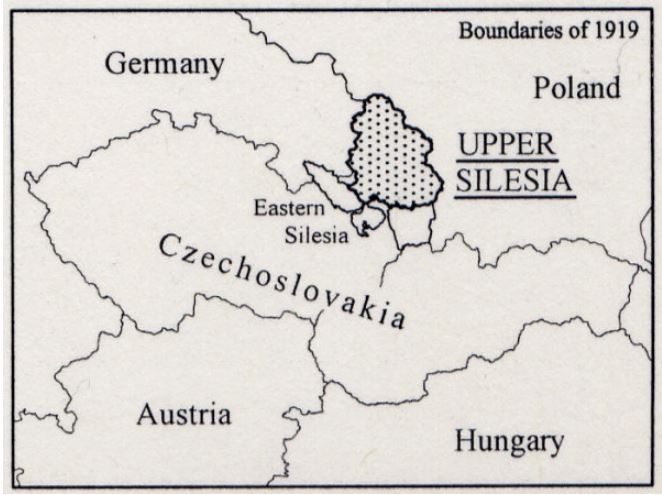
Ryan easily catches the attention of the reader with an absorbing story of a man who suffered severe injuries and wondered what he could do with the rest of his life.  The time period is late 1944 and early 1945 in the Upper Silesia part of Poland that had been under Nazi occupation since 1939.  However, as the novel unfolds Russian troops and tanks are making their way west endangering any Germans in their path.  Brandt returns home to the family farm and notices an emaciated young woman who is being held prisoner at an SS “Rest Hut” near the farm.  He is convinced that the woman is Judith, whose real name is Agneta Gruber who Brandt last saw her before the war broke out when they were arrested for anti-Nazi activity in Vienna.  Given the choice of death in prison or the army, Brandt enlisted in the Wehrmacht, but retained a guilt that he had abandoned Agneta years before.

(Russian T-34 Tank during WWII)

The physically debilitated Brandt, against the wishes of his family decides to accept a job at the Rest Hut as it’s steward as a means of trying to rescue Agneta and four other woman as the SS had begun murdering their prisoners.  Ryan creates the backstory of the relationship between Brandt and Agneta and Brandt’s obsession with saving her and assuaging his guilt.  The remorse Brandt feels goes beyond his relationship with a woman he still loves to righting the many wrongs he committed on the eastern front as a soldier.

Once Ryan introduces the suicide of an SS officer named Schmidt the novel begins to branch out from the single track of Brandt’s hopes for saving the woman to the Holocaust.  It seems his commander Obersturmfuhrer Friedrich Neumann orders Brandt to destroy Schmidt’s diary and other possessions which delineates what the SS has done on the eastern front murdering Jews.  Ryan manages the Holocaust with subtlety as he does not become involved in descriptions of mass murder, but he provides a number of hints concerning the horrors that have occurred.  For example, Neumann’s comment that he did not want to remain in Kiev and sought his transfer to Upper Silesia.  He like everyone knew what was occurring as he stated, “he hadn’t planned to become a murderer, he didn’t think.  It just turned out that way.”

Ryan does an excellent job juxtaposing a comparison of Brandt’s and Neumann’s beliefs and attitude toward the war, what they witnessed, and been involved in.  Both men develop doubts and disgust at themselves as they pondered their future.  They realize the Russians are not far away when Ryan introduces a third track to the novel through the character of Polya Kolanka, a female T-34 tank driver, one of the few in the Russian military.  We follow her quest to reach Germany and her experiences as the Soviet Union is about to overrun the Germans. 

Homeless refugee women and children, Russia, 1941.
(Refugees fleeing Russians at the end of World War II)

As Ryan’s plot evolves Brandt must navigate between a number of interesting characters.  There is Mayor Weber, a drunk with power who distrusts Brandt and has no compunction about killing.  Second in importance is the sadistic Scharfuhrer Peichl who reveled in beating prisoners.  Hubert, a partisan fighter in the forest who is in love with Brandt’s sister Monika.  Lastly, the four woman who are imprisoned with Agneta.

Ryan has authored a taut novel that expresses the dilemmas faced by Germans and Russians as the war winds down.  The reader wonders what will become of Brandt and whether he will be able to save the woman he loves, among others.  The novel is well written and follows the facts of World War II to a tee.  The novel is in part based on the experiences of Karl Hocker, an adjutant to the last Commandant of Auschwitz and he incorporates photographic documentation created by Hocker that had disappeared until 2005.  Many of the pictures were taken at a rest hut near a small village called Porabka, about twenty kilometers from Auschwitz.  Ryan uses this factual information to recreate a fictional account of an SS Rest Hut and introduces characters that reflect the hazards and emotions that their situation has fostered.

THE CONSTANT SOLDIER is an excellent read and I look forward to his latest standalone novel, WINTER GUEST which will be released this October.

LINCOLN AND THE FIGHT FOR PEACE AND FREEDOM by John Avlon

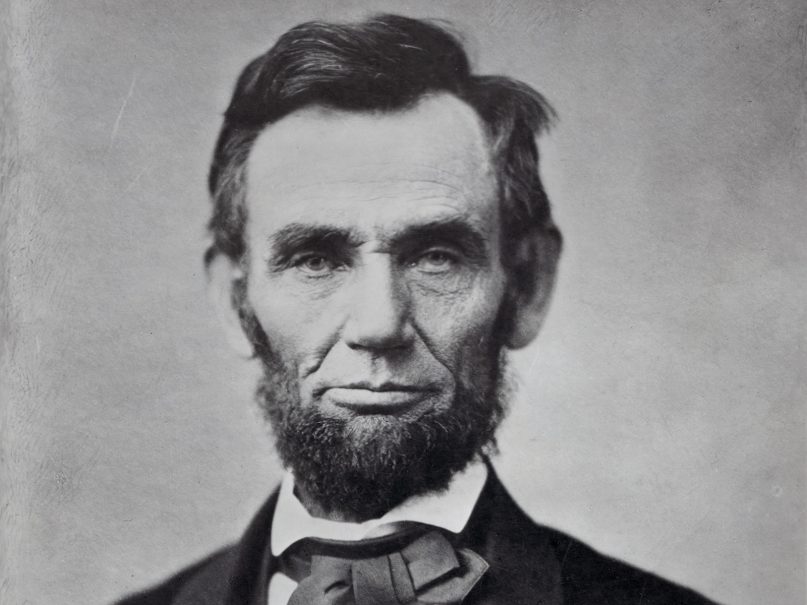
Abraham Lincoln on Nov. 8, 1863. Photo by Alexander Gardner/LOC/Creative Commons
(Abraham Lincoln)

To date over 16,000 books have been written on Abraham Lincoln, so why another?  In the current case, John Avlon a former Daily Beast editor, author of serious studies of political centrism, and a current CNN analyst has authored LINCOLN AND THE FIGHT FOR PEACE AND FREEDOM which takes a unique approach toward our 16th president.  The book focuses on the six weeks from Lincoln’s second inauguration through his assassination as the Civil War finally concluded and the war over the peace had begun.  According to Avlon, Lincoln evolved into the conciliator-in-chief in his approach to the south and was vehemently against a punitive peace.  Lincoln sought to reunite the country through empathy, understanding, humility and a deep belief that in order to bring the country together after four years of war and over 600,000 casualties a reconstruction policy must be implemented that was perceptive of the needs and beliefs of the former enemy and bring about a coalescing of moderate political elements to block the extremists that remained on both sides of the political spectrum.  For Avlon Lincoln’s approach to winning the peace would serve as a model for future post war negotiations, for example General Lucius Clay’s approach toward Germany after World War II to prevent the revanchism that took place after World War I.

Today our politicians are engaged in a form of political partisanship which at times places our nation at the precipice of civil war.  No matter the issue; protecting children from the ravages of a failed gun control debate, overturning Roe v. Wade, the refusal to accept the results of a fair and free democratic election, the denial of voting rights, and numerous other issues makes it clear that something is broken in our political system.  The question that confronts the American electorate is whether politicians, with their lust for power are so dug in their positions that the odds of any reconciliation between Democrats and Republicans, with extreme elements in both parties appears unlikely in the near future.

Ulysses S. Grant
(Ulysses S. Grant)

In the state that we find our political discourse, John Avlon raised the banner of Abraham Lincoln to serve as a role model as to how we can fix, or at least reorient our body politic.  Avlon begins his narrative on April 4, 1865, as the Civil War winds down with Lincoln’s visit to Richmond, Va. the capital of the defeated Confederacy. Unaccompanied by a large number of troops or any celebratory instruments the president walked the streets of the city with his son Tad greeting former enemy soldiers and citizens with compassion, humor, and kindness.  Lincoln’s mantra was to heal the nation and not erase the history of the war – history required learning the right lessons, so we would not be condemned to repeat them.  He was committed to stopping the cycle of violence, changing his focus from winning the war, to winning the peace.

Lincoln’s world view centered on three ”indispensable conditions:” no ceasefire before surrender, the restoration of the union, and the end of slavery for all time.  “Everything else was negotiable.  Lincoln wanted a hard war to be followed by a soft peace; but there would be no compromise on these core principles.”  For Lincoln winning the peace meant if you failed to do so you would have lost the war.  Lincoln worked without a historical parallel to guide him.  He would establish a new model of leadership focused on reconciliation that would make a long and just peace possible – unconditional surrender followed by a magnanimous peace.  Even though he would be assassinated five days after Robert E. Lee surrendered, in the last six weeks of his life that included his second inaugural address he articulated a clear vision that he hoped would result in a peaceful reunification of his country, “with malice toward none; with charity for all.”

20121121013133tad-lincoln-turkey-pardoning.jpg

(Tad Lincoln)

The fight for peace needed to be waged with the intensity that rivals war in order for the United States to be redeemed and serve as a beacon of universal freedom.  To achieve this “unconditional surrender” was sacrosanct.  Lincoln needed to eradicate the cause of the war – slavery and ensuring the rebels accepted a decisive defeat.  Lincoln wanted a constitutional amendment ending slavery before the end of the war as he was fully aware that once the war concluded Congress would not have the courage to do so.  “The 13th amendment was the political expression of unconditional surrender: there would be no retreat from the end of slavery.”

Avlon has written a highly readable account of how Lincoln hoped to achieve his goals dealing with a recalcitrant Congress and elements in the Confederacy who did not want to admit defeat.  He takes the reader through the history of the final six weeks of Lincoln’s presidency step by step culminating in his assassination at Ford’s theater.  Lincoln’s core beliefs can be summed up in the Biblical construct of the “golden rule,” a combination of common sense and the moral imagination to dislodge deeply ingrained prejudice.

Frederick Douglass
(Frederick Douglass)

Avlon has the uncanny ability to apply his phrasing to portray Lincoln’s soul be it a visit to City Point, Va. to reach out to wounded Confederate soldiers to his tearful and heart felt reaction to the carnage of war when he visited battlefields.  Avlon is able to convey the substance of Lincoln on a personal and public level as he grappled with bringing the war to a conclusion and at the same time set the foundation of lasting peace through reconciliation and understanding.  At times it seems Lincoln may have been too lenient, but Avlon points to certain non-negotiable issues where the president’s back was stiffened where he refused to give in.  As Lincoln biographer and historian Allen Guelzo writes it is “Lincoln who tells the African American soldiers of the Black 29th Connecticut that ‘you are now as free as I am,’ and if they meet any Southerners who claim to not know that you are free, take the sword and the bayonet and teach them that you are; for God created all men free, giving to each the same rights of life, liberty and the pursuit of happiness.”*

I agree with Guelzo’s analysis of Avlon’s overall theme in that “As much as Avlon is convinced that Lincoln’s “commitment to reconciliation retains the force of revelation,” “Lincoln and the Fight for Peace” is short on the exact content of that revelation for the postwar years. Frederick Douglass insisted in 1866 that “Mr. Lincoln would have been in favor of the enfranchisement of the colored race,” and Avlon is not wrong to see Lincoln favoring a reinvention of the South as a small-scale manufacturing economy to replace the plantation oligarchy that triggered the war. But Lincoln played his political cards so close to the chest that, beyond this, it is unclear exactly what directions he thought Reconstruction should take. It is still less clear whether even he would have been successful (had he survived the assassin’s bullet) in pulling any of it off in just the three years that remained to him in his second term.”

General Robert E. Lee, Mathew B. Brady (American, born Ireland, 1823?–1896 New York), Albumen silver print from glass negative
(Robert E. Lee)

Avlon possesses a tremendous faith in the words and actions of Abraham Lincoln during his lifetime and how they resonated in the last third of the 19th century through the end of World War II.  As historian Ted Widmer writes, “Lincoln offers a boost of confidence at a time when our history, instead of uniting us, has become yet another battleground. With insight, he chooses familiar and lesser-known Lincoln phrases to remind readers how much we still have to learn from our 16th president. His book also offers an extra dividend, coming as it does in the midst of Ukraine’s agony. Avlon closes with the final sentences of the second inaugural address, and its hope that we can “achieve and cherish a just, and a lasting peace, among ourselves, and with all nations.” As Lincoln understood, the work of democracy at home is indispensable to the work of peace abroad. It is reassuring to have the case for each restated so cogently.”**

*Allen C. Guelzo, “A Lincoln for Our Polarized Times,” New York Times, February 15, 2022.

**Ted Widmer, “Lessons from Lincoln’s Leadership at the Close of the Civil War,” Washington Post, April 15, 2022.

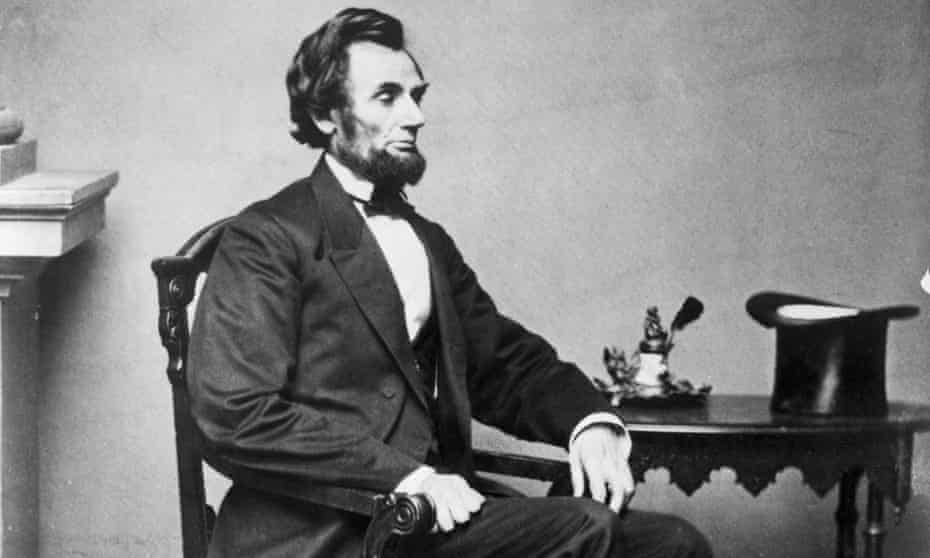
Abraham Lincoln in a portrait by Matthew Brady, taken in December 1861.

DECEMBER ’41 by William Martin

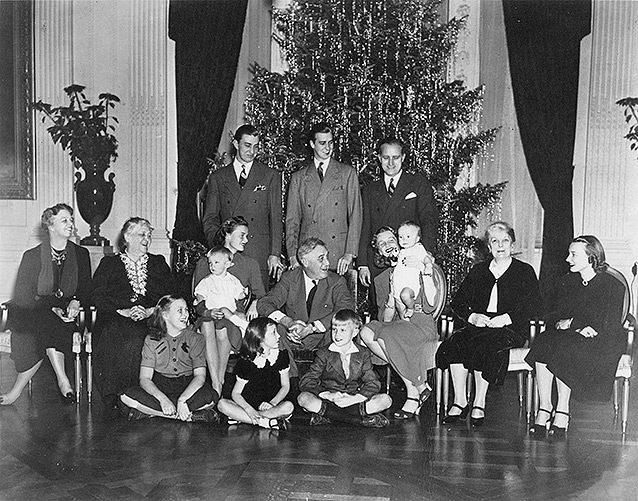
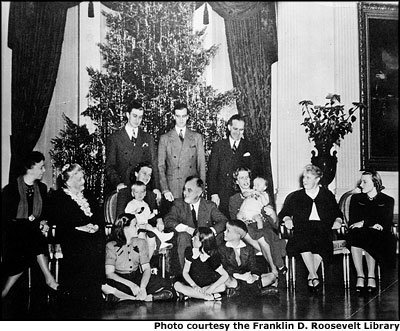
Roosevelt and family in front of the Saint Croix Christmas tree in 1941.
(The Roosevelt family, Christmas, 1941)

For those  who are familiar with the works of William Martin you have come to appreciate his Peter Fallon mysteries.  Novels such as HARVARD YARD, THE LINCOLN LETTER, CITY OF DREAMS, THE LOST CONSTITUTION, and BOUND FOR GLORY are structured with two alternating time periods, one dating back a century or two to our contemporary world reaching climaxes when the two came together.  Martin’s focus in other novels rests on the traditional chronological approach of historical fiction that includes; ANNAPOLIS, BACK BAY, CAPE COD, and CITIZEN WASHINGTON.  After a ten year hiatus from his last novel, Martin has authored DECEMBER ’41 a supercharged work that adopts the traditional chronological timeline which develops a plot that was designed to culminate in the assassination of President Franklin D. Roosevelt, Christmas Eve, 1941 shortly after the Japanese attack on Pearl Harbor and a surprise visit of British Prime Minister Winston Churchill.

The novel itself has elements of detective mysteries from the 1930s and 40s with dialogue, scenes, and characters from that time period.  Martin blends this approach with commentary about race, ethnicity, misogyny, and the role of the United States in the world.  In a way Martin has taken a page from Philip Roth’s novel, THE PLOT AGAINST AMERICA raising the same issues but his effort is about defeating Roosevelt through assassination, while Roth focused on replacing Roosevelt with Charles Lindbergh in the White House.

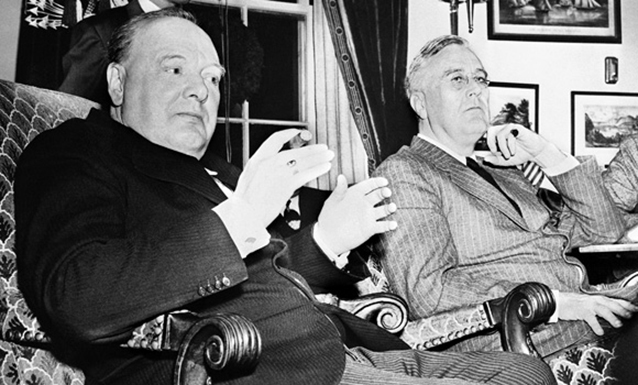
Winston Churchill and Franklin Roosevelt sit in the White House in 1941
(Winston Churchill and Franklin Roosevelt sit in the White House in 1941)

Martin begins the novel as Roosevelt is addressing Congress with his “a date which will live in infamy speech” as the American people hung on every word from coast to coast.  At the same time at a shooting range in a Los Angeles County canyon a group of Nazi sympathizers and spies engaged in target practice, one of which had plans to kill President Roosevelt.

Martin has created a scenario that at the time was not out of the realm of possibility, particularly after Adolf Hitler declared war on the United States on December 11, 1941.  Martin develops three main characters; Kevin Cusack, a script reader at Warner Brother studios, Martin Browning, a virulent supporter of Nazi Germany and an American citizen, and Frank Carter, an FBI agent stationed in Los Angeles.  The three characters evolve slowly and by the end of the novel they will all come together.  Along the way there are a series of other personalities that play important roles.  Vivian Hopewell, a starry eyed Marlene Dietrich look alike; Stella Madden, a hard nosed female detective; Madden’s flamboyant assistant, Bartholomew Bennet; Stanley Smith, a Pullman porter on a cross country train; Emile Gunst, a member of the German Bund who imports German ceramics; Helen and Wilhelm Stauer, Browning’s co-conspirators, and a host of other savory and unsavory characters.

Image 1 - Santa Fe Railroad 1940 Super Chief Vintage Poster Print Retro Style B&W Art

The texture of the time period is front and center.  The reader is provided glimpses into the Hollywood culture of the 1940s with cameos from John Wayne, John Huston, Hal Wallis, Humphrey Bogart, Erol Flynn, constant references to Leslie Howard, and what it took for a female to achieve stardom. 

Martin also delves into topics which are still germane today and compares them to earlier examples in American history.  For example, when discussing the inferior quality of American leadership, he points to Warren G. Harding.  His approach to the world balance of power fosters a debate as to which is the greater threat, Communism or Nazism.  The antisemitism of the period, the America Firsters, the KKK, and the Nazi ideology espoused by certain individuals is a dominant theme.  In discussing the interaction between diverse characters, American racism comes to the fore particularly the role of porters on American railroads and trains with nicknames like “Super Chief.” In summary, the first half of the novel is not up to Martin’s usual standards in developing his plot.  However, once a number of characters board a train from Los Angeles to the east coast the novel begins to gather steam.  The question is has Martin written a storyline that is feasible, the answer is yes, but has he branched out and produced an approach that is new, the answer is no.  In the end the novel is an easy read, but it is not as absorbing as his other efforts.  When I picked up a William Martin novel I had great expectations.  I anticipated something that was in the realm of previous Martin efforts, Ken Follett or Frederick Forsyth.   However, the current work left me somewhat disappointed.   Despite some exciting and heart pounding scenes, overall, it left me hoping for a plot that was more engaging with greater depth.

President Roosevelt family photo. Courtesy the Franklin D. Roosevelt Library.

THE BETRAYAL OF ANNE FRANK: A COLD CASE INVESTIGATION by Rosemary Sullivan

annefrank1-800x605
(Ann Frank House, Amsterdam, the Netherlands)

For decades, the most famous work of Holocaust literature, THE DIARY OF ANNE FRANK was required reading for many children. It is an important contribution to Holocaust literature in that it is one of the few primary sources that exists for a family’s day to day existence hiding from the Nazis.  Anne Frank’s papers were discovered after World War II and were edited by her father Otto, the only family member to survive extermination and published the diary in Dutch in 1947, and later in English in 1952.  There are many aspects of Anne Frank’s story that are shrouded in mystery, among them is the exact date of her death in Bergen-Belsen, probably some time with only weeks remaining in the war in Europe.

Another of the unknowns is how Nazi authorities came to learn the Frank family was in hiding.  The question of who led Karl Josef Silberbauer, an SS Sergeant and two Dutch detectives on August 4, 1944, to Prinsengracht 263, a narrow building along one of Amsterdam’s canals to the Franks where the family was in hiding.  Rosemary Sullivan’s latest book, THE BETRAYAL OF ANNE FRANK: A COLD CASE INVESTIGATION attempts to answer the questions surrounding the seizure and deportation of the Frank family resulting in the death of all except Otto Frank.

amsterdam-anne-frank-e1401282362216

In 2016 Dutch filmmaker Thijs Bayens, and journalist Pieter van Twisk opened a further investigation with a team of Dutch investigators, historians, and researchers that included  27 year FBI veteran, Vince Pankoke.  The team would be headed by Pankoke who treated the Anne Frank house as a crime scene, not a museum.  “With the help of newly designed software that used artificial intelligence to seek out data, patterns humans might miss, Pankoke and his ‘Cold Case Team’ spent several years combing through historical records, and police files interviewing witnesses and their descendants and analyzing theories.”*

The results of the investigation coincided with the release of Sullivan’s monograph and created quite a stir resulting in the Dutch publisher suspending further dissemination of the book.  One might ask what is gained by questioning how Anne Frank and her family were seized accomplishes.  In a world where many argue that “it cannot happen here”  all one has to look at is the increasing ideological divisiveness and the growing popularity of authoritarianism in the world today to see that it can occur and may be well on the way to doing so at present.

anne2bfrank

One of the main reasons for the creation of the Cold Case Team is that the Netherlands had a reputation of tolerance whereby Jews could seek shelter after the rise of Adolf Hitler.  Despite this reputation the Netherlands transported more Jews to the death camps in the east than any other western European country.  Of the 140,000 Jews living in the Netherlands 107,000 were deported, and only 5,500 returned.  One of the questions Pieter van Twisk asks was why was the number so high?

Sullivan has authored a book that can  be divided into two parts.  The first, encompassing about one-third of the narrative focuses on rehashing the history of the Frank family and those involved in keeping the family safe in the annex behind the business at Prinsengracht 263, and the plight of Dutch Jewry upon the arrival of the Nazis.  The role of a Dutch Judenrat (Jewish Councils), deportations to Buchenwald, the role of the SD Jewish Affairs squad known as unit IV B4 which centered on collaboration, and Kopgeld, bounty hunters, and executions are all explored. Any attempt by the Franks to emigrate to the United States ran into the wall constructed by the State Department led by Breckenridge Long, an anti-Semite who did all he could to thwart the entrance of European Jewish refugees into the United States.  By 1943, Amsterdam was declared Jew free.  There is little that is new or surprising, but it forms a useful lead into the second section which focuses on the organization, make-up, and implementation of strategies to try and figure out who turned in the Franks to the Nazis or was there another explanation as to how the Nazis came upon the annex.

de-draaikast-naar-de-onderduikruimte-in-het-anne-frank-huis-700x394

Sullivan describes how the Cold Case team implemented modern law enforcement techniques that were not available after the war.  Strategies such as behavioral science or profiling, forensic testing, artificial intelligence defined as computer systems able to perform such tasks as visual perception, speech recognition, translation between languages, and decision making were all employed.  Scientists from Xomnia, an Amsterdam based data company that offered to provide the foundation for artificial intelligence that Microsoft agreed to develop further, stated that at some point the program algorithms should be able to predict what or who was likely a suspect.

Perhaps Sullivan’s most useful chapters center around the details of the investigation.  The team was amazingly thorough in its approach.  It investigated numerous theories and concluded that of the 27,000 Jews in hiding in the Netherlands, one-third had been betrayed. By the end of the investigation more than 66 gigabytes of data in the form of more than 7500 files was created.  In so doing Sullivan concludes that suspects such as Job Jansen, who in the early on had denounced Otto Frank to the Nazis and is convinced his Jewish wife is having an affair with Otto Frank was innocent.  Then there is Nelly Voskuijl, a Nazi whose sister was helping to hide the Franks.  Another is Willem van Maaren, the warehouse manager who might have been after bounty money.  Anton “Tanny” Ahlers, a currier for the NSB was a committed Nazi and bounty hunter but he like the others was not responsible for the seizure of the Frank family.  Lastly, there is the case of Anna van Dijk, who from 1943 on laid traps to uncover where Jews were hiding, but there is little evidence that she turned the Franks in – but she was executed at the end of the war for turning in at a minimum 68 Jews and possibly over 200.  

6cabdda4cff0f50b5f2dab587b2e649f

In the end the Cold Case Team singles out a Jewish notary Arnold van den Bergh and member of Amsterdam’s Jewish Council  may have passed information about the Franks to the SS in order to save his own family.  Sullivan’s exploration into the Cold Case spends the most time analyzing the role of van den Bergh and his relationship with Otto Frank and argues that the most logical culprit was the former notary for the Dutch Judenrat, but Vince Pankoke is not so certain, so we must conclude that the investigation was less of an unsolved mystery and more of a well kept secret on the part of Otto Frank.

annefrankscreengrabs01.jpg
(Vince Pankoke)

As Ruth Franklin points out, “those who went into hiding were perhaps even more at the mercy of others. Anne was unusual in having a stable hiding place together with her family; most Dutch Jewish children were sent into hiding alone, since they were easier to hide than adults. There are many stories of abuse and exploitation of these children by their hosts, in addition to the larger risks that hiding entailed. Picture all those dots on the map: any one of those people could potentially have betrayed the Franks.”  Or as journalist Kathryn Hughes concludes, Regardless, what Sullivan does manage to do is assemble a compelling picture of what it was like to live in Amsterdam under Nazi occupation: here is a collection of increasingly isolated individuals, hungry, terrified and daily faced with impossible choices about whether to save themselves, their loved ones, or the nice family that lives next door. And it is this moral vacuum that follows in the wake of antisemitism, rather than any particular “perp,” that betrayed Anne Frank.**

*Ruth Franklin, “Beyond Betrayal,” New York Review of Books, May 5, 2022, 20.

** Kathryn Hughes, “The Betrayal of Anne Frank by Rosemary Sullivan review – who tipped off the Nazis? The Guardian, 2 February 2022.

For an excellent discussion for the subject at hand consult Jane Eisner, “Searching for Anne Frank’s betrayer, finding a moral dilemma,” Washington Post, January 21, 2022.

Otto Frank’s business premises, Prinsengracht 263 (in the middle), around 1947.
(Anne Frank House, Amsterdam, the Netherlands)

GREY BEES by Andrey Kurkov

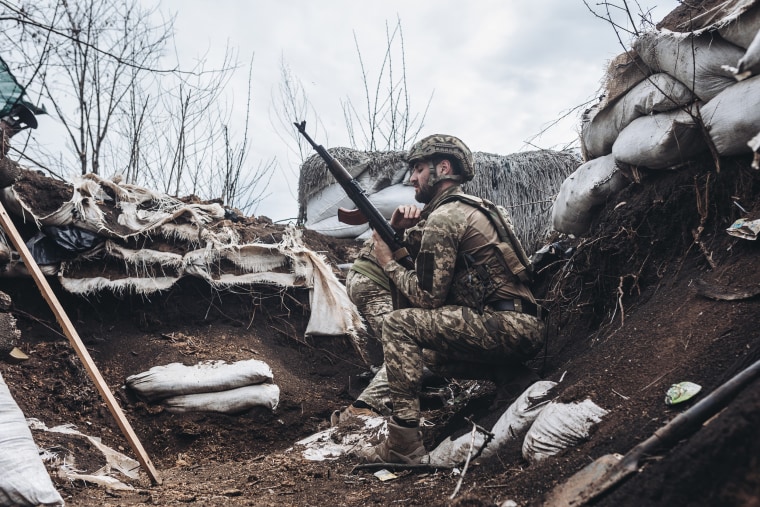
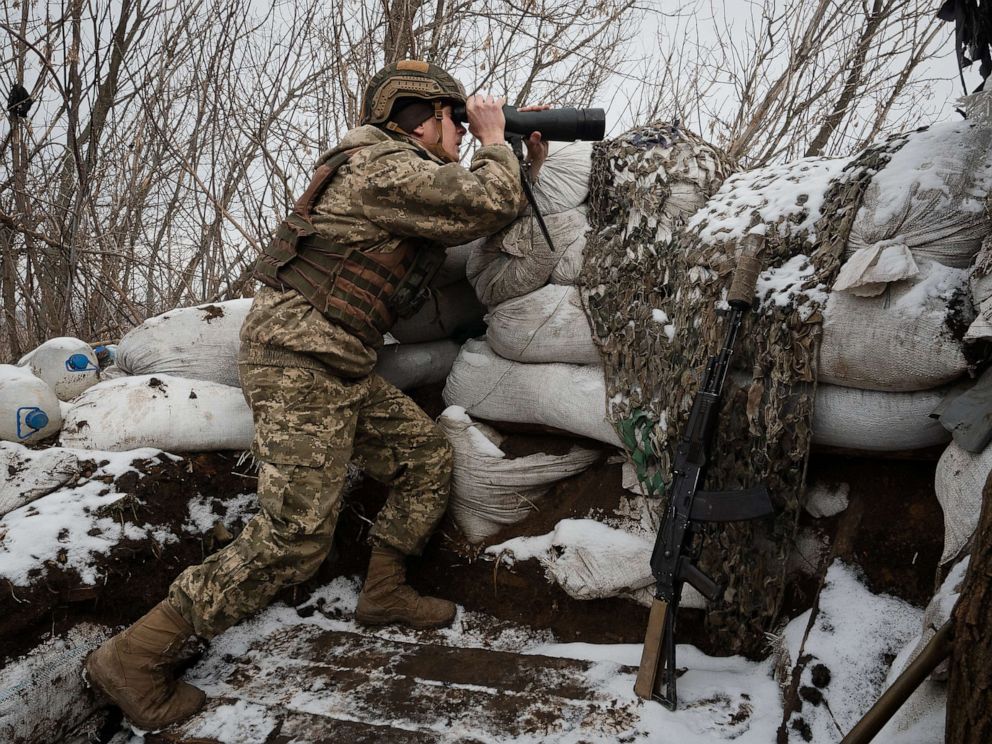
Ukrainian frontline in Donbass
(A Ukrainian soldier in the Donbas region)

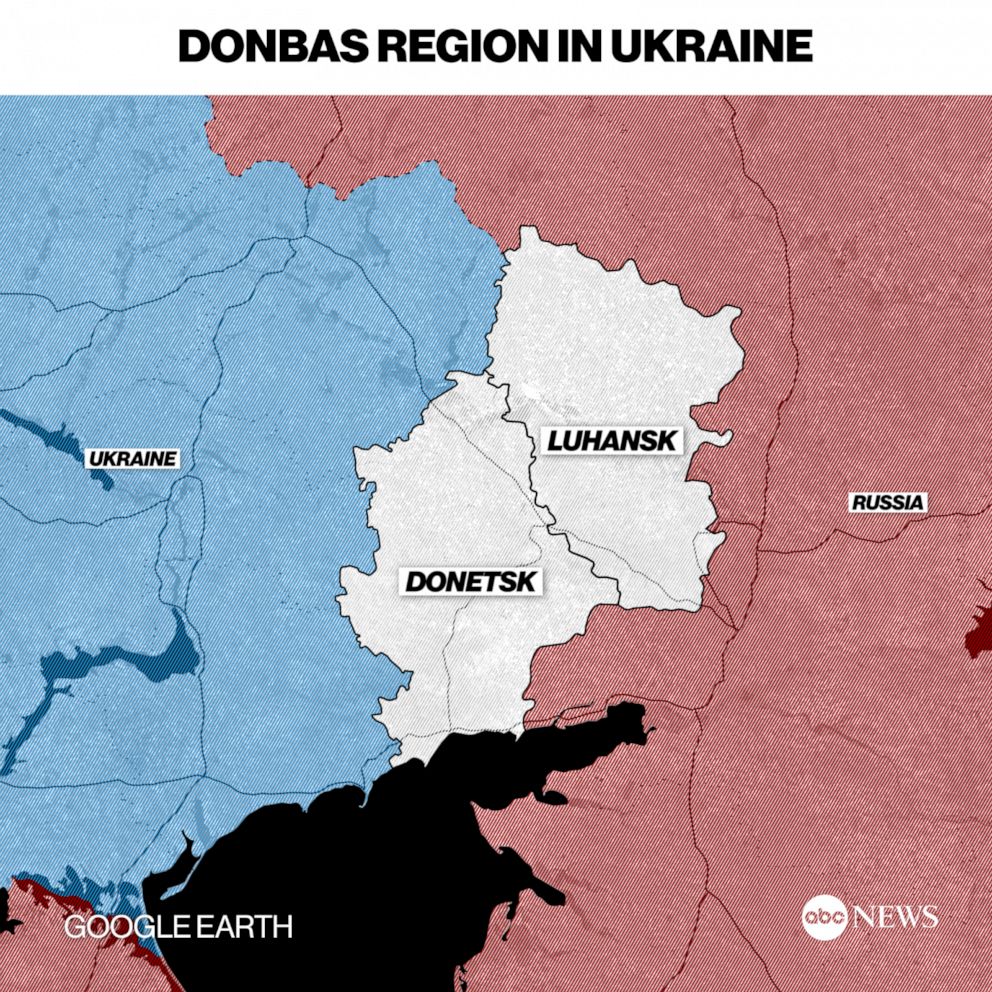
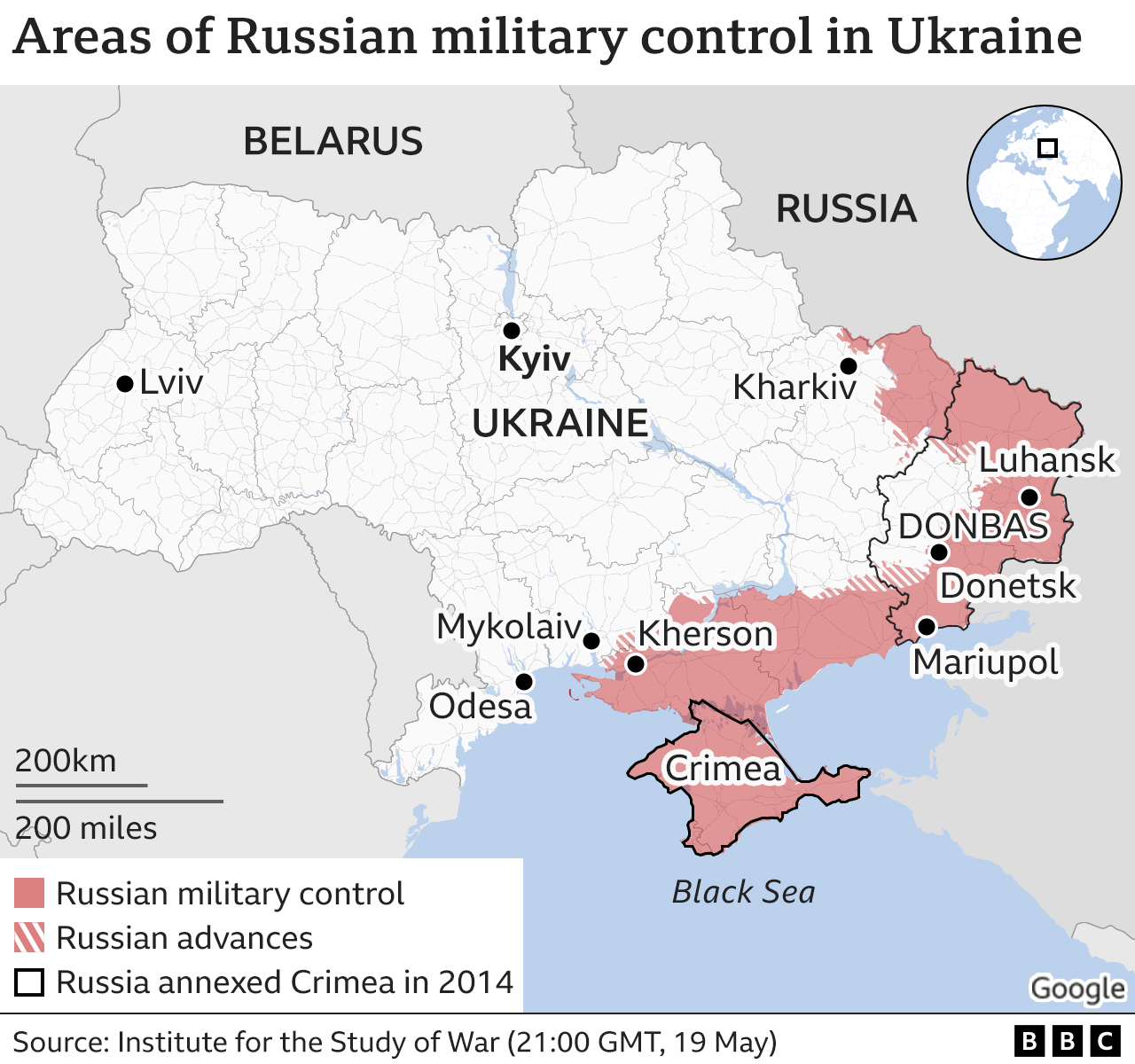
On May 9, 2022, Vladimir Putin stood in Red Square and celebrated the Russian victory over Nazi Germany.  As he spoke the “Special Military Operation” he unleashed on February 24th grinds on with a death toll estimated at 26,000 for Russia and god knows how many Ukrainian soldiers and civilians, assuredly in the thousands.  The war, a term which is illegal in Russia took a turn last month when Russian forces withdrew from the Kyiv region as Moscow decided to cut its losses in the west and concentrate its firepower in the east, particularly in the Donbas region made up of Luhansk and Donetsk two areas that have been at war with the Ukrainian government since Moscow annexed the Crimea in 2014.

For the people living in the region who did not leave for Russia or safer parts of Ukraine, war has become an almost accepted part of their daily lives.  Today the fighting has been brutal and mirrors the type of conventional battles that ground up thousands upon thousands of soldiers during World War II.  Success for either side on the battlefield has been slow as Russia launches its missiles and artillery and Ukrainian forces try to stall the Russian advance and in certain areas retake villages from Russian troops.  The people who are caught in this morass between the Ukrainian troops and pro-Russian separatists in the breakaway “people’s republics” of Donetsk and Luhansk live in what is referred to as the “grey zone.”  No one knows exactly how many people remain in the area, but for those who have stayed the chief aim is survival.  To ascertain what life is like for the residents of the eastern region, Ukrainian novelist, Andrey Kurkov has authored a haunting book entitled GREY BEES, a story about a disabled pensioner and devoted beekeeper – “one of the people of the Donbas.”

PHOTO: donbas region in ukraine

Kurkov’s protagonist is named Sergey Sergeyich who travels to Crimea where he hopes to arrange a holiday for his bees.  Instead, his trip south turns into an ordeal as he witnesses the poor treatment of the Crimean Tatars by Russian authorities.  Sergey tries to maintain neutrality between the two sides, but he develops sympathy for the Muslims and his beliefs create suspicion on the part of the Russian security service – the FSB, which is also a threat to his beloved bees.

The first part of the novel is devoted to Sergey’s life of isolation in the tiny village of Starhorodivka located in the grey zone between Ukrainian and Separatist soldiers.  Sergey’s life is one of repetition, boredom, and survival.  With no electricity and limited access to food his focus is clear – avoid snipers and travel only at night.  The only other person who lives in the village is his “frenemy,” Pashka Khmelenko who seems pro-Separatist/Russia.  Their relationship goes back to childhood and was never strong, but the situation they find themselves in draws them closer.

Sergey was married with a daughter, but after a series of disagreements his wife left taking their child with her.  Sergey had been a mine inspector before the war, but by age forty-two he retired on disability with silicosis.  Sergey’s outlook on life is clear, he must maintain his health as best he can for the sake of the bees.  If he should pass away the bees would perish – he refuses to allow himself to “become the annihilator of hundreds of thousands of bee souls.”  He believed such a sin would burden him through his afterlife.  Sergey is firmly neutral in terms of political affiliation during the war – he only cares about his bees and worries what might occur to his society of beekeepers if Donetsk were to become independent since there was no society of beekeepers in that region.

Map showing areas of Ukraine currently under Russian control

The novel provides a window into the horror of what life is like in eastern Ukraine.  The dominant emotion is how to deal with the silence between bombardments.  Military silence which is not really silence becomes the norm as the shelling can come at any time – it becomes the accepted mode of existence for people in the region.  Kurkov describes a grey area that had been consumed by mining, but Sergey looks forward to spring, whenever it arrives as it brings the beauty of nature that offsets the calamity of destructive warfare.

The second part of the novel evolves as increased shelling begins to disturb the hives, so Sergey loads up his bees in his Lada and travels from town to town finally reaching Crimea.  As the story progresses Sergey finds it difficult to remain neutral as he sees how the Russian soldiers treat his beekeeper comrade, a Crimean Tartar named Akhtem and his family.  Sergey’s commentary is enlightening as he compares the behavior of his bees with behavior during the Soviet period and wonders why his bees are acting like humans.

For the author, “civil society” could learn a great deal from Sergey’s bees.  In addition, Kurkov’s story and dialogue point to the timelessness of war.  For Sergey and others, telling time serves no purpose, only the seasons matter. 

During his journey to Crimea, time is of the essence as Russian authorities will only grant him a ninety day pass.  As he travels on, Sergey meets a number of people that will influence his journey and alter his perceptions of the human condition.  Gayla, a woman who operates a food store, wants him to stay with her.  Aisylu, the widow of his bee colleague, Akhtem provides food and emotional support.  Lastly, a series of Russian officials who seem to enjoy creating obstacles for Sergey.  In all instances the reader will acquire insights into life in Crimea and the Grey Zone and how Putin and his minions inflict tremendous psychological and physical damage on its inhabitants.

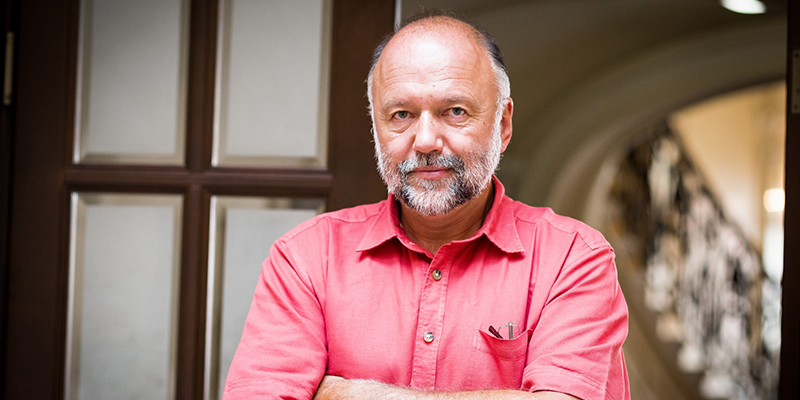
(Andrey Kurkov, author)

In a novel that professes neutrality the portrayal of Russian characters comes off according to Jennifer Wilson in her March 29, 2022, New York Times  book review “as eerily cold, almost monstrous – snipers, cops, Putin apologists – as the actions of the Russian government were in some ways reflective of a deeper national character.  It recalls Kurkov’s professed view of Russian and Ukrainian people as fundamentally different, each with a unique ‘mentality.’ As Putin tries to justify his occupation on the grounds of a shared history, there is indeed a strong current within Ukraine’s intelligentsia toward highlighting what makes the cultures and literary traditions distinct. Any suggestion of syncretism or co-influence feels tantamount to treason.”

The Dublin Literary Award states that Grey Bees is as timely as the author’s Ukraine Diaries were in 2014 but treats the unfolding crisis in a more imaginative way, with a pinch of Kurkov’s signature humor. Who better than Ukraine’s most famous novelist to illuminate and present a balanced portrait of this most bewildering of modern conflicts.

PHOTO: A Ukrainian Serviceman monitors the possible movement of the separatist forces at a frontline position held by Ukraine's 503rd Detached Marine Battalion on Feb. 7, 2022, near Verkhnotoretske, Ukraine.
(A Ukrainian soldier in the Donbas region)