RESCUED FROM ISIS: THE GRIPING TRUE STORY OF HOW A FATHER SAVED HIS SON by Dimitri Bontnick

Image result for photos of Dimitri Bontinck

(the author)

As parents we worry about many things.  Over the last decade parents in western countries be they Muslim or Christian have a new source for concern – The Islamic State or ISIS. It seems many of their children have become vulnerable to ISIS’ slick online propaganda or the radicalization that is preached at a number of Mosques.  In Dimitri Bontnick’s new memoir the nightmare of losing a child to the “Caliphate” is real and destructive. In his book, RESCUED FROM ISIS: THE GRIPING TRUE STORY OF HOW A FATHER SAVED HIS SON he details the recruitment of his son, his physical return, and the temporary loss of his mind.  In addition, Bontnick is able to convey the stories of numerous other families who try and gain the freedom of their sons and daughters.

Image result for photos of Dimitri Bontinck

(father and son, Jejoen)

After beginning the book with his own life story and how he raised his son Jejoen or Jay,  Bontnick seems confounded by what led up to his son joining ISIS.  He was raised in a bi-racial liberal Belgium family with few restrictions.  The author points out a number of factors that he thinks contributed to Jay’s recruitment.  First, he was forced to change schools; second, the breakup with his girlfriend of three years; and third, their home was on the edge of a neighborhood that was a hotbed of jihadism.  Throughout the book Bontnick tries to wrap his head around why his son and so many others have given up their families and lives to join what they hoped to be the Caliphate.  The author takes us through his son’s recruitment as well as many others as they make the decision to travel to Turkey and cross the border into Syria.  From there we learn of their training, brain washing, and existence as part of radical Islamists.

Bontnick describes in detail how he went about trying to save his son, who ostensibly had turned his back on him.  Jay’s actions destroyed his family and resulted in his parent’s divorce.  We travel with Bontnick on numerous occasions into Syria and the minefield of Aleppo and Raqqa in search of his son, and after finally gaining Jay’s freedom, the sons of many parents pleaded to him for help.  Bontnick conveys what he was up against, first Sharia4Belgium, an organization designed to bring Belgium under Sharia law and a member of the Caliphate; then he had to deal with a series of characters in Syria, many of which were very dangerous as he was captured, beaten, and released.  During his odyssey he did come across a number of journalists, Islamists, rebel fighters, and Syrian citizens who did their best to locate Jay and allow his father to bring him home.

Image result for photos of Dimitri Bontinck

(Some of the contacts Bontnick made in Al-Hamraa, Syria that helped him locate his son)

The first question a parent asks is why did I not see this coming?  In retrospect the answer is they did, but did not want to admit that their child, as in the case of Jay was becoming a stranger.  Bontnick explores his parental errors and warns parents how not to behave if they want to protect their children.  The author points out the difficulties in navigating Syria due to the many factions, armies, and ideological groups.  Bontnick traveled to Kafr Hama, a very dangerous enclave where Belgium jihadis were located.  He did and said a number of things that he feels guilty about, but justifies his actions in trying to save his son.

As Bontnick tells his story he does briefly integrate the political and military history of the Syrian Civil War.  Once he is able to free his son he will return often to Syria to bring medical supplies and assist other distraught parents in trying to free their children.  These endeavors were rarely successful, but Bontnick should be praised for all of his efforts.  The greatest fears of the sons in returning home was being prosecuted and going to prison.  Bontnick’s attitude is based on the belief that they were brainwashed as teenagers by a predatory organization that recruited westerners in “the hope of rewriting the software in the heads of children” should be taken into account.  His argument that Belgium authorities have no programs or policies in place to deal with individuals who have given up on radicalization and want to return home is very sound.  His suggestion to use their experiences as intelligence or allow them to provide information from within the Islamic State is something authorities should consider.

Once Jay returns we learn of his trial, conviction, and suspended sentence.  But despite his freedom he informs an interviewer from New Yorker magazine that his recanting of his radicalization was a sham, breaking his father’s heart.  Later their relationship would improve and the author’s experience changed his outlook on life to that of helping others rather than chasing money and a career.  The book is a heart rendering journey of a father who is attempting to keep what remains of his family together, and a successful dismantling of a major terrorist network in Belgium.  It is also a handbook for parents who must confront the issues laid out in the narrative.  Bontnick offers a great deal of advice, some of which is naive, but overall it is a chilling tale that is part of the larger war being fought against terrorism by the west.

Image result for photos of Dimitri Bontinck

(the author)

KINDNESS GOES UNPUNISHED by Craig Johnson

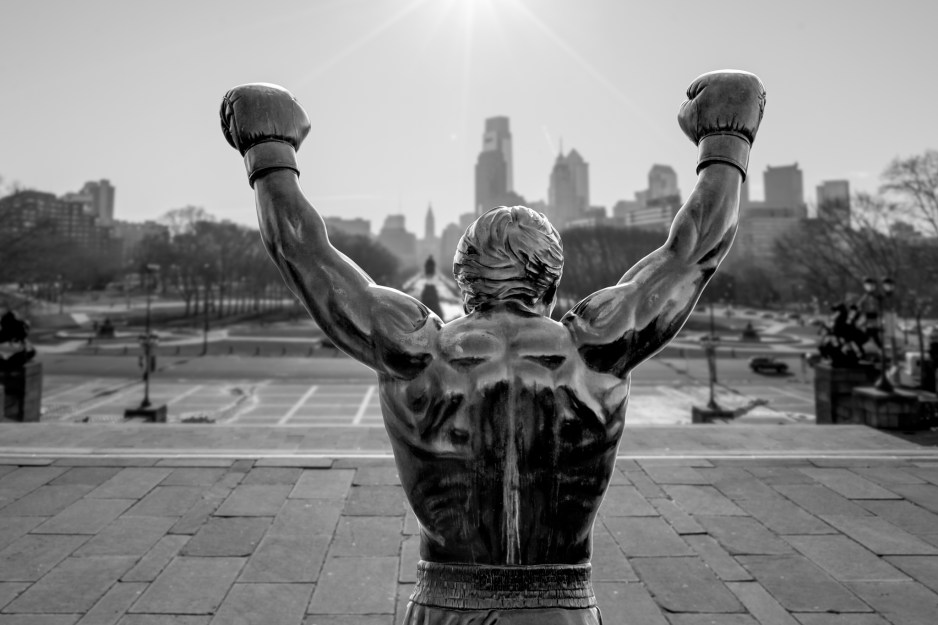
Image result for photo of rocky statue in Philadelphia

(“Rocky” statue in Philadelphia)

Craig Johnson’s third iteration of Absaroka County Sheriff Walt Longmire finds our Wyoming law enforcement hero driving cross country with his best friend since childhood, Henry Standing Bear, and Dog (yes, he named his dog, Dog!) to the city of brotherly love.  As KINDNESS GOES UNPUNISHED begins Henry arrives at the Pennsylvania Academy of Fine Arts to speak about his Mennonite photograph collection and is accompanied by Longmire who avails himself the opportunity to visit his daughter Cady who is a lawyer in Philadelphia.  In true Longmire fashion as soon as they arrive in town things begin to happen in an unexpected way.

Almost immediately Johnson’s wise cracking and sarcastic dialogue begins to dominate the developing story line as Longmire and Detective Victoria “Vic” Moretti’s mother Lena are chatting when a Philadelphia PD patrolman tracks them down and informed them that Cady has been viciously attacked near the steps of the Franklin Institute.  The situation becomes confusing when Devon Conliffe, Cady’s supposed boyfriend was rather disingenuous about their relationship and his actions at the time of the incident.  This provokes Longmire to begin his own investigation apart from the Philadelphia PD.  As Longmire begins to dig into the assault, Conliffe is thrown off a bridge and dies.  What begins to emerge is that his death may be related to the city’s drug trade.

As the story evolves it appears more and more that Cady’s accident and Conliffe’s death are related.  When Longmire receives a warning to “but out” the drama begins to escalate as Cady remains in a coma and one of the best story tellers around will have captured your interest.

One of the different aspects Johnson introduces is the entire Moretti family.  Lena, Vic’s mother, a beautiful woman who already has had an affair and seems quite taken with Longmire.  Victor, the father is Chief Inspector Field Division North of the Philadelphia PD, Vic’s brothers, two of which are policemen and involved in Cady’s investigation.  Through these characters we are exposed to a dysfunctional family dynamic that explains Vic’s view of life and how the Philadelphia PD operates.

As the drug trade is introduced as well as a corrupt District Attorney it seems that Longmire may be in over his head.  After he gains the confidence of two Philly detectives he has greater access to information to try and figure out why Cady was attacked.  What he learns is very disconcerting and forms the core of the novel.  As the story progresses it seems that Longmire is doing the work of a Philadelphia cop.  He is hindered as the closer he gets to solve the attack, that person is murdered.  But as he continues clues are left in unusual places to assist him.  Longmire has to overcome corruption, self-interest, and politics to finally achieve success.  A success that was encouraged by the concept of hope that permeates the novel.

KINDNESS GOES UNPUNISHED is an entertaining read as it reflects the value of friendship and family.  It places Longmire in a milieu he is unfamiliar with and like a “Clint Eastwood character” he navigates with a western chip on his shoulder.  The book should be a satisfying read for those who have watched the Netflix version, which differs a great deal from the novels or for those who are reading the books as a standalone.

Related image

(“Rocky” statue in Philadelphia)

THE GATEKEEPERS: HOW THE WHITE HOUSE CHIEFS OF STAFF DEFINE EVERY PRESIDENCY by Chris Whipple

Image result for photos of former White House Chiefs of Staff

(Rahm Emanuel, President Obama’s first Chief of Staff)

At a time when the oval office is occupied by a man who seems to know no bounds of decency when it comes to race, hounds people who disagree with him on twitter, and vilifies individuals who he views as disloyal or refuse to do his bidding like former FBI head James Comey or Special Prosecutor Robert Mueller, it is refreshing to read Chris Whipple’s new book THE GATEKEEPERS: HOW THE WHITE HOUSE CHIEFS OF STAFF DEFINE EVERY PRESIDENCY.  Recently President Trump fired his Chief of Staff, Reince Pribus, a man who had little influence over the President.  Since Trump is enamored with generals, he finally convinced John Kelley, a former Marine general to become his new Chief of Staff.  Kelly made it clear his role was not to reign in the President, but to bring order and efficiency to the West Wing.  It is clear that Kelly does not totally subscribe to the historical role of the Chief of Staff as defined by Leon Panetta, who successfully rescued Bill Clinton’s presidency who states that, “you have to be the person who says no.  You’ve got to be the son of a bitch who basically tells somebody what the president can’t tell him.”  If you had hoped that Kelly would influence or temper Trump’s tweets and actions all you have to do is evaluate the President’s reaction to events in Charlottesville, his rally in Phoenix, his reaction to the ongoing Russia investigation, and his pardon of Sheriff Joseph Arpaio of Maricopa, AZ.

Image result for photos of former White House Chiefs of Staff

(Reince Pribus and John Kelly, President Trump’s Chiefs of Staff)

Whipple does the American people a service by describing and evaluating the men who have served as Chiefs of Staff dating back to the presidency of Richard Nixon.  In each case we see individuals battle to keep the Chief Executive on message, fully briefed on issues, and to project themselves as presidential unlike the dysfunctional situation that currently plagues the White House.  The key for the Chief of Staff is to instill discipline and focus on the West Wing as Leon Panetta was able to do to get Clinton reelected in 1996.  The most important task for the Chief of Staff is to always tell the President what he may not want to hear.  Whipple is correct that the role of the Chief of Staff is to translate the president’s agenda into reality.  “When the government works, it is usually because the chief understands the fabric of power, threading the needle where policy and politics converge.”  For example, without James Baker who stood between the press, Congress, and internal factions, Reagan’s presidency would have been a failure.  Further, without Leon Panetta to bring discipline and order to the White House Clinton would have been a one term president; without Robert Kennedy, John F. Kennedy had to deal with the Bay of Pigs; Lyndon Johnson did not have a strong Chief of Staff and he was swallowed by Vietnam.  As President Eisenhower told Richard Nixon, “every president has to have its own son of a bitch.”

Image result for photos of former White House Chiefs of Staff

(President George H.W. Bush and John Sununu his Chief of Staff)

One of the most surprising points that Whipple makes is that the most advanced model of organizational structure at the White House was developed by H.R. Haldeman – the problem is that he did not follow his own ideas resulting in Watergate.  For later Chiefs of Staff eventually they would fall back to Haldeman’s structure.  Other surprising points include the career of Dick Cheney who was a sensational organizer during his tenure as Chief of Staff under President Ford, and almost got Ford reelected in 1976, but when he became Vice President under George W. Bush his entire world view had changed as he morphed into the defacto chief.  Many have conjectured why, and point to 9/11’s impact as being responsible.

The chief that one should not model was Hamilton Jordan who served under Jimmy Carter.  Jordan was not interested in the nitty gritty of policy and found basic White House protocol incomprehensible.  Jordan exacerbated his situation by his continual offending of Congressional leadership.  What made matters worse for Jordan was when Carter was elected the new president believed he was “the smartest person in the room” and acted as his own chief and the net result was the seeming failure of the Carter presidency despite his energy policy, the Camp David Accords, arms control, and the Panama Canal Treaty.  The opposite of Carter was Ronald Reagan who didn’t think he was the smartest person in the room, and knew how to delegate and have a strong Chief of Staff.  Apart from Iran-Contra, Reagan’s presidency is seen as a success as Baker made Reagan understand the political process of the presidency would be closely linked to his acceptance in Washington, something Carter never bought into, and navigating between the ideologues and pragmatists that served the president.

Image result for photos of former White House Chiefs of Staff

(James and Howard Baker, two of Ronald Reagan’s Chiefs of Staff)

The strength of Whipple’s book is how he reviews the highs and lows of each administration by focusing on the actions of the diverse Chiefs of Staff who organized the West Wing and made it run efficiently.  By doing so Whipple explains the strategies and actions taken and judges whether their approach to governance was effective or not.  In the process the history of each administration is dealt with, and at times Whipple uncovers “nuggets” that have not been covered effectively by other authors.  A case in point is the reputation of Leon Panetta and by turning the Clinton administration around he proved you didn’t have to be “a bully or an attack dog to be an effective Chief of Staff.  You just have to be very smart.  You have to know when to be tough, and also when to let the reigns be a little looser.”  The Clinton administration also produced Erskine Bowles and John Podesta who demanded that Clinton treat them as peers despite their friendships and were able to be honest and upfront with him which led to a balanced budget, the States Children’s health Insurance Plan and the survival of the Lewinsky Affair.

Andrew Card who would have the longest tenure as a chief saw James Baker as a role model, but 9/11 would produce a new “Dick Cheney.”  Whipple explores why this occurred conjecturing with CBS’ Bob Schieffer that it could have been his heart condition that was responsible.  Whipple reviews the debate and actions that led to the ill-fated invasion of Iraq.  He does not really add anything new to the discussion, but what emerges is a marginalized Card who could not navigate between Powell, Rice, Rumsfeld, and the Vice President.  One of the most controversial chiefs was Rahm Emanuel who served under President Obama.  Whipple does an excellent job explaining the different factions within the Obama administration and Emanuel’s role particularly guiding legislation through Congress as he was able to overcome the scars left over from the Clinton administration in gaining the passage of the Affordable Care Act.  Once Emanuel is replaced, Whipple is dead on in explaining why Emanuel’s replacement William Daley was a failure in his short stint at the White House, and how Dennis McDonough was able to counter Obama’s “Chicago crowd” as like Emanuel he was a strong communicator, something that Daley was not.

Image result for photos of former White House Chiefs of Staff

(Andrew Card informing President George W. Bush about 9/11)

In a sense by reviewing each Chief of Staff’s tenure Whipple has created a handbook for President Trump’s Chief of Staff.  He does so by presenting a theoretical approach to the position, but also the realities that each man faced.  The political pragmatism that is needed to be successful emerges under the auspices of Baker, Emanuel, Panetta, and others, a characteristic that seems to be missing in the current White House.  Whipple writes with the journalistic flair one would expect from a multiple Peabody and Emmy award winner and in the current environment there are many people in power who should consult it.  If the Trump presidency eventually is unsuccessful in reaching its goals, Whipple has already explained why.

Image result for pictures of rahm emanuel

(Rahm Emanuel)


DEATH WITHOUT COMPANY by Craig Johnson

Image result for photo of absaroka county wyoming

Craig Johnson’s sequel to his successful THE COLD DISH which introduced Absaroka County Sheriff Walter Longmire is entitled DEATH WITHOUT COMPANY.  Many of the same characters reappear including retired Sheriff Lucian Connally, who resides at the Durant Home for Assisted Living, Longmire’s constant foil, Victoria (Vic) Moretti, Henry Standing Bear, Longmire’s closest friend since childhood and owner of the Red Pony Bar, as well as Ruby, the person who is really in charge of Longmire’s office, and Cady, Longmire’s daughter who was an attorney in Philadelphia.  Johnson introduces a few new characters, the most important of which are newly hired deputy Santiago Saizarbitoria, and “dog,” Longmire’s new companion that he never got around to giving a name.

The current Longmire episode begins with the seemingly routine death of Mari Baroja at the Durant Home for Assisted Living.  A seemingly normal occurrence at the facility turns out to be a possible investigation as it appears that Lucian was once married to Baroja for three hours over fifty years ago.  It seemed the two ran off to get married at a young age when Baroja’s Basque father and uncles had the marriage annulled.  The first part of the book is dominated by the question, what was Lucian hiding, and why?

Johnson’s empathy for the historical plight of Native-Americans seems to drip off of each page.  His constant references to their treatment by the US government and life on the “rez” (reservation) is present in character dialogue and background descriptions providing the reader with an accurate picture of Native-American life.  Johnson is a very nuanced and descriptive writer as he is able to set a scene and comfortably places the reader among the characters, i.e.,  Lucian’s ruminations of his past life.

The first third of the book is spent reacquainting old reader or acquainting new readers with the main characters and how they interact, and the dynamics of the Baroja’s family, particularly when it emerges that they control a great deal of methane production on the Four Brothers Ranch which they own – production that is worth millions.  All the evidence points to Mari’s death as one of natural causes, until a lab report that she had been poisoned by naphthalene, an ingredient in moth balls.  It turns out that Mari was susceptible to this poison and Lucian’s insistence that she did not die of natural causes finally rings true.  Further evidence of foul play is obvious when Mari’s doctor, the Holocaust survivor Isaac Brumfield is involved in a car accident and is almost killed.  Further, Mari’s granddaughter Lana is attacked in her bakery, but survives. It turns out that Mari was worth millions and had changed her will fourteen times, the last being a few days before she died, and it appears that the case may also rest on a missing can of Metamucil.

From this point on Longmire is in full investigative mode.  He relies on Standing Bear and Vic, his deputy to gather information and evidence concerning family members as it appears they have the most to gain.  He also uses his daughter’s legal expertise as she arrives in the midst of events to celebrate Christmas.  In so doing we learn a great deal of the history of how dysfunctional the Baroja family was, especially once the will is read and it appears the largest portion of Mari’s wealth went to her granddaughter Lana, and her twin daughters Kay and Carol receiving substantially less.

Johnson’s current effort, along with the television series “Longmire” are superb entertainment.  They reflect the avarice of human nature, excellent plot development, and twisted and surprising endings.  I recommend the entire series, both video and the printed word and look forward to KINDNESS GOES UNPUNISHED, the next installment in the Longmire saga.

Image result for photo of absaroka county wyoming

THE MIRACLE OF DUNKIRK by Walter Lord

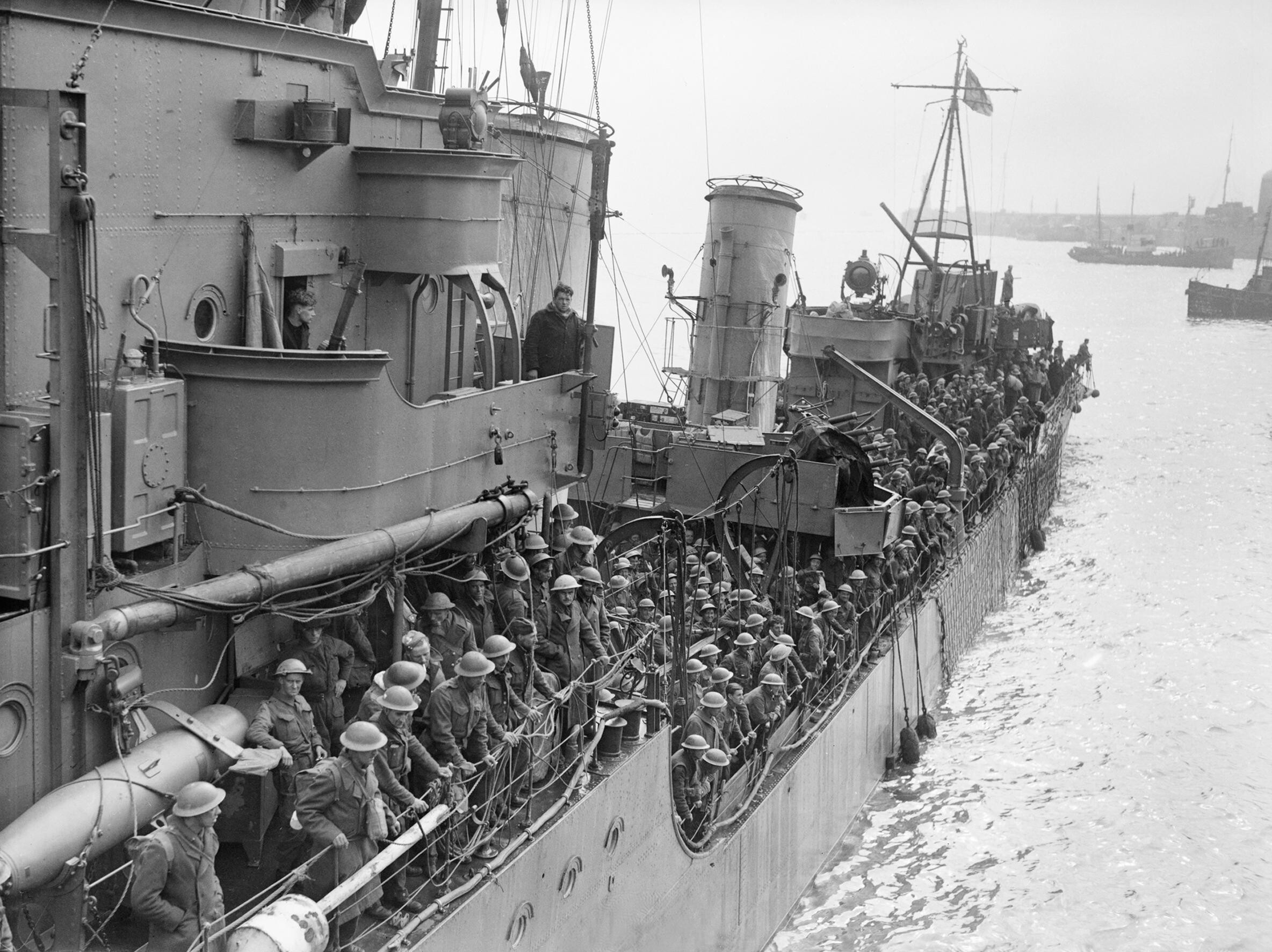
Image result for photo of ww2 dunkirk

(the evacuation from Dunkirk)

A few days ago I saw the film “Dunkirk” which attempted to convey the importance of the rescue of 338,000 men off the coast of France across the English Channel in late May and early June, 1940.  The film does an excellent job presenting the plight of British and French troops as they lined up on the beaches to be extracted from the threat of German tanks, artillery, soldiers and bombers.  What the historian, Walter Lord refers to in his classic study, THE MIRACLE OF DUNKIRK is a series of crises that allowed many components of British society to take part in the rescue of these men.  Though originally published in 1982, Lord’s book has lost none of its punch and command of events that led to the evacuation, the evacuation itself, and its implication for the overall war effort.  When reading Lord’s work today it still reflects a historian who had mastered the craft of narrative history and allowed the reader to take part in the action being described.

Related image

The approach taken in the film is reflected in Lord’s work.  It presents three important elements of the rescue; the outnumbered  brave British pilots who met and tried to neutralize German Stukas, the employment of anything that would float represented by a family fishing boat, and the men stuck on the French beaches trying to survive German bombing.  All aspects help capture the bravery, spirit, audacity of the British people that allowed them to save their army – an achievement that would go a long way in finally defeating the Nazis five years later.

Having seen the film I decided to read Lord’s highly readable study of what occurred.  Events in France shocked many, particularly Prime Minister Winston Churchill who was informed early on the morning of May 15, 1940 by French Premier Paul Reynaud that the French had been defeated after the Germans surprised them by attacking through the supposedly impenetrable Ardennes Forest.  German Panzer Divisions poured through the French countryside trapping the British Expeditionary Force (BEF), two French armies, and all Belgium soldiers, nearly one million men pinned against the sea at Flanders.

Image result for photo of ww2 dunkirk

Lord does a superb job describing British resiliency as they tried to block the German advance at the same time they instituted a massive withdrawal to save the BEF.  Lord points out French arrogance in dealing with the British, how quickly their troops and leadership became demoralized, and how the British were confronted with French “invisibleness” as they tried to cope with the German advance.  British policy seemed to always have to take in to account the French state of mind.  Once the French had given up, the BEF command had to prod them to hold certain areas so an escape route could be protected.  Further, the French felt they were not being treated equally once the evacuation began to gather steam.  They wanted the use of British ships and equal extraction of soldiers.  Churchill was very cognizant of French sensitivities as he was afraid of losing an ally at a time when things were becoming desperate.

Once the Germans realized what was occurring as the BEF and its allies began retreating north they worked to close off any access to French ports, be it Boulogne, Calais, and Dunkirk.  The Germans were spreads very thin and were stunned the allies did not attack their flanks as they raced for the beaches.  Luftwaffe head, Herman Goring grew jealous of Heinz Guderian’s Panzer unit and pleaded with Hitler to halt the German advance and allow his air force to complete the job of wiping out the BEF.  Hitler was concerned about his armor and viewed Paris as his main target so he went along with Goring.  This decision was very telling as it gave the BEF three days to organize its retreat before Hitler changed his mind – probably creating the opportunity for the “miracle” at Dunkirk.

Image result for photo of ww2 dunkirk

Perhaps Lord’s best chapter, “Operation Dynamo” deals with how the Admiralty bureaucracy organized the diversified types of ships and crafts that would take part in the rescue of the BEF.  On May 14, 1940 the BBC called for “all owners of self-propelled pleasure craft between 30 and 100 feet in length to send all their particulars to the Admiralty within fourteen days.”  Lord provides intricate details how this miracle at sea was organized under the leadership of Vice Admiral Betrum Ramsay who was located deep in the White Cliffs of Dover.  The result was a “strange fleet of ferries, hoppers, dredges, barges, coasters, and skoots.”  Once Boulogne and Calais fell, Dunkirk was the only option.

What sets Lord’s work a part from others is how he integrates the private stories and individual experiences of the soldiers and civilians who came to their rescue during the evacuation.  The harrowing trip across the channel and back avoiding German mines and bombers, placing the reader with the heroic individuals Lord describes.  Lord presents a number of important personages in his narrative that include King Leopold III of Belgium who quickly surrendered to the Germans, General Bernard Montgomery who organized his troops to fill the gap in the BEF escape route, and General Gort (Viscount Lord) who was in charge of BEF at Dunkirk, among others.  In addition, Lord has interviewed numerous survivors, civilians, and officers whose personal experiences helped create a fascinating narrative that began with a disorganized movement of troops onto the beaches, the need to create a pier to allow ships to pick the men up, and organizing the men into small units that would make for an efficient extraction.  What resulted at times was “bewildered waiting” and trying to avoid being hit by German bombers.

Image result for photo of ww2 dunkirk

The British command also had to make important choices as a number of destroyers dispatched to evacuate men began to be sunk.  Churchill and company were concerned that the losses were too much in light of what they thought would be a long war.  At one point a number of destroyers were withdrawn.  What facilitated the evacuation was low cloud cover and smoke for a good part of the end of May, 1940.  As the Admiralty withdrew the destroyers the void was filled by car ferry’s, fishing boats, open motor launches, barges, cabin cruisers, trawlers, and rusted scows – ships/boats of every conceivable type.  By the end of May, it became a deluge of “little ships.”  These craft were mostly unarmed and many were piloted by everyday civilians, a number of which were on their maiden voyage with little knowledge of nautical equipment.  The ingenuity of the British was seen as troops cannibalized materials from wherever they could, be it partially sunken destroyers, damaged buildings etc. all to create a temporary pier or mole so rescue boats could come astride and extract as many men as possible.

By the end of the evacuation 224,686 of the BEF and 123,095 French soldiers were evacuated.  This would be a problem for Churchill for the remainder of the war as the French believed that the British did not do their utmost to save French soldiers. Lord also does a marvelous job detailing the intricate and frosty relationship between England and France, especially as the Germans began to turn their attention away from Dunkirk and moved their panzer divisions to conquer Paris.

Image result for photo of ww2 dunkirk

The significance of the evacuation lay in the large number of British troops that were saved.  Guns and vehicles could be replaced, but not the only trained troops that Britain had left.  It would form a nucleus of the great allied army that would win back the continent.  Further, leaders such as Lt. General Alan Brook, Major-General Harold Alexander, and Major-General Bernard Montgomery “all cut their teeth at Dunkirk.”  In addition, the evacuation electrified the British people and gave them a sense of purpose that the war previously lacked.  It was an opportunity for ordinary citizens to feel they had made a direct contribution to the war effort.

Lord has written a highly readable account of the rescue of allied forces from Dunkirk.  An accomplishment many historians credit for saving Britain from being forced out of the war with Germany.  Though written and researched over thirty five years ago it still stands as the best narrative of the rescue and provides numerous insights into the mindset of the hundreds of thousands who survived the Nazi onslaught in the late spring of 1940.

Image result for photo of ww2 dunkirk

(the evacuation from Dunkirk)

THE COLD DISH: A LONGMIRE MYSTERY by Craig Johnson

Image result for photos of the Cheyenne Indian reservation in Wyoming

The last week or so my wife and I have been binging on the Netflix program, Longmire.  We have found it almost addictive as each program leaves the viewer hanging anticipating the next episode.  The characters are fascinating as is the Wyoming landscape that is presented.  This being the case I thought it would be interesting to see where the mindset for the program derived.  It seems the series was the brainchild of the novelist Craig Johnson whose first effort was entitled THE COLD DISH: A LONGMIRE MYSTERY, part of a fifteen book compendium.  Johnson has what I would characterize as a soft sarcastic approach to dialogue and writing in general.  He sprinkles in the beauty of Wyoming and the intricate relationship between life on an Indian reservation and the town of Durant.  The main character is Sheriff Walter Longmire, a cultured man educated at USC and an individual who served in Vietnam.  Longmire became a widow three years before the story begins when his wife Martha suffering from cancer was murdered while undergoing chemotherapy in Denver.  Longmire comes across as a disheveled man living in a partially completed log cabin on the outskirts of Durant.  The people closest to him are his daughter Cady, a lawyer who lives in Philadelphia, and his childhood friend Henry Standing Bear who is Longmire’s link to the reservation and served with Special Forces in Vietnam.  A great deal of the socialization that takes place in the novel is centered in the Red Pony tavern which is owned by Henry and the local police station.

Johnson has created an eclectic group of characters as the plot unfolds.  His department consists of Deputy Victoria Moretti, a former Philadelphia cop who carries her own personal and professional baggage.  Ruby is the lady in charge of the office who runs a very tight ship and at times acts as Longmire’s conscience. Deputy Brian Connally, known as “Turk” has a very dysfunctional relationship with Longmire.  Jim Ferguson is the Head of Search and Rescue, and Lucien Connally is the former crusty old sheriff who lives in an assisted living complex who serves at times as Longmire’s alter ego.

Image result for photos of the Cheyenne Indian reservation in Wyoming

Johnson does a wonderful job integrating the native culture and everyday life of the Cheyenne Indian reservation to the reader.  The problems of the reservation range from the lack of education, drugs, alcoholism to the constant struggle for survival.  The Indian bureaucracy put in place by the US Department of the Interior often comes in conflict with Longmire and his office as the fight against federal control is ever present with the many rules and regulations that exist on the reservation which Longmire navigates like a minefield.  Longmire relies on Henry as his guide throughout the plot and is one of the strongest characters that Johnson creates.

The novel opens with Johnson bringing the reader up to date on all the major characters then launches into a scene at the Red Pony when Longmire informs Henry that Cody Pritchard has been found dead amidst a herd of sheep outside of Durant.  Pritchard was among a group of four teenagers who four years earlier had raped and sodomized an emotionally challenged Indian girl whose trial split the entire community, white and non-white.  When three of the four boys served less than two years, and the fourth received probation and 100 hours of community service, the animosity spilled over.  The death four years later brings a number of people to the conclusion that Pritchard, who was the least apologetic over what had been done was murdered in a revenge killing.  Later in the novel when another of the boys is killed, Longmire is confronted with a very dangerous case.

Longmire is a loner and still grieves over the death of his wife.  He has difficulties establishing and maintaining relationships with others, particularly women.  His friends pressure him to seek the companionship of someone, but his awkwardness and guilt over the death of his wife is a stumbling block as he has a habit for saying the wrong thing.  Despite these shortcomings Johnson introduces Vonnie Hayes and through their relationship we can see what a tortured individual Longmire has become.

The reader is taken through the wilds of Wyoming as Longmire and Henry seek the killer and it is a very suspenseful journey.  As the novel reaches its climax the reader will be stunned with the path that the author takes.  Johnson has created the basis for a very effective and entertaining series and the television program along with his novels are well worth the time to experience them.

Image result for photos of the Cheyenne Indian reservation in Wyoming

SONS AND SOLDIERS: THE UNTOLD STORY OF THE JEWS WHO ESCAPED THE NAZIS AND RETURNED WITH THE ARMY TO FIGHT HITLER by Bruce Henderson.

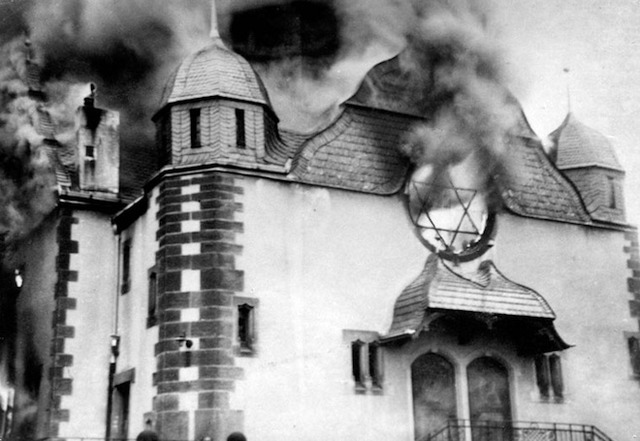
Related image

(The burning of a Jewish synagogue during Kristallnacht)

During World War II there was a little known group of men who were trained at Camp Ritchie, Maryland.  Their extensive classwork and field training was designed to prepare them to interrogate German prisoners of war and gather intelligence to be used against Nazi forces.  What became known as the “Ritchie Boys” was formed in mid-1942 and was made up of 1985 German born Jews who had immigrated to the United States in response to Nazi persecution particularly after Hitler’s rise to power in 1933,  Kristallnacht in November, 1938, and the events of 1941.  Most of these German-Jewish boys arrived without parents and siblings and had to adapt to their new homeland on their own.  Part of the reason was due to the racist/anti-sematic attitude on the part of a number of important State Department officials like Breckenridge Long who as Assistant Secretary of State helped set American immigration policy.  The journey of the Ritchie Boys and their impact on the Second World War is aptly told by Bruce Henderson with compassion and insight in his latest book, SONS AND SOLDIERS: THE UNTOLD STORY OF THE JEWS WHO ESCAPED THE NAZIS AND RETURNED WITH THE ARMY TO FIGHT HITLER.  The story of the Ritchie Boys takes them through their wartime experiences in gathering important intelligence from German POWs, their participation in a number of important battles, including the Normandy invasion, Operation Market Basket, the Battle of the Bulge, liberation of extermination camps, and their efforts after the war to locate family members.

In the first part of the book Henderson focuses on the early plight and immigration of a number of men who would become Ritchie Boys.  They include Martin Selling, who was rounded up after Kristallnacht, separated from his family, imprisoned in Dachau and after his release made it to the United Kingdom due to the work of a Jewish relief agency that eventually provided a visa to enter the United States.  Gunter Stern, who would change his name to Guy grew up in a middle class family in Northern Germany and as the situation for Jews deteriorated in 1937 he was sent by himself to the United States to live with an uncle in St. Louis because the State Department refused to allow the rest of his family to immigrate.  Stephan Lewy was placed in an orphanage after his mother died and the economic fortunes of his father collapsed.  After his father was released from a concentration camp and they experienced Kristallnacht he left Germany for Paris leaving his father and step mother behind.  Werner Angress was not a very good student and he was sent to an agricultural farm in Poland where he found success.  Once things deteriorated in Berlin his father developed a successful plan for the entire family to escape and go to Amsterdam.  In 1939 Angress escaped from Holland and left for America.  Lastly, Victor Brombert, another teenage boy was smuggled out of Germany in 1933 and moved to Paris, however, during the Vichy regime he left France to experience a harrowing voyage to New York and safety in 1941.

Image result for photo of Guy Stern

(Guy Stern)

All of the boys experienced the emergence of Hitler, their removal from schools, harassment by Hitler Youth, and the collapse of their families as parents were arrested, businesses confiscated, and the eventual separation.  All witnessed and were affected by the 1935 Nuremberg “Blood” Laws, Kristallnacht, and the difficulty of emigrating in part because the Nazis seized their assets and only allowed them to take a pittance of their wealth out of the country.  Henderson further explores the difficulties as they had to navigate the exclusionary immigration laws of the United States and their enforcement by elements in the State Department.  Jews were required to provide affidavits from American citizens that they would take care of their relatives financially, along with other documentation that took a great deal of time to obtain.  The work of David Wyman provides an inside look into the “old boys club” of the State Department and their arcane views when it came to race and Jews.  Henderson describes the heroic efforts of the families as they realized that only one family member would be allowed to leave and in most cases it was the eldest son with the hope they could reunite later.

Image result for Wobbelin concentration camp photos

(American soldier and survivors of the Wobbelin concentration camp)

The boys that are the center of the story would become naturalized American citizens before they were sent overseas to fight the Nazis.  Henderson describes their training and dispatch to England to participate in the Normandy landing.  Since native Germans would have knowledge of Nazi/German culture and colloquial language the Ritchie Boys were in high demand to interrogate POWs.  The individual stories Henderson presents reflects the importance of the Ritchie Boys to the allied war effort.  Particularly interesting is Werner Angress who was attached to the 82nd Airborne and with little training parachuted behind German lines.  His later intelligence gathering leading up to and during the Battle of the Bulge was very important.  Another insightful segment deals with Victor Brombert’s participation in the 28th Infantry Division as he experienced combat in Belgium and Northern France and predicted the Battle of the Bulge which was ignored by hire ups.  Perhaps one of the most ingenious of the Ritchie Boys was Guy Stern who after Normandy was made Head of Survey and his reports were distributed to all allied commanders including General Eisenhower.  Along with another Ritchie Boy named Manfred Ehrlich, who changed his name to Fred Howard, he developed a number of unusual schemes in order to extract information from POWs.

Image result for photo of werner angress

(Werner Angress, his mother and two brothers after the war)

Henderson tells a number of wonderful stories including the visit of Marlene Dietrich as part of the USO, the capture of Hauptmann Kurt Bruns who ordered the death of two captured Ritchie Boys, how the Ritchie Boys had to overcome the skepticism of some officers who accused them of being German spies, and at times the guilt they felt when they had to use unorthodox methods to extract information from POWs.  Perhaps the most poignant part of the book is when the Ritchie Boys confronted the Holocaust when they witnessed the concentration camps.  Stephan Lewy arrived at Buchenwald with the Sixth Armored Division, Guy Stern arrived at Buchenwald three days after its liberation, Werner Angress witnessed the Wobbelin concentration camp, and when Manny Steinfeld arrived there he could not escape the possibility that his sister and mother were murdered there.

Overall, Henderson tells a remarkable story.  It is told clearly integrating numerous interviews with the Ritchie Boys and accompanying research.  My main criticism involves the method of sourcing which is very ineffective and difficult to attribute information.  As a historian I would love to have been able to match materials to citations so I might have pursued certain aspects of the book further.  However, the topic is fascinating and Henderson has done these men a great service by telling their story.

Image result for photo of kristallnacht

(The burning of a Jewish synagogue during Kristallnacht)

HOUSE OF SPIES by Daniel Silva

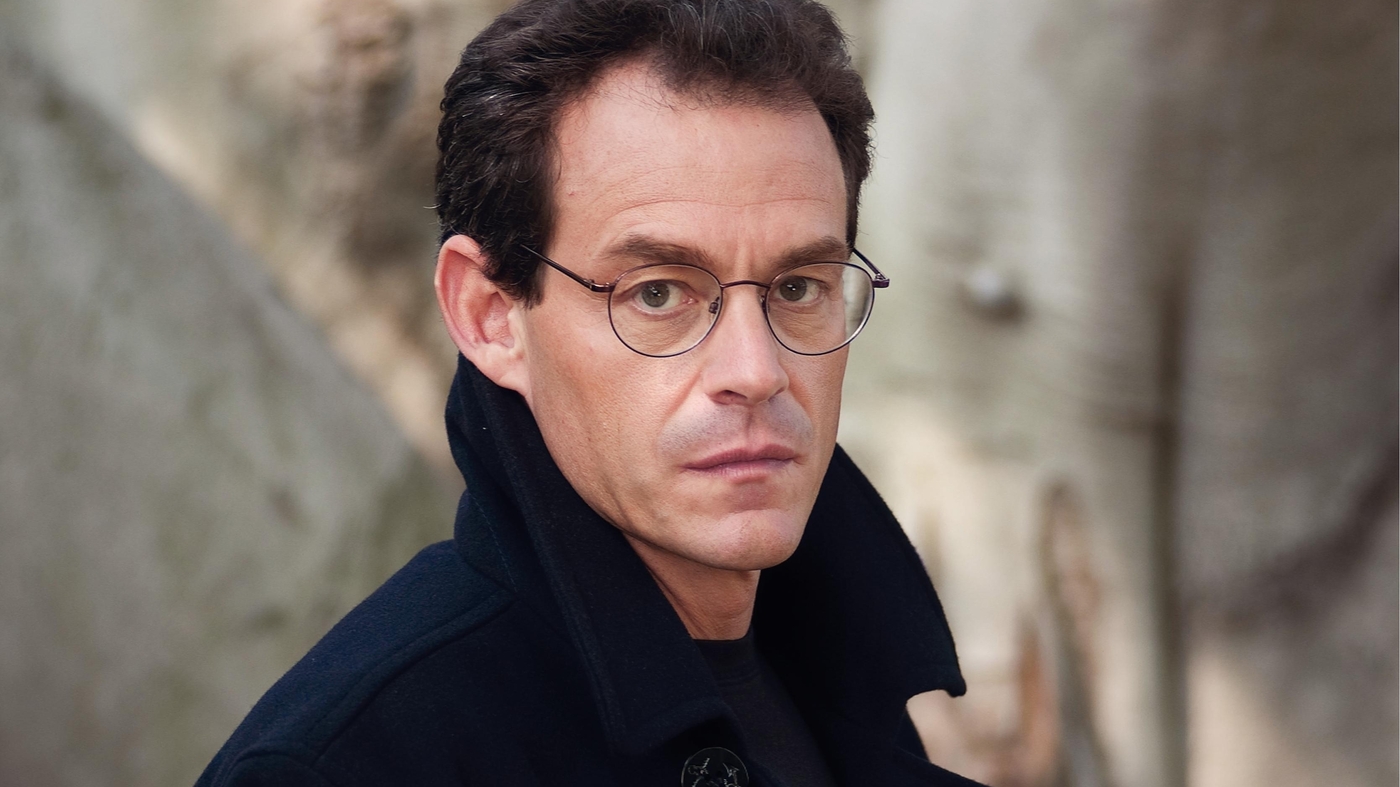
Image result for photos of daniel silva

Daniel Silva seems to reward his readers with a new Gabriel Allon tale each summer.  This July it is no exception with the appearance of HOUSE OF SPIES, a story that is very contemporary as Silva seems to have a knack for constructing a plot, unbeknownst to him that has a striking resemblance to what is occurring on the streets of England and Europe.  Silva’s new novel moves seamlessly from THE BLACK WIDOW to his latest iteration of the Allon character.  Last summer when THE BLACK WIDOW was published Allon was chasing an ISIS inspired master terrorist named, Saladin and it concluded with the fear that after his successful attack in Washington, D.C. he would soon strike again.  These fears came to fruition at the outset of the novel as Julian Isherwood, a London art dealer with strong ties to Allon and Israeli intelligence becomes a hero during a Saladin operation in West London.  Isherwood is able to save a number of lives, but the result of the attack on three separate sites is close to 1000 deaths and the most devastating London has suffered since the Nazi bombing during World War II.

A number of characters from THE BLACK WIDOW reappear in the HOUSE OF SPIES.  Christopher Kelly, a former M16 operative who returns to the British spy agency after an absence of twenty five years has a major role.  Graham Seymour, the head of MI6, Paul Rousseau head of France’s elite Alpha Unit, Dr. Natalie Mizrahi, a physician turned Israeli agent who had saved Saladin’s life, Adrian Carter, the Chief of the CIA’s Directorate of Operations, and numerous Israeli agents, and of course Ari Shamron, Allon’s mentor all appear.  Silva’s story is prescient as Saladin’s attack in West London follows on the heels of the real attack in London on the bridge across the Thames and the Borough Market in early June.

Image result for photos of daniel silva

In the current situation Allon finds himself as Chief of Israeli Intelligence having to take somewhat of a background role as the complex operation that has been prepared unfolds.  There are many moving parts and characters that Israeli agents and Kelly carry out with Allon offering instructions through ear pieces from afar.  The question is can Allon allow “younger” operatives to play the central role in carrying out the OP, which is totally against his nature. The novel itself is not as intense and gripping as previous episodes.  It seems to move at a more leisurely pace missing much of the drama that Silva’s readers have grown accustomed to.  Silva is still right on when it comes to the current world situation and does not shrink from commentary concerning politics, European-American relations, European society, and cooperation among allies.  There are numerous references to the questionable attitude put forth by the Trump administration, the problem of dealing with a “dirty bomb,” issues within the American intelligence community, the role of French society in creating jihadists, and a number of other pertinent problems.

If there is a lesson to be learned from Silva’s work is that allies need to work together; share intelligence and not create road blocks against each other, avoid demeaning the intelligence community, never publicly criticize one’s allies, and pursue a policy that can only be described as “chaotic,” as it is not conducive to maintaining the security of people in the fight against terrorism.  Perhaps certain individuals should read some of Silva’s novels as it may be easier to digest than intelligence briefings and other national security papers that are presented daily.  Silva’s latest work is a good read, but not one of his best.  But in true Daniel Silva style he leaves enough threads at the end of the book dealing with Iran, Syria, and ISIS that the next Allon caper must already be outlined in his mind.

Image result for photos of daniel silva


MIDNIGHT AT THE BRIGHT IDEAS BOOKSTORE by Mathew Sullivan

THE EXILE: THE STUNNING INSIDE STORY OF OSAMA BIN LADEN AND AL QAEDA IN FLIGHT by Cathy Scott-Clark and Adrian Levy

Image result for photo of bin laden compound in abbottabad

(Bin Laden family compound in Abbottabad, Pakistan)

After perpetrating the horror of 9/11 al-Qaeda leadership and its followers scattered with the expectation that they had provoked what would be a massive military response.  The path Osama Bin Laden and his family, al-Qaeda officials, and others took to escape the lethal American bombardment has been open to conjecture by historians and journalists for sixteen years.  The publication of THE EXILE: THE STUNNING INSIDE STORY OF OSAMA BIN LADEN AND AL QAEDA IN FLIGHT by Cathy Scott- Clark and Adrian Levy goes a long way in filling the gaps in what happened to Bin Laden and his followers, concluding in 2017.  The authors employ their investigative journalistic prowess to write the most complete account of the years the United States hunted for Bin Laden, al-Qaeda leadership, and operatives until their final capture or death.  What sets their work apart is that they rely on the stories of al-Qaeda leaders, gunmen, planners, spiritual guides, fighters, and family members told to them through countless interviews.  We witness the failure of the Bush administration to take out Bin Laden as they immediately pivoted to the invasion of Iraq, the rise of the Islamic State, the truth of what occurred in Abbottabad, Pakistan on May 2, 2011, and the individual stories of countless al-Qaeda and Taliban members as they sought to survive.

The narrative begins with Osama Bin Laden listening to a radio inside a cave north of Khost to what he hoped would be news of a successful attack on the World Trade Center.  What is interesting from the outside is that the authors report that the al-Qaeda Shura was actually divided as to the pursuit of the “plane operation” strategy.  Mahfouz Ibn El Waleed who Bin Laden relied upon to create religious justifications for his actions led the faction that opposed the attack.  El Waleed was also known as the “Mauritanian” served as Bin Laden’s go between with Taliban leader Mullah Omar, and arranging for Bin Laden’s family to seek refuge in Iran.  The authors also focus in on Sulaiman Abu Ghaith, a Kuwaiti cleric who prepared Bin Laden’s video reaction to the World Trade Center success and also accompanied the Bin Laden family to Iran.  Further, al-Qaeda kept the Taliban leadership in the dark over the 9/11 plan.

Image result for photo of osama bin laden

(Osama Bin Laden)

The authors present exacting detail in all aspects of the narrative.  They even discuss Bin Laden family turmoil involving Osama’s four wives, two of which were extremely religious and committed to their husband’s policy of jihad.  The authors discuss Bin Laden’s treatment of his wives and children and he comes across as an insular figure who marries off his daughters to mujahedeen, and educates his children to carry out his jihad.  When certain sons and daughters do not measure up he has no problem dispatching them to other family members or acolytes.  The family’s plight is based on interviews and we see their terror when exposed to American drones and bombing.  The role of Iran in this process is very interesting in that Teheran is willing to provide sanctuary to many family members.  At the outset Iran, long disassociated from the United States offers intelligence and other assistance to Washington.  However, within the Iranian government there was a split between a reformist faction led by President Mohammad Khatami and Quds Force Leader Qassem Suleimani over whether to turn over Bin Laden family members to the United States.  However, President George W. Bush’s “Axis of Evil” speech put an end to any improvement in Iranian-American relations and led to Suleimani’s dominance over policy.  Sadly, the Bush administration’s obsession with Iraq led to the lost opportunity of possibly improving relations with Iran as both wanted to destroy al-Qaeda and the Taliban.

The authors review the role of the ISI, Pakistan’s version of the CIA that has been told in a number of places.  They reach the same conclusions as previous authors and officials that the Pakistani government was not to be trusted and were in bed with the Taliban, al-Qaeda, and other jihadi elements.  Under President Pervez Musharraf and those that succeeded he in office the Islamabad strategy was to milk the United States for as much military and domestic aid as possible, feigning support, which at times did include military operations against al-Qaeda and the Taliban.  The lack of Pakistani government control in the border areas of Waziristan allowed al-Qaeda, Taliban and other jihadi groups a sanctuary from American attack.  CIA frustration with ISI and Pakistani government duplicity dominate the narrative.

Image result for photo of osama bin laden

The authors detail Bin Laden’s escape from the Tora Bora caves north of Khost.  Abu Musab al-Zarqawi and his men were also present in the area and along with al-Qaeda militants the authors describe how unnerved they were by the massive US bombing and the hundreds of people that were killed.  It appeared to CIA Station Chief Robert Grenier in Islamabad that al-Qaeda and Bin Laden would withdraw into Waziristan, Pakistan’s “no man’s land” and he had no faith that the Pakistani promise to interdict them would take place.  In fact the Mumbai attack in India took place at the same time, resulting in Pakistani troops moving to its border with India, a change that seems almost too coincidental.  Grenier asked general Tommy Franks for troops to keep al-Qaeda and Bin Laden boxed in, but he refused, almost guaranteeing their escape.  Franks’ argument was that he did not want to commit troops and make the same error as the Soviet Union.  This may have played a role in his thinking, but Dick Cheney and Donald Rumsfeld had already turned to regime change in Iraq.

The authors dig into the evolution of US interrogation techniques paying special attention to Dr. James Mitchell, a clinical psychologist who had no practical experience with this type of interrogation, i.e., waterboarding, walling, diapers, insects, etc. a policy approved by Attorney General John Ashcroft in July, 2002.  The narrative presented is based on the diary prepared by Abu Zubayda, a Saudi born Palestinian logistical expert who sent recruits and funds to jihad training camps in Afghanistan from Peshawar.  This diary provides an amazing picture of “ghost detainees” in the CIA’s covert rendition program and was the first to undergo enhanced interrogation techniques.  Other sources include Justice Department documents, CIA tapes, and US Senate Reports.

Image result for photo of osama bin laden

(Bin Laden’s fourth wife and their children)

The chronological approach chosen by the authors covers most aspects of the run up to the war in Iraq, the Sunni uprising led by Zarqawi until his death, events in Afghanistan, including the resurgence of the Taliban, the role of Iran, and US strategy to achieve its goals in the region.  Integrating the narrative with the plight of the Bin Laden family by concentrating on Osama’s journey that resulted in his five year residence in his compound in Abbottabad is extremely important in terms of the final capture.  The American raid is described in detail as is the role played by Bin Laden’s Pakistani allies.  Interestingly, according to the authors the Bin Laden family was about to move from the compound and travel to Peshawar.  At the time of his death Osama Bin Laden was buoyed by the developing Arab spring, the economic crisis in the United States, and the unrest in Pakistan.  His plan was to leave Abbottabad to “reinstate the rule of the Caliphate” in Peshawar.  However, differences with Ibrahim, aka Abu Ahmad al-Kuwaiti, assigned to be Osama’s constant companion delayed his departure, resulting in the successful American raid.

Image result for pictures of guantanamo bay prison

(US detention center at Guantanamo Bay, Cuba)

Perhaps THE EXILES most important contribution to the growing source material on 9/11 and after is how they took the myriad of interviews of their subjects and formulated a clear and incisive narrative that explains how Osama Bin Laden and his family were able to escape to Pakistan, resulting in their claustrophobic life in Abbottabad as the US continued its search for years.  The book fills an important gap in the historiography of its subject, and though at times is very rigid in its reporting, it a major contribution for academics and general readers alike.

Image result for photo of bin laden compound in abbottabad

(The Bin Laden family compound in Abbottabad, Pakistan)