THE GREAT HALIFAX EXPLOSION: A WORLD WAR I STORY OF TREACHERY, TRAGEDY, AND EXTRAORDINARY HEROISM by John U. Bacon

Related image

(remnants of the north end of Halifax after the explosion)

John U. Bacon’s thoughtful and detailed approach in his new book THE GREAT HALIFAX EXPLOSION: A WORLD WAR I STORY OF TREACHERY, TRAGEDY, AND EXTRAORDINARY HEROISM results in one of the best “disaster” monographs in recent memory.  The author’s approach is based on empathy and what appears to be a personal commitment to write a clear, concise narrative that is meaningful as it covers all aspects of the catastrophe.  Bacon begins by laying out the crisis that came at 9:04 am on December 6, 1917, then retreats and provides a history of Halifax. Once you acquire a sense of the city and its geography, Bacon describes how two ships, the Mont Blanc, and the Imo seemed to come together to play a dangerous “game of chicken” in the Bedford Basin outside Halifax Harbor, a game that resulted in the deadliest man made explosion up until the bombing of Hiroshima.

The explosion must be seen in the context of World War I.  By the time of the collision the war had been ongoing for three years but it had reached a stalemate in the trenches.  Once Russia left the war, the Germans would turn their attention to the western front which created an increasing need for explosives to prevent any breakthrough.  The Mont Blanc was captained by Aime Joseph Marie Medec who had little time to familiarize himself with his vessel which would carry the largest cache of explosives ever loaded on to a ship – 62 tons of gun cotton, 246 tons of benzol, packed in 494 thin steel drums and stacked three and four barrels high, 250 tons of TNT, and 2366 tons of picric acid, a very unstable and poisonous chemical.  The cargo weighed almost 3000 tons, or 6 million pounds.  The plan was for the ship to be loaded in Gravesend Bay, Brooklyn, NY and travel up the east coast to Halifax where it would meet a convey for the voyage across the Atlantic.  This plan was chosen to offset the threat of German U-boats as convoys of allied ships was deemed the safest way to reach Europe.
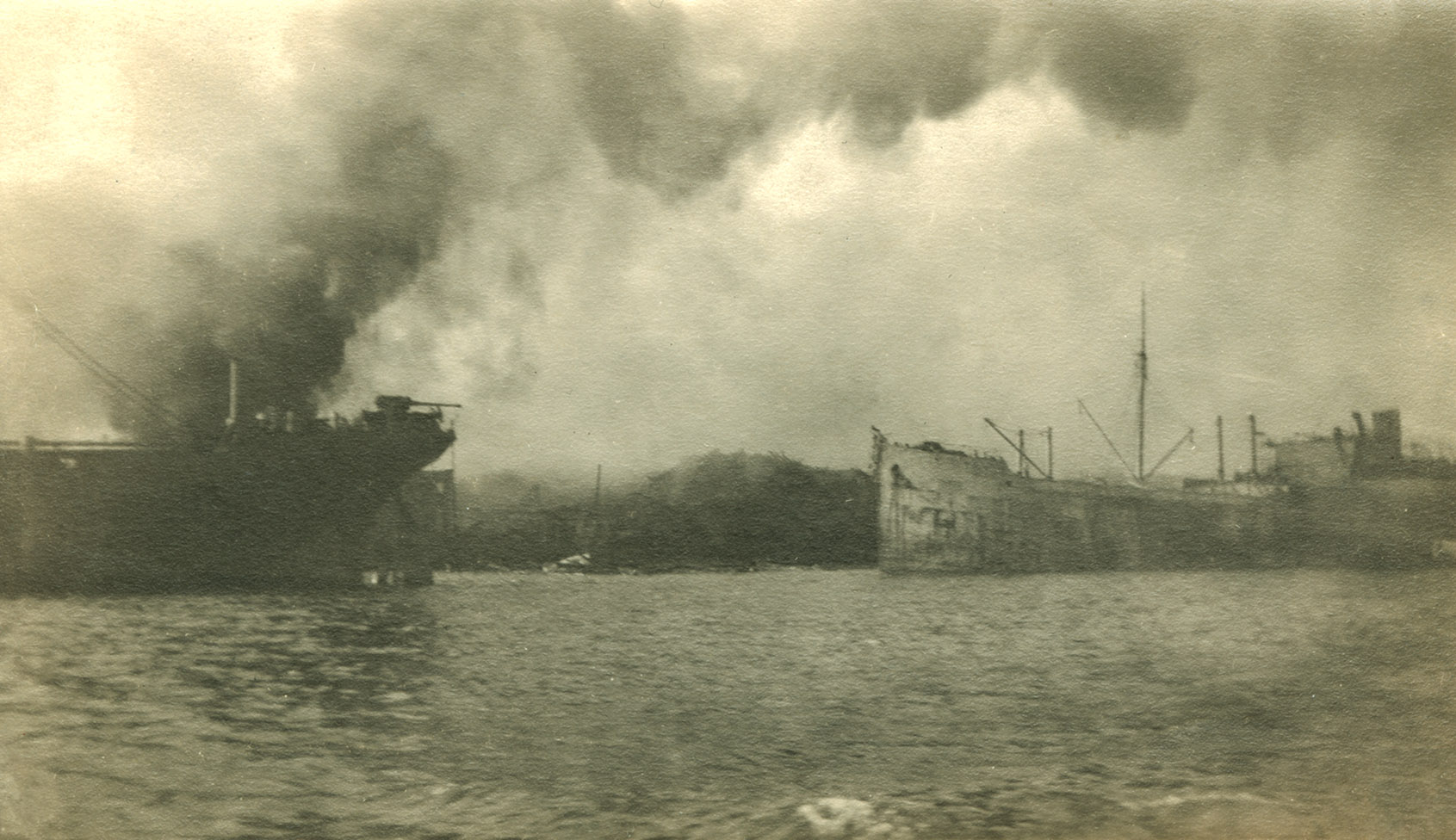
Image result for photo of halifax explosion 1917

(the Mont Blanc and the Imo after they collided)

Bacon presents an accurate portrayal of events leading up to the war in Europe and how the war was fought.  Further, he describes the importance of Halifax Harbor to the overall war effort and the contributions made by Canadian soldiers from Halifax who fought in overseas.  Bacon choses a number of Haligonians (Halifax residents) who volunteered for the military and fought in the trenches.  Through the eyes of Ernest Barrs who fought and was wounded in Belgium at the battles of Ypres the reader gets a true portrait of what life was like for soldiers.  Barrs story is an amazing one in that after surviving for two years he is severely wounded.  The day of the explosion found him rehabbing outside of Halifax and because of his own medical issues and familiarization with medical techniques he joined a Dr. Elliott to help administer to Haligonian survivors in December, 1917.  Bacon introduces the reader to other families whose stories are traced from before the explosion, what happened during the explosion, and after.  You become familiar with the Orr, Driscoll, and Pattison families who lived in the Richmond neighborhood in the North End of the city which would be almost destroyed on December 6th.  Bacon describes family life, occupations, schooling and the interests of the children to the point where one feels that they know them personally.
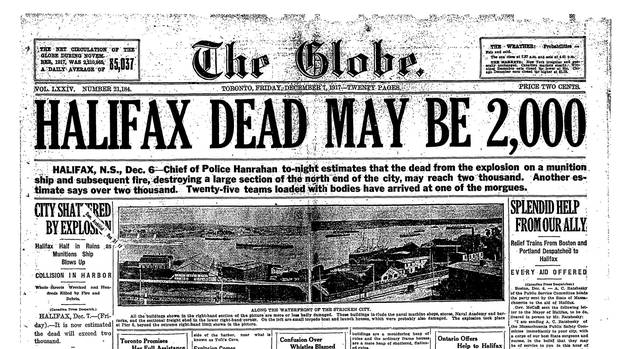
Image result for photo of halifax explosion 1917

The tragedy that took place was completely avoidable.  Bacon explores the leadership and strategies employed by the captains and harbor pilots for both ships and concludes it was the fault of Captain Haakon From of the Imo.  The most fascinating chapter is called “A Game of Chicken” where Bacon describes the path of both ships, the Mont Blanc heading north to meet a convoy in Halifax, and the Imo traveling south toward New York to load supplies for a return to Europe.  The Imo was supposed to stay on western side of the Narrows and the Mont Blanc on the east.  The Imo would move to the center and refused to accommodate the Mont Blanc which was following the correct navigational protocol.  The Imo finally decided, too late, to move to the side it was assigned as Capt. Medec moved to the east to avoid a collision, but it hit the Imo.  With the cargo on the Mont Blanc, devastation could only result.  Bacon provides a blow by blow account up until 8:46 am when the Mont Blanc’s cargo ruptured. The result was the total destruction of the north end of the city, the death of almost 2000 people, 9000 wounded, and the loss of almost half the homes in Halifax.

Image result for photo of halifax explosion 1917

Bacon takes the reader through the mobilization of resources, the bravery of first responders, and the generosity and selflessness of the survivors who tried to help the victims and each other.  At the outset many believed it was a German attack. However, soon reality would set in allowing Bacon to compare the experience of trench warfare and the catastrophe that befell Halifax.  The shock and emotions today would be called Post Traumatic Stress Disorder, but at that time people did not know what they were dealing with.  The “instant refugees” wandered looking for parents, children, and other family members, for many to no avail.  Bacon returns to the families that he introduced earlier in the book and explains what they went through. Bacon goes on to describe the tsunami that resulted from the blast as well as the blizzard that arrived the next day in Halifax, furthering the suffering and hindering rescue and recovery attempts in a city that had 900 hospital beds remaining, with 9000 injured needing medical treatment.

A major theme of the narrative involves the historical relationship between Canada and the United States. For 141 years it seemed the United States worked to annex Canada provoking anger and fear on the part of our northern neighbors.  The Halifax explosion altered feelings between the two countries due to American support and generosity.  Many Haligonians were stunned by the massive relief effort that arrived from the United States, particularly the large number of doctors and nurses that resulted in setting up their own hospital to treat the victims.  A major result of this crisis was the cementing of Canadian-American relations, and an alliance that has stood the test of time up to the present.

Image result for photo of halifax explosion 1917

(the anatomy of the disaster)

Bacon’s account is extremely thorough based on letters, diaries, oral histories, and other archival material he consulted.  He describes how word of the disaster spread and how surrounding towns and communities provided doctors, nurses, soldiers, first responders, businessmen and others to assist as much as they could.  The people behaved in an amazing fashion, so much so that looting was not a problem.  Boston is singled out for their aid and assistance in a wonderful chapter describing the work of Massachusetts Governor Samuel W. McCall and Abraham C. Ratshesky (known as A.C.) who led Boston’s substantial relief effort.

The author follows the aftermath of the explosion taking the reader through the investigation and the long drawn out court proceeding over a period of years.  He concludes the narrative by bringing up to date information about the survivors and their families.  The book is a heart rendering account that is hard to put down, and highly recommended.

Image result for photo of halifax explosion 1917

(remnants of the Halifax pier #6)

COLLUSION: SECRET MEETINGS, DIRTY MONEY, AND HOW RUSSIA HELPED DONALD TRUMP WIN by Luke Harding

Image result for photo of the kremlin

(the Kremlin, Moscow)

Each day it seems as if the American people are exposed to the drip, drip of Russian interference in the 2016 presidential election and the possible role played by the Trump campaign in collusion with the Putin government.  We hear about Christopher Steele’s “Dossier,” the link between Russian oligarchs and their ties to Putin, meetings with Trump officials, the role of Paul Manafort, a former Trump campaign manager facing indictment, the flipping of a Trump foreign policy advisor to the Mueller investigation, and the latest, a deal between Michael Flynn, Trump’s former National Security advisor and the special prosecutor.  The latest twist seems to be conservative House Republicans calling for a Special Prosecutor to investigate the Special Prosecutor.  If names like Orbis, Fushion GPS, Gucifer 2.0, GRU, FSB, Sergey Kislyak, Carter Page, Robert Goldstone, Natalia Veselnitskaya, and numerous other names boggle the mind then you might want to consult Luke Harding, a foreign correspondent for the Guardian, new book, COLLUSION: SECRET MEETINGS, DIRTY MONEY, AND HOW RUSSIA HELPED DONALD TRUMP WIN.

For those who are skeptical about Trump’s role in either obstruction of justice, or outright collusion with Russia they should consult Harding’s monograph.  In fact, as the confusion that surrounds the collusion becomes clearer and clearer one might say that Harding has done us all a service by preparing a handbook of all the characters, motivations, crimes, disingenuous behavior, outright lies/falsehoods, and other aspects associated with the topic.  Harding digs deep using his many sources based on a career that saw him posted to New Delhi, Berlin and as the former bureau chief in Moscow from 2007 to 2011, as well as his contacts in Britain’s MI6 and SIS, as well as the American intelligence community.  Further he has followed and written about the likes of Paul Manafort and his machinations in the Ukraine for Viktor Yanukovych long before Trump announced his candidacy, and was also able to interview Christopher Steele.  What results is almost a legal brief that points to the guilt of the Trump campaign and the President in collaborating with Moscow, and doing all it could to deflect any investigation of what actually occurred.

Image result for photo of putin and trump

(Putin and Trump)

Harding begins by providing the background for the “Dossier,” authored by former British intelligence operative Christopher Steele.  The famous “Dossier” grew out of Steele’s assignment to uncover the Kremlin’s innermost secrets as they applied to Donald Trump.  Steele’s investigation argues a number of points that anyone who has followed this story in any detail has heard numerous times before;  from Trump’s public call for Putin to hack Hillary Clinton’s emails, the Wikileaks leak of Clinton emails in June and October 2016, the hacking of Democratic and Republican National Committee computers, with only Democratic information leaked, Trump’s denigration of almost every politician domestic or worldwide, except for Putin who he constantly praises, the fact that Russian intelligence sources have been “cultivating, supporting and assisting Trump for at least five years,” how Trump and his inner circle have accepted a regular flow of intelligence from the Kremlin, claims that the FSB has compromised Trump through his past activities in Moscow sufficiently to be able to blackmail him, and a trail of money laundering and other acts that make one ask, what does Moscow have on Trump that he is afraid to criticize Putin, and constantly denies Russian involvement in the election, in addition to repeatedly interfering in the Mueller investigation?  All the answers to these questions are present in Harding’s narrative.

Image result for photo of christopher steele

(Christopher Steele)

The author takes the reader through the actions of Aras and Emin Agalarov, Paul Manafort, Carter Page, Michael Flynn, Trump’s lawyer, Michael Cohen, Trump’s son-in-law Jared Kushner and a host others along with a short biographical sketch of each.  We learn their role in the collusion through their interest and relationship with the Kremlin.  Harding explores Vladimir Putin’s motivations and goals as they relate to his hatred of Hillary Clinton, the desire to create chaos and doubt in the American electoral system, and most importantly gain a reduction or lifting of economic sanctions imposed by the Obama Administration due to Russian actions in the Crimea, Ukraine, and the 2016 election.  In Donald Trump, Putin found an American politician who could allow him to achieve these goals.  The question Harding raises is how do we establish the trail between the two men?  The answer he argues lies in following the money.

Image result for photo of carter page

(Carter Page)

The entire scenario would seem unbelievable if it hadn’t occurred.  Trump and his supporters can scream “fake news” all they want, but indictments are facts and Trump’s behavior throughout points to someone with something to hide.  Harding provides an in depth analysis of the Trump-Kremlin tie that dates back to 1987 when the KGB looked on the New York real estate developer as a meaningful target.  Harding traces Trump’s relationship with certain Kremlin linked officials, and oligarchs.  What emerges is a clear picture of how the Kremlin developed its relationship with Trump that would lead them to support his candidacy for president.  Harding explores the role of Donald Trump, Jr. and the infamous June, 2017 meeting with Russian lawyer Natalia Veselnitskaya, former KGB officer Rinat Akhmetshin, and others who offered the president’s son dirt on Hillary Clinton.  At first, as in most cases with Trump associates, Trump, Jr. denied the meeting, then said it was about something else, then finally gave in and admitted he met with Russians and was favorable to receiving foreign dirt on Clinton.

Image result for photo of deutsche bank

Harding follows his own advice and follows the flow of money.  Offshore shell companies, multiple bank accounts, tax havens, payoffs, Russian oligarchs, laundering of funds, money disguised as salary or real estate deals, the role of Deutsche Bank, Trump’s New York creditor are all included in Harding’s expose.   Harding relies a great deal on Steele’s research and conclusions and believes that roughly 70-90% of what is in the “Dossier” is true, that being the case, it is clear as to why Trump wants to shut down the Mueller investigation.  In fact, Harding provides so many plots and sub plots that at times it is hard to keep up with the flow of information, evidence, and characters discussed.  For the Trump people it appears that almost every day they have to put out some sort of brush fire that relates to the Mueller investigation be it the testimony of Donald Trump, Jr., Attorney General Jeff Sessions, or the investigative work of Congressional committees.  One thing that is clear from Harding’s investigative work – the Trump Organization has been laundering Russian money for years, and without Russian money the Trump Organization’s many financial issues would have proven disastrous.

Image result for photo of Michael Flynn and Trump

(Michael Flynn addressing the Republican National Convention)

Harding also explores the relationship between former FBI Director James Comey, the role of the Justice Department, and Trump’s attempts to bring Comey on board in dropping the investigation of Michael Flynn.  The author takes the reader through the Comey firing and its role in obstruction of justice which the president even admitted to NBC’s Lester Holt.  Harding has gone a long way in disentangling the web of Trump’s financial empire, a structure that appears to rest on a great deal of Russian state funds.

One wonders why certain Republicans have cooperated with Trump’s campaign of fake news and obstruction.  Perhaps it is the current tax bill that they are trying to ram through Congress might want to achieve corporate tax cuts and follow the orders of their donors.  Be that as it may, if you are interested in learning what Trump is afraid of you to consult Harding’s latest book.

Image result for photo of the kremlin

(the Kremlin, Moscow)

THE CASTLE OF KINGS by Oliver Potzsch

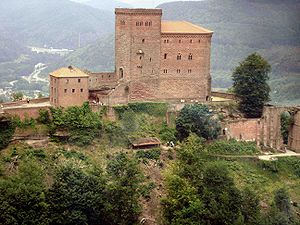
Image result for castle at Trifels in Germany photo
(The Trifels castle)

In a July 20, 2016 interview with the New York Times, author Oliver Potzsch remarked that in his latest book, THE CASTLE OF KINGS his goal was to write a “German Ken Follett” type novel.  The story is set in the Holy Roman Empire during the 16th century.  At the time Germany was made up of a large number of principalities whose princes owed fealty to Charles V, the Holy Roman Emperor.  The period described in the novel is in the midst of the 1524-1525 Peasant Wars between the German princes and their peasants who revolted against the high rents they were charged to work the land.  The situation was also exacerbated by the continued religious struggle that was launched by Martin Luther that would lead to the Protestant Reformation.

The novel begins in the Palatinate, a small German principality that the Rhine River navigates.  Mathis a sixteen year old boy is returning from an errand delivering horseshoes for his father who is the blacksmith for the castle of Trifels.  On his route through the small town of Annweiler he passes a large gathering of people who are about to witness the hanging of three individuals, one of which is Mathis’ own age.  Due to the socio-economic catastrophe caused by the plight of the peasants, families were starving and the therefore resorted to poaching, a crime punishable by death.

The novel itself meanders with a Folletesque tinge.  We find a developing love story between Agnes, a falconer, and daughter of a knight who is the castellan of the Castle at Trifels, and Mathis, who is the son of a blacksmith.  As Agnes and Mathis are confronted by the mores and social norms of the time period one is reminded of the love story between Ned Willard and Margery Fitzgerald in Follett’s latest novel, PILLAR’S OF FIRE.

The novel presents two worlds that are on a collision course.  Agnes’ father Philipp Schluchteren von Efernstein represents the feudal code of knights and the courtesies that men offered each other even on the battlefield.  There are a number of scenes, both peaceful and violent whereby this plays out.  Efernstein’s beliefs are confronted by modernity, particularly when it came to the battlefield.  The development of gun powder and artillery is replacing courtly combat that relied on broad swords.  Efernstein has difficulty accepting this and the kinds of agreements one must make with other Dukes, Counts, and former knights in order to survive.  This generational gap is also seen in the relationship between Mathis and his blacksmith father, Hans Weilenbach who has casted swords and armor for decades and now must deal with a son who has become an explosive expert.

Potzsch has created a number of story lines which all seem to intersect.  Mathis’ development as an expert in the deployment of artillery and his relationship with Agnes who must deal with a stubborn father.  The presence of robber knights like Hans von Wertingen and their impact on the local economy and the lives of everyone, Dukes and peasants included.  Agnes’ obsession with her dreams which present a 13th century figure named Johannes of Brunswick  and his alleged conspiracy haunts her – what do they mean and what is his relationship to her contemporary world?  The relationship between Erfenstein and a young Count, Frederick von Lowenstein-Scharfeneck who enter into an alliance which has a major impact on all the major characters, the machinations pf Mayor Bernwart Gessler of Annweiler, the role of the Peasants Revolt and the rebels who live in the forest who organize to deal with the high burden of taxes and the demands not only by secular leaders, but the Catholic Church itself.  Lastly, and most importantly is Agnes’ quest to learn the history and significance behind a ring that belonged to Frederick Barbarossa that falls into her hands leading Agnes to a monastery where the secrets are hidden.

Image result for castle at Trifels in Germany photo

Potzsch has woven an intricate and complex plot that makes excellent use of German history.  The conflict between Luther and the Church, the peasants and the princes, and princes against princes dominates.  What emerges is a series of flawed characters that Potzsch develops with remarkable detail.  Efenstein, Agnes, Mathis, and von Lowenstein-Scharfeneck have already been mentioned.  But individuals like Father Tristan, Agnes’ confessor and medical healer, Shepherd Jockel, a peasant leader, and Melchoir von Tanningen, a traveling minstral and swordsman, in addition to the brotherhood of 12 whose secrets can alter the course of European history contribute greatly to plot development.

Potzsch’s creativity creates many twists and turns as the murders and disingenuous behavior on the part of a number of characters continue to mount.  Potzsch describes beautiful landscapes, dark castles, Rhine River rapids, information about arquebuses, falconets, mercenaries, and a wonderful summary of the Hohenstaufen and Habsburg monarchies.  This is a big book, but an engrossing and enchanting one at times that is well worth the read.  Again, if you enjoy Ken Follett, you most certainly will enjoy Oliver Potzsch.

Image result for castle at Trifels in Germany photo

(The Trifels Castle)

THE NIX by Nathan Hill

Image result for photos of 1968 democratic convention

(Police riot at 1968 Democratic National Convention in Chicago)

What does one look for in a first novel?  Perhaps an unusual beginning, then a scenario that immediately draws one in and makes you want to continue with great expectation as you are presented with a balance of sarcasm, humor, and seriousness.  These criteria are met in Nathan Hill’s thoughtful new novel THE NIX, which opens with an innovative approach by a woman who leaves her husband and son, followed by a scathing introduction to a Roy Moore type character, a former governor of Wyoming, whose evangelical conservative credentials are impeccable, one Sheldon Packer.  Packer seems to have been attacked in Grant Park in Chicago provoking a satirical YOU TUBE presentation as it shows a CNN type of approach to reporting about “Terror in Chicago.”

Image result for photo of allen ginsberg

(Poet, Allen Ginsberg)

This is the tip of the iceberg for Hill as he develops a series of fascinating characters ranging from Hill’s main protagonists, Professor of Literature Samuel Andersen-Anderson who is abandoned by his mother Faye Andersen-Anderson at the age of eleven.  It seems that Faye is the one who attacked former Governor Packer with a handful of gravel and is painted as a 1968 hippie type of radical who was being charged as a terrorist under the aegis of the post 9/11 Patriot Act.  Other characters include, Faye’s father, Frank, an intolerant factory worker, Bethany and Bishop Fall, twins, one of which is a violin progeny, and a brother who is abused by his school headmaster and winds up fighting in Iraq.  Laura Pottsdam represents America’s quintessential college student enrolled in Samuel’s literature class, but has difficulty carrying out the most basic assignment without cheating, but once caught she sees her duty to destroy her literature professor’s career.  Mrs. Schwingke is a Home Economics teacher that offers an interesting perspective on the role of women, particularly in light of the recent sex scandals that have emerged nationwide.  Pwange, divorced and lonely, and one of Samuel’s gaming partners.  Charles Brown, an undercover cop during the Chicago riots that witnessed the Democratic National Convention in 1968 who later becomes an embittered judge confined to a wheel chair.  Alice, a woman who settled along the banks of Lake Michigan who was close with Faye during the summer of 1968, and of course the poet Allen Ginsburg of 0mmmm fame.  Hall of Famer, Ernie Banks, and the famous journalist, Walter Cronkite make their appearances as do many others.

Image result for photos of 1968 democratic convention

(Chicago Mayor Richard Daley)

At times THE NIX reads like a John Irving novel with its irreverent approach to society, power, and politics.  Samuel Andersen-Anderson is very unhappy in his position at a university outside of Chicago.  It is here that Hill offers the first of a number of insightful views on America – academic life, administration of, and student participation in university life.  What we witness is the paper chase for tenure, administrators who bend to the will of students, who are not overly interested in education, but more of a free ride through the stepping stone to a successful career.  For Samuel, who had the potential of being a major literary figure earlier in his career, finds himself facing economic ruin if he does not deliver a manuscript that he has been paid for earlier.  The publisher, represented by his agent Guy Periwinkle, wants Samuel to write a book about his mother who in addition to attacking Governor Packer with gravel was supposedly a 60s radical who was arrested for prostitution.  The problem is that Samuel has not seen Faye for over twenty years and she refuses to cooperate with him to fill in the blanks in her life.

In addition to comments on academia Hill integrates views on the role of Hollywood memoirs, the publishing industry, Chicago traffic, high end suburban housing tracts with names like Venetian Hills, elementary school rules and regulations, life in a nursing home, the typical 1950s Home Economics education, life on convoy patrol in Iraq, and a wonderful critique of Disney world among other commentaries.  This approach apart from having a John Irving tinge, also has the feel of Kurt Vonnegut.

Hill offers a detailed description of Faye’s life and how it evolved, then turns to Samuel.  The pivoting point in their lives are clear, for Faye it is when she is eight years old and does not keep the secret of her father’s newly built bomb shelter from the neighbors.  For Samuel, it is when his mother, trapped in a conventional life that she never wanted, runs away from home, offering the advice that “the one you love the most is bound to cause you the worst pain.”  Samuel needs a crutch throughout his life and it becomes a “gaming habit” entitled, “Elfscape,” a vehicle to fill the time gaps in his life and maintain his anonymity at the same time.

Image result for photos of 1968 democratic convention

Hill creates numerous witty scenes that are quite entertaining, but some of those scenes could be left out reducing the bulk of this rather lengthy novel.  As far as Hill’s grasp of the history of the period he is quite accurate.  His portrayal of the 1968 Democratic Convention and the violence caused by Mayor Daley and the Chicago police is accurate in the confines of blending the history of what actually transpired, and Hill’s artistic license.  To get a true sense of what really occurred see Lawrence O’Donnell’s recent book, PLAYING WITH FIRE: THE 1968 ELECTION AND THE TRANSFORMATION OF POLITICS.*   Hill moves seamlessly between 1968 and 2011 throughout the novel even integrating the Occupy Wall Street movement, the lost idealism of “boomers,” and the emergence of millennials.  The multiple story lines are juggled nicely, and the author has the ability to write so effectively that there is not a boring scene or sentence in the entire book as he journeys back and forth from 1968 and 2011.

Image result for photos of 1968 democratic convention

One of the more interesting analogies that Hill proposes resonates today.  During the summer of 1968 Hill argues that protesters and the police need each other equally.  Both groups need an enemy, someone to hate, so they can validate their own actions and beliefs and gain further support.  This is much like today’s politics. Trump and his supporters constantly point to their opponents as un-American and crooks, while Trump’s liberal opposition sees the president as mad, a threat to the constitution, and the implementing the deconstruction of the government.  Each side needs the other to validate their own beliefs and behaviors.  Only when this cycle is broken can the American people move forward.

The question must be asked is THE NIX presenting a tragic-comedy of American contradictions that fostered the election of Donald Trump?  I am afraid the answer is yes, and through Hill’s dialogue and characters we can gain insight into a president who emerged from a career in New York real estate that brought his emotional baggage and personality flaws to the White House.  THE NIX is a wonderful book, so sit back in a relaxing chair, with gentle music in the background, and enjoy the ride.

*Recently reviewed in http://www.docs-books.com

Image result for photos of 1968 democratic convention

(Rioting outside the 1968 Democratic Convention in Chicago)

It’s Aaron F****** Boone as the new NYY manager

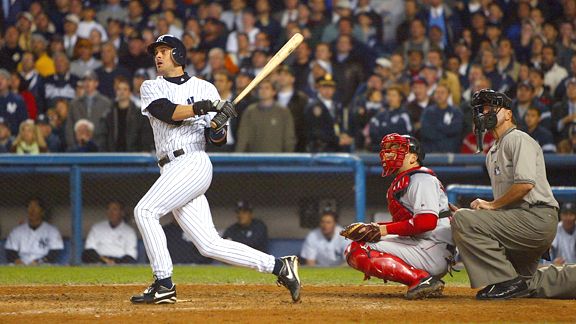
Image result for photo of aaron boone home run

NYY GM Brian Cashman has placed his own career on the line by investing in Aaron Boone, a great communicator and baseball lifer as his new manager.  Boone has the DNA and/or pedigree to accomplish the task, but will be be successful?  Things he might consider:

(1) Maintain Tony Pena as the experienced bench coach that is needed who can also continue the development of the “Sanchize.”  Or perhaps return him to a first coaching position and bring in an experienced pro like Eric Wedge.

(2) Allow Larry Rothstein full control of the pitching staff.  He has done a wonderful job since 2011 and I am certain with the relationships he has established he will continue to be successful.

(3) Carlos Beltran would make a strong hitting coach and it would bring him under the NYY fold for the future, particularly if Boone falters down the road.

(4) Hopefully the fact he does not speak Japanese will not hinder him with the quest to sign Ohtani.  I wonder does Boone hable espanol?  It would certainly help.

(5) I would try and sign Chris Woodward as the third base coach.  I realize that would create a staff of most of the people who interviewed for the managerial position, but they all bring different strengths to their perspective positions and could facilitate Boone’s growth.

All of this may become academic if the NYY do not start off fast next March, but they have too much talent not to.  If they add a returning C C Sabathia or an Alex Cobb, along with Shohei Ohtani things will take care of themselves.  Boone is not that far removed from the game since his switch to an analyst position with ESPN – his combnation of a strong baseball IQ and communication skills exhibited will stand him in good stead.  All the best of luck – but remember the division over the Boston Red Sox, at least a wild card, and possibly a World Series appearance will be the measure of success.  Bring on Gleyber Torres, Chance Adams, Justin Sheffield and the next wave of talent and see what it brings.  The bottom line is that the 2018 NYY baseball season will be one to watch carefully.

Boone celebrates game winning home run : News Photo

MY LAI: VIETNAM, 1968, AND THE DESCENT INTO DARKNESS by Howard Jones

Image result for photos of william calley

From the outset of his new book MY LAI: VIETNAM, 1968 AND THE DESCENT INTO DARKNESS notable historian Howard Jones argues that the massacre that took place on March 16, 1968 killing 504 Vietnamese villagers “laid bare the war, revealing that it was unwinnable and that, in the process of fighting for democracy and a way of life; America had lost its moral compass.”  .  When it comes to examining American opinion on My Lai one finds that it is split.  On the one hand, during his four month trial Lt. William Calley argued that he was innocent and that he was just following orders.  However, at the time Americans were polarized and the massacre fed opposition to the war, which addition to the Tet Offensive, the invasion of Cambodia, and the Kent State shootings helped unite Americans against the carnage in Southeast Asia and for many it had turned our young men into “baby killers.”  On the other hand, many saw Calley as a scapegoat for a war gone wrong, with a flawed military approach that hindered the prosecution of the war correctly.  Calley’s conviction would harden support for the war and no matter what one’s point of view is the fissures in American society were exacerbated by events at My Lai.

Jones is to be commended for attempting to produce the most balanced and accurate account of the massacre and its aftermath as possible.  He employs all the tools of a good historian by exploring all documentation available, secondary sources on the topic, interviews, and film to present a fair representation as to what happened.  As historians we are aware that total objectivity in reporting and analyzing historical events is almost an impossible task, but Jones comes very close in achieving his goal.  What sets Jones’ effort apart is the availability of Vietnamese accounts which are skillfully integrated into the narrative that were not available for authors who have previously engaged this topic.

Image result for photos of william calley

(Warrant Officer Hugh Thompson, President Richard Nixon, Lt. William Calley)

Jones does an excellent job in setting the scene of the area known as “Pinksville” where the My Lai villages were located.  It is clear that events leading up to March 16th were fraught with booby traps, land mines, snipers, and other obstacles that resulted in the death of many soldiers.  Jones captures the mindset of men who were ordered to take part in the sweep that targeted the 48th Viet Cong Battalion that dominated the area.  Men were told that Vietnamese civilians would be absent in large part as they usually walked to the market in Quang Nai City, and that the Vietcong force would be double the size of the American units.  The instructions given to American troops by Captain Ernest Medina, Lt. Calley, and other higher ups was poorly conceived and left a number of gaps for troops to deal with.  Jones stresses the relationship between Medina and Calley as a major issue as Medina held a very low opinion of his Platoon commander and often humiliated him in front of the troops.  Jones further stresses the weak intelligence that was provided and orders that zeroed in on a “search and destroy” mission that applied to anything that could possibly be used by the Viet Cong (anything, including civilians who supported the VC).

Image result for photo of ernest medina

(Capt. Ernest Medina)

Jones describes what feels like a minute by minute account of the slaughter that took place.  The actions of certain soldiers receives greater attention as they were actively involved in the killings.  Jones has mined trial transcripts, Army reports, and interviews and with a historians eye for detail and lays out that happened on March 16, 1968 in a cogent fashion.  He explores the command structure, personalities involved, as well village life for Vietnamese peasants.  Captain Medina is center stage whose orders were to kill any Vietnamese present, because if they were in the villages they must be Viet Cong.  For Medina “search and destroy” meant burning the villages and killing its inhabitants.  Since the troops were told no civilians would be present, for the soldiers once the killing started it could not be controlled.  For Platoon One under Calley another component was his need to prove himself to Medina.  For Calley the way to impress Medina was the body count.  Taken with racism and fear infused in the men, and Calley’s psychological needs it was a disaster waiting to happen.

At times the reader will become sickened by what Jones describes.  Wanton murder, gang rapes, sadism are all present as Jones relates the actions of deprived men like SP4 Gary Roschevitz, PFC Robert T’Souva, PFC Paul Meadlo and numerous others, a list that is too long to reproduce.  Calley as the officer in charge saw himself as judge, jury, and executioner.  Eventually a number of men refused to continue to take part or refused from the outset.  Men became concerned as Stars and Stripes reporter Jay Robert and photographer Ronald Haberle were present and creating a record of events.

Image result for photo of ernest medina

(Helicopter gunner Lawrence Colburn)

One of the most important characters that Jones introduces is Warrant Officer Hugh Thompson, a helicopter pilot who flew over the battlefield, landed and confronted the perpetrators, and even got into an argument with another officer that almost turned violent.  Once the massacre ended Thompson would report what he witnessed which takes the reader into the second part of the book entitled “Aftermath and Cover up” which is exactly what took place.  Jones does a good job following the trail of “investigations,” written reports, denials, and collusion that was designed to cover up the actions taken by those in charge.  Men like Colonel Frank Barker, Colonel Oran Henderson, and their commander Major General Samuel Koster are seen pursuing an investigation with blinders on.  First, trying to discredit Thompson; Second, obfuscating and fabricating as much as possible in the hopes that the evidence would not produce war crimes; lastly, arguing that 128 Viet Cong were killed, however it could never explain why only 3 weapons were captured, which made no sense and reflected their disparate reasoning.   Jones pinpoints the strategy used to white wash events and zeroes in on the lack of accountability taken by those in command from General William Westmoreland on down.

Perhaps the most important person in pursuing the truth was helicopter gunner Ronald Ridenhour who came in contact with PFC Charles “Butch” Gruver who was present at My Lai in April, 1968.  Gruver told Ridenhour what had happened which conformed to what he saw on the ground during a fly over of the region.  Ridenhour would continue to run into men who were at My Lai, but fearing retribution would wait a year before sending out a five page description of what really occurred to military, administrative, and congressional leaders.  This would finally lead to a series of contacts within the government, one of which was the Inspector General’s Office.  Colonel William Wilson was charged with investigating Ridenhour’s allegations.  Jones follows Wilson’s journey across the United States and as he interviewed a number of former soldiers who had been present on March 16, 1968.  Based on his information General Westmoreland directed Chief Warrant Officer Andre Feher of the Army’s Criminal Investigation Division to conduct an inquiry as to what happened in My Lai.  Jones reproduces important aspects of his conversations with Calley, Thompson, Meadlo and others as well as the Army’s attempt to keep the charges against Calley out of the media.

My_Lai_massacre.jpg

Throughout the narrative Jones’ presentation is impeccable and it continues as he presents and analyzes the results of the Peers Commission which found that American troops had massacred between 175 and more than 400 Vietnamese civilians.  The commission blamed Major-General Samuel Koster for suppressing information, falsely testifying, and initiating a conspiracy to withhold facts.  Further, it found evidence that Medina and Calley were guilty of war crimes.

The role of the Nixon administration fits the pattern of illegal actions they were engaged in at the time.  Nixon personally became involved as he tried to discredit witnesses to the massacre and believed that Calley was “getting a bum rap.”  Nixon set up “Task-Force My Lai” under H.R. Haldeman to undermine negative press reports.  Nixon’s strategy was to reduce opposition to the war as My Lai was causing the opposite.  He would pressure Senator Mendel Rivers, who headed the Senate Arms Services Committee investigation to discredit witnesses, and the Sub-Committee headed by Senator F. Edward Herbert which zeroed in on Thompson and Colburn.

Jones follows the legal trail that led to a series of trials, though fewer than recommended.  Since many witnesses were unavailable or refused to cooperate, in addition to the defense argument that you could not convict someone for obeying an illegal order held sway making it very difficult to obtain convictions.  The result was that the Army dropped the charges against numerous individuals.  The trials that receive the most attention are those of Calley, Henderson, and Medina.  Jones has carefully examined the trial transcripts and reconstructed the courtroom scenes of each, in addition to the public and military reactions to the verdicts.  In Calley’s case many saw him as a scapegoat for a war no one wanted to fight.  For President Nixon, the verdict was superfluous as he decided to “commute” the sentence before it was even imposed.

Much of what Jones has written reads like a “Grisham” type novel as rape, murder, deceit are all on full display inside and outside the courtroom.  My Lai was the worst massacre in American military history and it deeply affected American politics and society for the years that followed.  One must ask the question was My Lai an aberration or one of many atrocities American troops engaged in.  The answer based on available evidence is no, as there are numerous examples of this type of behavior, but were not on the level of My Lai because of the numbers involved – over 500 dead, a result of the actions of at least 40 American soldiers.  Jones brings his study to a conclusion by talking about the lives of many soldiers including Hugh Thompson, Lawrence Colburn, and many others and how it affected their lives following military service.  The conclusion that can be drawn is we still do not know why allows why people that appear to be normal commit such acts of horror.  Jones has written the penultimate book on My Lai and its historical implications and it should be read by all considering a military career and those civilians who are in charge of the military and are involved in the conduct of foreign policy.

Image result for photos of william calley

PLAYING WITH FIRE: THE 1968 ELECTION AND THE TRANSFORMATION OF AMERICAN POLITICS by Lawrence O’Donnell

Image result for photos of 1968 democratic convention

(The 1968 Democratic Convention demonstration on the streets of Chicago)

The publication of MSNBC host Lawrence O’Donnell’s new book, PLAYING WITH FIRE: THE 1968 ELECTION AND THE TRANSFORMATION OF AMERICAN POLITICS comes at a propitious moment in American political history.  According to O’Donnell 1968 is the watershed year that set our current politics in motion – a partisan conflict were by ideology and party affiliation has become more important than the needs of the American people.  O’Donnell argues that before 1968 the terms conservative democrat and liberal republican existed, today they are pretty much extinct.  By examining 1968 we can discern the origin of this political schism and conjecture on how it affects the United States domestically and in the realm of foreign policy.  The comparison between our current politics and 1968 is fascinating as Donald Trump seems to have adopted the populist message of Alabama governor George C. Wallace, be it state’s rights or white nationalism, and Bernie Sanders can be compared with Minnesota Senator Eugene McCarthy and his liberal socialist agenda.  We must also mention the emergence of Roger Ailes and the role of Fox news in molding a certain part of the electorate, because in 1968 Ailes joined the Nixon campaign, which over decades led to the creation of his successful news outlet and helped formulate the term “fake news.”


The election of 1968 was about life and death as the war in Vietnam controlled people’s lives.  A person’s draft status dominated their waking hours be it soon to be high school graduates, college students, and recent college graduates.  The United States found itself in this situation due to the machinations of the Johnson administration in late July and early August, 1964 that resulted in the Gulf of Tonkin Resolution which provided Lyndon Johnson with almost imperial powers to conduct a war.  According to Attorney General Nicholas Katzenbach appearing before Senator J. William Fulbright’s Senate Foreign Relations Committee the Gulf of Tonkin Resolution authorized the president to use “the armed forces of the United States in any way that was necessary,” and argued further that the constitution did not require the Senate to play a role in foreign policy.  Johnson would take the Gulf of Tonkin Resolution as almost carte blanche in getting the United States into a quagmire in Vietnam.  Keeping with the theme of comparing the past to the present, the Patriot Act passed by Congress and signed into law on October 26, 2001 in response to 9/11 has been used in a similar fashion by three presidents; Bush, Obama, and Trump to conduct war on their own terms in the Middle East, and currently it appears, in Africa.

Image result for photo of LBJ agonizing over Vietnam

(President Lyndon Johnson agonizing over Vietnam)

For O’Donnell the key figure in 1968 is Senator Robert Kennedy who appeared as a political “rock star.”  People believed that he would never send America’s youth to fight in Vietnam a subject he rarely spoke about in his speeches.  People related to Kennedy because they recognized the pain he was in and believed his empathy for the electorate was real.  Many believed that it was only justice for Robert Kennedy to reclaim the presidency that was lost in Dallas when his brother was assassinated in November, 1963.  The 1960s was an era of change, and no one’s view of the world changed more than Robert Kennedy.  By 1968 the Senate began questioning Johnson’s “monarchial” approach to Vietnam and this would help foster the political upheaval we are still dealing with today.

O’Donnell does a wonderful job replaying the events leading up to 1968 and what took place that incredible year.  My main problem with O’Donnell’s approach is that it mostly based on his own experience and writing and a slew of secondary sources and in some cases not even the best ones.  A case in point is the Johnson-Kennedy rivalry and contempt for each other.  The best study of rivalry is Jeff Shesol’s MUTUAL CONTEMPT: LYNDON JOHNSON, ROBERT KENNEDY, AND THE AND A FEUD THAT DEFINED A DECADE an in depth nuanced look that O’Donnell might have consulted.  There are many other examples including his over-reliance on Evan Thomas’ biography of Kennedy, which reinforces my belief that O’Donnell needs to broaden his research, with the integration of more primary materials that would further his arguments as a significant part of the book reads like Theodore White’s THE MAKING OF THE PRESIDENT 1968.

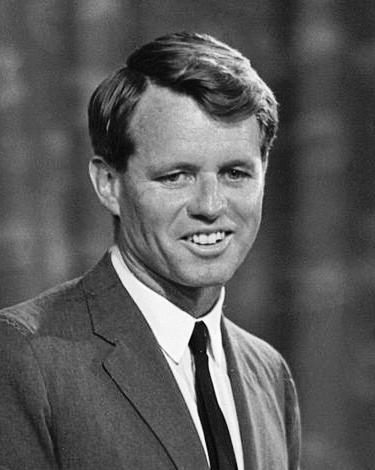
Image result for pictures of robert kennedy

(New York Senator Robert F. Kennedy)

To O’Donnell’s credit there are many fine chapters and insights interspersed throughout the narrative.  By delving into the different factions on the left and the right the reader is exposed to the ideological struggle that existed in both the Democratic and Republican parties.  The introduction of Allard Lowenstein, the role of Gene McCarthy’s candidacy, in addition to the rise of the radical left, we can see the beginning of the splintering of the Democratic Party.  The chapters dealing with the Kennedy-McCarthy competition for the Democratic nomination is well played out as is the candidacy of Hubert Humphrey after Robert Kennedy is assassinated.  Republicans also experienced many fissures in their quest for the presidency.  The discussion involving the reinvention of Richard Nixon, the liberal quest of Nelson Rockefeller, and the rise of Ronald Reagan on the right within the Republican Party are all artfully explained and we see the end result, and the type of campaign the “new Nixon” ran.

Image result for photo of eugene mccarthy

Among O’Donnell’s most important points include the machinations within both major political parties, the role of the Tet Offensive in Johnson’s withdrawal from the race, Kennedy’s candidacy, and the politics of fear employed by George Wallace.  Perhaps O’Donnell’s most interesting comments encompass the rise of Ronald Reagan as a conservative spokesperson for General Electric allowing him to develop into a viable political candidate.  O’Donnell’s is right on when he argues that Reagan was GE’s tool in educating workers, and indirectly the public in the evils of unions, government interference in the economy, and the benefits of giving freer rein to corporate America embodied in General Electric.

In addition, O’Donnell is correct in pointing out that the militarization of America’s police forces that we experience today began in 1968 following the assassination of Dr. Martin Luther King.  King’s death led to burning and rioting in 30 US cities that called for 18 Army Brigades, consisting of 50,000 troops to restore civilian control.  The result was 20,000 arrests and 39 dead.  Another example of how the past formed the present is the concept of “premeditated confrontation” that ABC introduced as a way to save money on their coverage of the Republican convention.  By pitting the well-known conservative intellectual William F. Buckley against Gore Vidal, novelist and liberal commentator the expected explosions took place.  When we watch PBS, the networks, and cable television today, we can easily discern where these types of panels originated.

Image result for photos of 1968 democratic convention

(Mayor Richard Daley of Chicago yelling anti-semetic comments toward  Senator Abraham Ribicoff at the Democratic Convention)

O’Donnell forces the reader to relive or learn for the first time the impact of the assassination of Robert Kennedy and to contemplate a counter factual approach to history by conjecturing what America might have experienced had he been elected to the presidency.  Vietnam, civil rights, and numerous other issues would probably have played out much differently than it did under the Nixon administration, an administration that came to power based on the treason Nixon committed by interfering with the Paris Peace talks at the end of October, 1968 thereby contributing to the ongoing war in Vietnam and perhaps lost the opportunity for peace that led to the death of over 20,000 more Americans.

Image result for photo of richard nixon

(President Richard Nixon)

What is clear from O’Donnell’s narrative is that Donald Trump copied the 1968 Richard Nixon playbook in his presidential run.  First, the slogan “America First” began with Nixon as did the concept of the “silent majority” that Trump also followed.  Second, Nixon’s approach was one of anti-tax, anti-government, anti-abortion, pro-law-and-order, just as was Trump’s.  It is also clear that 1968 was a dividing line in the evolution of partisan politics and a realignment of the American electorate, it is just a question of how long the American people will suffer because of these changes.  For O’Donnell, Eugene McCarthy is his hero because he was the first one to take the risk and try and end the war.  Bobby Kennedy, is also his hero, but he was not the first to challenge an incumbent president as McCarthy had.  In conclusion, I would recommend that O’Donnell include more of his comments that have been on display recently on various programs on MSNBC, because they strengthen his overall narrative argument.

Image result for photos of 1968 democratic convention

(The 1968 Democratic Convention demonstrations on the streets of Chicago)

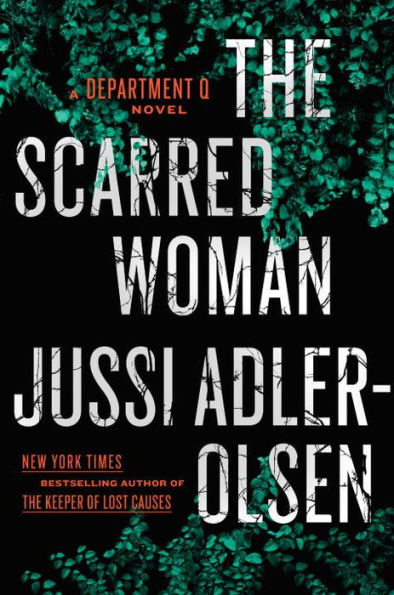
THE SCARRED WOMAN by Jussi Adler-Olsen

Image result for photo of copenhagen denmark

(Copenhagen, Denmark)

Anne-Line Svendsen is a very unhappy individual who is entering the mid-life doldrums.  She is employed in the Danish Social Security office and has developed a tremendous hostility for the clients she deals with on a daily basis.  She does not have any empathy for the people she is supposed to help, in particular a woman named Denise Zimmermann whose grandfather had been a member of the Nazi SS during World War II, a mother who is totally without any redeeming qualities, and an abusive grandmother.  At the outset of Jussi Adler-Olsen’s seventh installment of his Department Q of the Danish Police Department series, THE SCARRED WOMAN, Anne-Line begins to contemplate what it would be like to murder some of those who are taking advantage of the Danish social safety net.   As the plot develops Adler-Olsen’s usual panoply of characters appears; Detective Carl Morck of Copenhagen’s cold cases division; his side kick, Assad, a refugee from Syria who is slowly becoming a competent detective; Gordon Taylor another assistant, and Rose Knudsen, Morck’s administrative assistant, who after an earlier breakdown is still struggling to deal with the reemergence of her past.

What makes Adler-Olsen’s latest effort so inviting is that the complex web that he creates making it is very difficult to figure out a series of murders over different time periods.  There are a number of candidates aside from Svendsen and a plethora of scenarios are presented to confuse the reader further.  Along with the mental exercise that is presented, there is a great deal of comic relief.  Every chapter or two there is a scene involving Assad who’s English and/or Danish leaves a lot to be desired.  Morck continuously corrects him leading to much laughter.  Morck’s feud with the Head of Homicide, Lars Bjorn begun in previous books is continued, as is the dysfunction of his command, and the lack of competence among certain detectives.  In addition, a number of characters seem to reemerge, the most important of which are retired homicide detective Marcus Jacobsen, Morck’s old boss, and Tomas Laursen, an investigative technician.

Image result for photo of police headquarters, Copenhagen, Denmark

(Copenhagen policemen at a crime scene)

Adler-Olsen does a wonderful job developing a number of plot threads that converge at times.  First, there is Anneli Svendsen who is determined to be rid of women who are soaking the Danish social welfare system.  Second, is Denise Zimmermann who supports herself through a number of sugar daddies and finally resorts to robbery with Jasmine Jorgensen, another woman approaching thirty who is concerned that she can no longer rely on her body as her chief means of support as she continued to get pregnant in order to collect more money from social services.  Third, is Morck’s valiant attempts along with other members of Section Q to solve the murder of Denise’s grandmother Rigmor, and a cold case that is twelve years old that appears similar.  Fourth, and most distressing for Section Q is the condition of Rose.  She has a checkered past of psychiatric care, a father who mentally abused her and her three sisters.  Rose’s diaries are discovered and they are a cry for help as she recommits herself to a psychiatric hospital.  For Morck and company this is all a revelation and their relationship with Rose takes on new meaning after being kept in the dark concerning her mental condition for a number of years.

As the story evolves Morck’s priorities become confused.  He has the twelve year old murder, a three week old murder, Rose’s condition, and a number of breaking issues, and he is torn as to what he should concentrate on.  Adler-Olsen plays on his dilemma, but also creates a plot that in some way links all of these disparate elements by the end of the book.

In THE SCARRED WOMAN Adler-Olsen displays a great deal of empathy and personal emotion that is much stronger that previous Section Q tales.  We see a more mature Assad, and a Carl Morck who seems to review previous relationships and faces up to a number of personal mistakes.  If you have read previous renditions of Section Q, or about to try Adler-Olsen’s craft for the first time you will not be disappointed.  Adler-Olsen is a master story teller and his latest is difficult to put down until the last sentence.

GRANT by Ron Chernow

Image result for photo of U.S. Grant

Recently Ron Chernow was asked on the CBS morning news program if his new biography, GRANT could become a Broadway musical as his previous book HAMILTON had.  His response was clearly no, but he left open the possibility of a movie.  Whatever the case, Chernow has written the most comprehensive biography of the man credited with changing the course of, and winning the Civil War, then went on to support Lincoln’s reconstruction program, and assumed the presidency.  The book is quite long, to the point that Chernow dedicated the book to his readers, as he stated in a New York Times interview he himself would have difficulty dealing with the length of his own books.  As far as a film is concerned it is easy to contemplate such a complex life story that experienced numerous successes and failures.  Before the Civil War his private life was riddled with failed businesses and depression.  He had to deal with a father-in-law who thought very little of him, and a father who was rather intrusive.  Troubled by alcoholism he would lead the North to victory over the Confederacy, was a proponent of civil rights for freed slaves, and guided the United States through the perilous years following the Civil War.

Every high school student is taught that there was a great deal of corruption linked to the Grant administration, but in truth noting ever involved him on a personal level.  The historiography dealing with Grant’s life and career beginning with William A. Dunning at the turn of the twentieth century has been rather negative, but Chernow’s effort has continued the new strain of thought reflected in recent biographies by Ronald C. White and Jean Edward Smith who argue that Grant was a great military leader and a better president than he has been given credit for.

Image result for photo of U.S. Grant

Chernow’s portrait of GRANT is all consuming beginning with a boyhood that witnesses a grandstanding father and a stubbornly private son.  Along with his over-bearing father, Grant had to cope with a painfully retiring mother resulting in a young man who kept a world of buried feelings locked inside, a trait he would carry his entire life.  Chernow follows his subject through his formative years and West Point until his marriage to Julia Dent, a southern woman who lived on a plantation.  Since the Grants were rabid abolitionists it created tremendous pressure on the young couple, particularly Ulysses who could never measure up in terms of wealth to his father-in-law.

Chernow is a wonderful writer of narrative history, but he also centers on the motivations and consequences of people’s actions.  Employing his analytical skills to Grant’s intellectual development in dealing with American expansion during and following the Mexican War, and the problem of Texas we witness a man who realizes early on that the war incited by President James K. Polk could only exacerbate domestic tension by adding territories that the south would try and turn into slave states.  Grant’s pre-presidential views are in a constant state of evolution; whether dealing with military strategy during the Civil War, his dealings with Union generals such as George McClellan, William T. Sherman, Philip Sheridan, and Henry Halleck; how to deal with the problem of “contraband” slaves and whether they should be employed by Union armies against the south; what approach to take against Robert E. Lee; and his developing relationship with Abraham Lincoln.

Image result for picture of julia dent grant

Chernow’s Grant has a facile mind who was able to control his emotions and weigh his decisions.  Grant realized that his reputation was one that stressed his problem with alcohol and the fact that casualties under his command were very high.  Chernow spends a great deal of time dealing with the alcohol issue and concludes that Grant was the type of drunk who could control when to start and stop drinking.  The evidence presented reflects the belief that Grant never drank during periods involving the preparation of and actual combat.  The stress of battle needed an outlet, and when Julia was not around or his Chief of Staff John Rawlins was not present to manage him, Grant did resort to alcohol.  As far as casualties were concerned, Grant unlike McClellan and George C. Meade did not pursue an offensive approach to war.   Once Grant experienced success in the western theater, particularly at Vicksburg, his relationship with Lincoln was solidified as the president finally found a general who wanted to destroy the Confederate army, and not just concentrate on acquiring territory.  Another major point that Chernow develops is that historians tend to concentrate on the Army of the Potomac and events in the east, with Grant’s life story the west comes into focus particularly its strategic value during the Civil War.

Image result for photo of lincoln at gettysburg

(Lincoln’s Gettysburg Address)

Grant’s relationship with Lincoln was the key to victory.  The strength of their bond can be seen with all the “presidential talk” surrounding Grant as the war wound down as he assured Lincoln he had no presidential aspirations.  In dealing with the social issues that emerged with the Emancipation Proclamation we witness the further evolution of Grant’s thinking as he proposed what would come to be known as the Freedman’s Bureau to take care of freed slaves.  Lincoln’s assassination hit Grant very hard, as he lost his partner in trying to bring the south back into the union without the former Confederates loosing total face.  Once Lincoln was gone, Grant as General in Chief had to deal with Andrew Johnson, an avowed racist who went to war with radical Republicans in Congress.  By wars end the “erstwhile goods clerk” from Galena, Illinois was in command of over one million men which could compete with any army in the world.  For Grant that army would be reduced appreciatively, but was to be used to control southern rejectionists who committed numerous atrocities against freed blacks, and wanted to reinstitute the status quo ante bellum.

Image result for photos of william tecumseh sherman

(General William T. Sherman)

Chernow provides a historically accurate portrayal of the Reconstruction period.  Beginning with the presidency of Andrew Johnson the author dwells on the former Tennessee governor’s blatant racism and goal of restoring Confederate ideals as soon as possible.  Grant, then General in Chief and temporary Secretary of War with Johnson’s suspension of Edwin M. Stanton challenged the new president on issues ranging from the Freedman’s Bureau, constitutional amendments, racist inspired riots and murder in Memphis and New Orleans, and the impeachment process.  It is clear from Chernow’s analysis that Grant became the foremost protector of persecuted blacks in the south as his disgust with Johnson continually increased.  With this process his world view moved closer to Radical Republicans.  Grant believed that Johnson “had subverted the will of Congress in a way that bordered on treason.”(589)  Grant grew very uncomfortable as he found himself in the middle between Johnson and the Radical Republicans over the interpretation of the Tenure of Office Act.  For Grant military rule in the south should be terminated as soon as possible, but also believed that withdrawal should take place without sacrificing the welfare of blacks.

Image result for photo of general philip sheridan

(General Philip Sheridan)

It came as no surprise that Grant was easily elected to the presidency, a job he never really sought, but once in office seemed to enjoy.  The problem was that Grant tended to view rich businessmen through rose colored glasses leading to weak and corrupt appointees.  Grant, who during the war had a knack for choosing superb talent proved to have lost that skill as president.  Men like Jay Gould and John Fiske tried to corner the gold market; Orville Babcock spied for whisky distillers within the administration along with General John McDonald, the Supervisor for Internal Revenue in Arkansas and Missouri; Secretary of War William M. Belknap made money selling trading posts that provided goods to Native-Americans; and of course the Credit Mobilier – all personified the looser morals of the Gilded Age which greatly detracted from his presidency.  Grant was a victim of the disease of patronage as he repeatedly handed out positions to family and friends.  Many of his problems resulted from the lack of a true civil service system.

In his defense, Chernow argues that Grant was the first president to oversee a continental economy which led to the rise of big business, particularly the expansion of railroads that required government assistance providing fresh opportunities for graft.  “With the federal government bound up in new moneymaking activities, there arose a gigantic grab for filthy lucre that affected statehouses as well and saturated the political system with corruption.”(645)  Grant had to cope with a strong Congress whose powers had been amplified as the death of Lincoln and the actions of Johnson greatly reduced the power of the Executive branch.  Overall, Grant’s problem was that after the Civil War the Republican Party evolved from a party of abolitionism to a more business oriented one.

Image result for photo of general john rawlins civil war

(General John A. Rawlins)

Chernow stresses the role of John Rawlins in helping Grant become the hero of the Civil War, but with his death a vacuum was created that no one could fill.  Without Rawlins to help Grant control his drinking problems, act as a sounding board for decisions, and choosing the proper person for a position, it became easier for people to take advantage of Grant.  The result was once Rawlins died, Grant’s presidency became a victim of “crafty, cynical politicians for whom the credulous Grant was no match.”  Later in life Grant would admit his character flaws and blamed himself for choosing and working with individuals that helped contribute to the negative view of his presidency.

Despite the corruption that hovered around the Grant presidency there are areas to admire.  During his administration Grant faced a clandestine Civil War in the south.  Remnants of the Confederacy morphed into the Klu Klux Klan and other racist groups that reigned murder and violence against blacks or any whites who supported them.  Grant used the newly created Department of Justice and the military to prosecute offenders and safeguard possible victims.  Though he could not totally eradicate the violence and hatred by 1872 he had destroyed the Klan in the south.  However, by his second administration acts of violence against blacks in Louisiana, South Carolina, and Mississippi increased culminating in the Colfax massacre and others.  When Grant sought to use federal troops to protect black voting rights he ran into northern opposition that had grown tired of Reconstruction.

Another area that Grant should be commended for was the negotiations resulting in the Treaty of Washington that settled the “Alabama claims” issue with the British dating back to the Civil War.   As a result Anglo-American cooperation would replace years of controversy and ill-feelings.  Further, it allowed for the influx of British capital which greatly enhanced American industrial development.

Image result for photo of U S Grant in old age

(Grant working on his memoirs right before he died)

It is interesting to note the current manipulation of the “Civil War Monuments Issue” by politicians in light of Chernow’s analysis.  The author explains Grant’s resentments against those who argued that he was only successful because of superior resources and men as opposed to the strategy he employed in defeating Lee’s army.  Further, it vexed him that after the Civil War “the North denigrated its generals while southern generals were idealized.”  Grant remarked that Southern generals were [seen as] models of chivalry and valor—our generals were venal, incompetent and course…Everything our opponents did was perfect.  Lee was a demigod, Jackson was a demigod, while our generals were brutal butchers.” (516)  Grant is probably turning over in his grave today as statues of the treasonous Lee are used as a vehicle to exploit the feelings of many individuals who still refuse to honor the 13th,14th,  and 15th  amendments to the Constitution.

Chernow’s work is masterful, well written, and the epitome of how history should be presented.  Chernow does not miss a beat; from Grant’s military career, family life, battle to overcome alcoholism, to the trust in mankind that led to so many financial losses.  If you have the time, GRANT is a major commitment, but if you choose to accept the challenge of engaging a book that weighs between two and three pounds you will not be disappointed.

Image result for photo of U.S. Grant

THE PRAGUE SONATA by Bradford Morrow

Image result for historic photos of prague

(Prague, Czech Republic)

At the end of World War I Jaromir Laska is killed on the battlefield leaving an orphaned daughter with his most prized possession, an old music manuscript.  The daughter, Otylie was packed off to live with an aunt in Prague where she remained until 1939 when the Nazis seized control of her country.  So begins Bradford Morrow’s brilliant new novel, THE PRAGUE SONATA where the music manuscript became the centerpiece of Otylie’s memory of her father.  Its origin and composer would become an obsession for Otylie and her husband Jakub who owned a small shop that was a mishmash of Jewish and Czech culture.  Otylie feared that the manuscript/sonata would be lost to the Nazis, and to save it she would disperse it in three parts; one to herself, one to her husband Jakub, and the final piece to their friend Irena Dorfman. The story line will begin at what appears to be an academic search, but it evolves into a mystery that will grip anyone with a sense of hope.

Morrow presents a remarkable story within a larger narrative.  The key character is Meta Taverner, a musicologist who lives in New York who years later comes into contact with Irena Dorfman.  Meta was quickly taken by Dorfman who was ninety years old when they met.  Dorfman tells Meta the story of the missing sonata pieces and gains a promise from Meta that she will try to track down the pieces and reunite them.  Meta’s search and life form the core of the novel, but the characters past and present are also of extreme importance.  For Meta the sonata is an authentic 18th century work, hauntingly beautiful, and the work of a master composer, but the question is which composer.

Image result for historic photos of prague

(The north-western, Old Town side of Na Příkopě Street)

Morrow exposes the reader to a panorama of Czech history; from the end of World War I, the Nazi occupation, the Allied liberation, the arrival of the Soviet Union and its repression, to the Velvet Revolution of 1989, and finally freedom.  Each character is placed in the proper course of events and their reactions become part of the accurate historical flow of the novel.  Morrow has an excellent grasp of history and the scenes he creates conform nicely to the historical record, except for one minor error in dealing with the assassination of Reinhard Heydrich.

The most important characters include Jakub Batos, Otylie’s husband who joins the Czech resistance against the Nazis; Daniel Hajek who would make Otylie’s life whole again, Paul Mandelbaum, Meta’s mentor at Columbia University; a pair of Czech musicologists, Professors Petr Wittmann and Karel Kohut who appear to have their own agendas that are ego driven; Tomas Lang whose sister Johana had part of the sonata in her possession; Johana herself who seemed to despise everyone; Gerrit Mills, a newspaper stringer who develops a personal interest into Meta’s work and person; and a number of others.  All characters are well developed and have their own specific identities and needs, particularly Meta who appears to be going through a severe identity crisis at the time that Irena Dorfman provides the story of the manuscript.  For Meta, who was training to be a concert pianist before an accident severely injured her right hand, Irena’s request provides her with an opportunity to provide meaning to her new career as a musicologist, as well as solving a very important question that deals with music, and the legacy of a family that was broken apart by war.

Image result for historic photos of prague

(End of Charles Bridge leading to Old Town Prague)

Morrow follows Meta’s quest in detail and integrates a great deal of Czech, and in general European music history and their composers, throughout the novel.  Further, Morrow takes the reader on a wonderful tour of Prague featuring local flavor, neighborhoods, and succeeds very nicely in examining human memory, music, and need.   If you are familiar with Lauren Belfer’s AND AFTER THE FIRE: A NOVEL Morrow’s work will be just as satisfying, but on another level it is more of a humanely epic tale.

Image result for historic photos of prague

(Prague, Czech Republic)