ONCE IN A GREAT CITY: A DETROIT STORY by David Maraniss

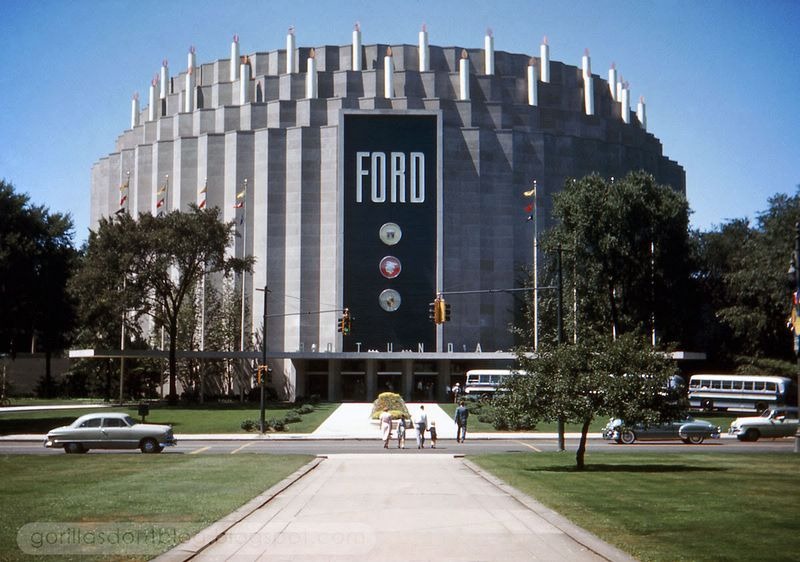
Image result for photos of Ford rotunda

(Ford Rotunda, Dearborn, MI)

David Maraniss’ ONCE IN A GREAT CITY: A DETROIT STORY is almost a love story or at the very least an ode to a city that has slowly fallen from the heights it had reached in the 1950s.  Maraniss focuses on the 1962-1964 period when the city was about to confront white flight to suburbia, the loss of manufacturing jobs, and the ever present issue of racism.  Maraniss who is an excellent writer whose works include sports biographies of Vince Lombardi and Roberto Clemente, the foremost study of Bill Clinton’s pre-presidential years, a wonderful book on Vietnam and the anti-war movement among a number of others.  Maraniss takes on the city of his birth, an urban colossus held together by the automobile industry and manufacturing after World War II that is in the midst of a severe decline.  The decaying city is like a boxer who has been knocked down and is trying desperately to get off the canvas.  In 1962 a reform mayor, Jerome Cavanaugh comes to office and launches a courageous campaign to root out racism in the city’s police force.  Others including Walter Reuther, the powerful head of the United Automobile Workers Union, who saw segregation through the lens of the Cold War and a threat to increasing progressive unionism worldwide is examined.  Reuther was a man of action who tried to create programs and investment to rekindle Detroit’s glory.  It was an uphill fight, and a timely story as today, Detroit, now much smaller and with a more varied economic approach is still trying to rise from the ashes.

Image result for photo of berry gordy, jr.

(the founder of Motown Records, Berry Gordy, Jr.)

Maraniss begins in a symbolic fashion as he describes two events that took place on November 9, 1962.  First, the fire that destroyed most of the Ford Rotunda one of the city’s most important symbols – America’s love affair with the automobile, never to be rebuilt.   Secondly, the police and federal agents raid of the Gotham Hotel, the center of black culture for many years, to break up a significant gambling racquet, and as a result the hotel was demolished in the name of urban renewal, or as others remarked “negro removal!”

Image result for pictures of walter reuther

The book conveys a number of interesting biographical sketches of important individuals of the period.  Maraniss ranges from the automobile industry concentrating on Ford, and the music industry zeroing in on Motown and the empire Berry Gordy, Jr. built providing the reader the feel of the mid-1960s.  The reader is also exposed to the grimy side of Detroit as Police Commissioner George Edwards goes after the mob and its gambling ties to the city.  His investigation, along with the FBI establishes links to National Football League players and the Giacalone mob family that involves Detroit Lions defensive tackle Alex Karras who will be suspended from playing, and eventually through a sting he arrests Tony Giacalone.   Mayor Jerome Cavanagh, a JFK liberal and his quest to bring the summer Olympic Games to Detroit in 1968 is discussed in detail as he tries to implement his progressive agenda.

Image result for photo of Henry Ford II

(Henry Ford II)

Maraniss used the rise of Martha Reeves and the Vandellas as a template to explain why Detroit was at the perfect storm to develop the Motown sound.  From the availability of pianos to middle class black families, the migration from the south of gospel and blues as people came in search of jobs during World War II, the reach of Grinnell’s, the music store that made affordable instruments available, the luck and proximity of random talents like Aretha Franklin, Diana Ross and Smokey Robinson living so close to each other during childhood, and the music education provided by Detroit public school teachers.  The role of the Reverend Clarence La Vaugh Franklin is analyzed as he moved from being a theatrical circuit preacher around the country to that of a civil rights leader in Detroit as he organizes a civil rights march, “the Walk to Freedom” in Detroit supported by Reuther and the UAW among others. The march was highlighted by an address by Martin Luther King, and it was at this Detroit rally that he laid the basis for his “I had a Dream Speech” given later that summer in Washington.  Overall, the black community throughout the time frame of the book is beset by a power struggle and division as Franklin is not able to maintain the unity of the rally and Reverend Albert Cleague moves toward a black liberation theology bent on dealing with the problems faced in Detroit.  Cleague will go so far as inviting Malcom X to speak to his supporters providing evidence of the total rift that existed as King was derided, and that there was no way to close the factionalism that emerged.
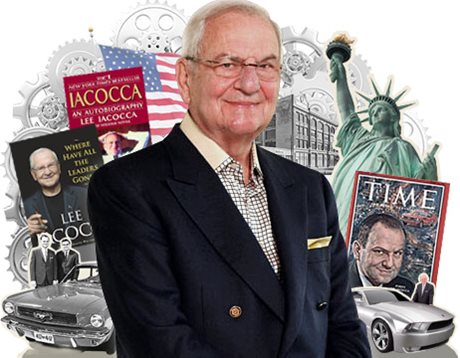
Image result for photo of lee iacocca

(Lee Iacocca)

Maraniss also explores the relationship between Lee Iacocca, the head of Ford and J.Walter Thompson, the advertising firm that was to modernize Ford’s image as 1963 approached.  The campaign would be headed by William D. Laurie, the head of the agency in Detroit and the epitome of the “Mad Men” mystique.  The project was T-5, and after the bust called the Edsel, Iacocca needed a success.  The success would become the Ford “Mustang,” whose development Maraniss details concentrating on the relationship between Henry Ford II and Iacocca.  Maraniss also conveys the importance of Ford and Walter Reuther focusing on their ability to negotiate and reach agreements that allowed workers to think of themselves as middle class as they received pensions, health insurance, and wages connected to an inflation index.  The work of these two men was important to the labor peace of the mid-sixties and their impact was throughout the industrial universe.
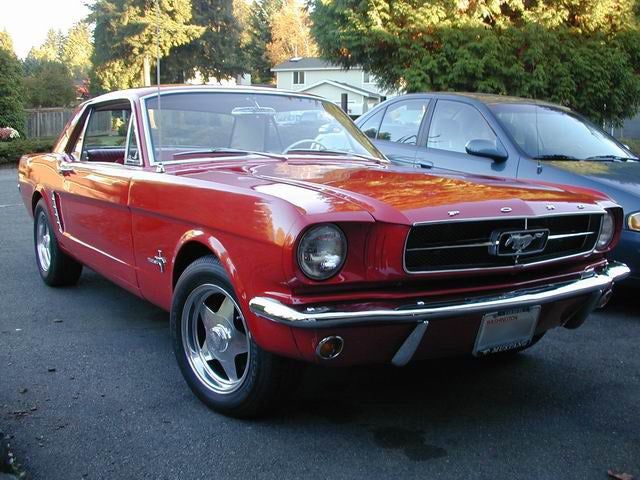
Picture of 1965 Ford Mustang Standard Coupe, exterior`

(1965 Ford Mustang)

Perhaps the most evocative topic is that of the development of Motown and the music industry and how it was spawned.  Concentrating on the Gordy family and its contributions, Maraniss focuses on Berry Gordy, Jr. and the Motown review, a stage show of some of the future stars of music including Smokey Robinson and the Miracles, Diana Ross and the Supremes, Marvin Gaye, and Martha Reeves and the Vandellas.  The review left Detroit on a 56 day tour on the day the United States instituted its embargo of Cuba during the missile crisis of October, 1962.  Maraniss effectively transforms the trip into a discussion of race in America as the group experiences segregation throughout its journey.  Traveling all over the Midwest, south, and winding up in New York City Maraniss integrates the black migration north for jobs beginning in the 1930s, the reaction of whites who felt they were taking their jobs, race based actions by white police forces, and the violence of black youth.  Racial fearmongering was a dominant theme and the issues that were prevalent during and after World War II were ever present as the tour wound on while the Civil Rights Movement was in full gear.   What emerges from the tour is that music is another Detroit export that impacted America second only to the auto industry.

Maraniss is careful to point out at a time when Detroit was booming a Wayne State University study in February, 1963 predicted the collapse of the city as it declared bankruptcy in 2013.  The study pointed to the reduction of the city’s population from 1,670,414 in 1960 to a projected 1,259,515 in 1970.  It also highlighted the white flight to the suburbs as blacks made up 28.9% of the city’s population in 1960 and a projected 44.4% in 1970.  The result of which would be a population whose tax base could not pay for its needs as by 2013 the population would be 688,000.  But what is fascinating at the time of the report automobiles were selling at record levels and the city was selling itself as the home for the 1968 Summer Olympic Games.

“By the close of Mr. Maraniss’ book, dreams of hosting the Olympics have been scuttled; urban renewal has uprooted many traditional, predominantly black neighborhoods; police reforms that might lead to greater racial harmony have stalled; and efforts to transform the city through Model Cities and War on Poverty programs have run aground, fueling tensions that would explode in the 1967 riot.” (NYT, September 14, 2015)   A riot that would kill 43 people, injure another 1189, result in 7200 arrests, with the destruction of over 2000 buildings.

Image result for pics of detroit today

(the symbol of Detroit today, an abandoned building)

If you want to relive the essence of the mid-1960s, Maraniss’ new book, with its emphasis on Motown, the Ford Motor Company, race relations and the civil rights movement, politics and much more is an excellent synthesis of the period.  It reflects Maraniss’ approach to narrative history, impeccable research and mastery of topic that will not disappoint.  Read it and enjoy.

Image result for photo of the supremes

THE GENERAL VS. THE PRESIDENT: MAC ARTHUR AND TRUMAN AT THE BRINK OF NUCLEAR WAR by H.W. Brands

Image result for photos of harry truman and macarthur

(General Douglas MacArthur and President Harry Truman at the Wake Island Conference, October 15, 1950)

On June 25, 1950 North Korea unleashed an attack against its southern neighbor that set off a war that resulted in 36,914 American casualties.  Many Americans are aware of the role of General Douglas MacArthur in the conflict, in particular his brilliant, but risky landing at Inchon that beat back the North Korean attack, and later in the war pursuing a strategy that led to Chinese intervention.  MacArthur’s actions were very controversial and once the Chinese crossed the Yalu River with over 100,000 troops and the military situation deteriorated, America’s allies grew concerned when MacArthur suggested the use of atomic weapons against the Chinese.  President Harry S. Truman did his best to reign in his commander to no avail and most historians believe that MacArthur overstepped his authority and allowed his strong belief system guide his actions.  Others like the British historian Robert Harvey and the American historian Arthur Herman believe the situation was much more nuanced.  The topic has again been explored in H.W. Brands new book, THE GENERAL VS. THE PRESIDENT: MACARTHUR AND TRUMAN AT THE BRINK OF NUCLEAR WAR.  Brands position is very clear that Truman’s firing of MacArthur was a “bold stroke” that may have headed off a much wider war with the Chinese.

Image result for pictures of dean acheson

(US Secretary of State, Dean Acheson)

Brands juxtaposes two personalities with totally different backgrounds and agendas.  Truman, reelected president in his own right in 1948 stood up to Stalin after World War II implementing the Truman Doctrine, the Marshall Plan, and stood fast over Berlin as he pursued the policy of containment of the Soviet Union.  With the North Korean attack he was able to blunt their progress until the Chinese crossed the Yalu River in force, but he was faced with a commander who wanted to employ nuclear weapons to send a message to the communist world.  On the other hand, MacArthur, the “all knowing general” who held politicians in contempt, especially a “novice” president like Truman.  MacArthur saw himself as having saved the Pacific in World War II, rebuilt postwar Japan, and now believed he had the communists right where he wanted them, but a feckless president stood in his way.  Brands does his best to explain the issues between the two men in the context of the Cold War in which they lived.  Brands has written a general history of their relationship and its ultimate outcome, but does not really add anything new that has not been uncovered by previous works on the topic.
Brands smooth narrative style, refined through the many books he has written is present throughout.  Brands is a master story teller who is able to present his narrative and analysis in a concise fashion that the general reader should enjoy, which at times will also satisfy an academic audience.  A case in point is how MacArthur gained the support of the Japanese people as he totally reoriented their society away from the militaristic emperor worship to a nation based on liberal democracy.  In the constitution he prepared he did away with all pre-war institutions, except the emperor, that had dominated Japan and resulted in World War II.  Further evidence of this approach can be seen as Brands reviews Truman’s career that spans his election to the Senate in 1940, his assumption of the presidency in 1945, and Cold War events to the onset of the Korean War.  Brands effectively relies on Truman’s correspondence with his daughter Margaret who served as a remarkable conduit into his thoughts and concerns.

Image result for Photo of General Matthew Ridgway

(General Matthew Ridgeway who took over command in Korea after MacArthur was relieved)

A major strength of the book are the character studies that are presented.  Discussions of people like Secretary of State Dean Acheson, a rather arrogant individual; General Omar T. Bradley, whose insights into Truman and MacArthur’s personalities are fascinating; General Matthew Ridgeway, a hero at the Battle of the Bulge during World War II whose leadership helped turn around the military balance in Korea; and Marguerite Higgins, a wartime correspondent add to the narrative.  Other strengths of the book include Brands’ description of the plight and final breakout of US Marines at the Chosin Reservoir and their two week trek battling the elements which were more dangerous than the Chinese communists to reach Hamhung.  Brands coverage of Truman and MacArthur rationalizations when confronted by Congress and the press is eye opening in trying to gain insights into their dysfunctional relationship after the Chinese communists crossed the Yalu into North Korea.  MacArthur’s statements at this time concerning administration restraints in dealing with bombing Chinese airfields in Manchuria and other issues is very similar to his rhetoric leaked to the American press after Matthew Ridgeway’s forces saved MacArthur’s reputation in April, 1951.  Brands coverage of Truman and the Joint Chiefs of Staff finally reaching the conclusion to relieve MacArthur of his command points to the final realization that MacArthur’s insubordination and egocentrism could no longer be tolerated.  Especially enlightening was the inclusion of a great deal of the testimony of MacArthur and Secretary of Defense George C. Marshall before Congress following MacArthur’s dismissal. However, the report of the hearings would have been enhanced if excerpts of Secretary of State Dean Acheson’s testimony had also been included.   This along with the geopolitical analysis of the region and domestic politics in the United States that included the role of Chiang Kai-Shek, Republicans in Congress, and the coming 1952 presidential election are all important pieces in understanding the war and its domestic implications.

Image result for photo of dwight eisenhower in korea

(President elect Dwight Eisenhower visits South Korea after his election)

Despite the strengths of the book there are a number of areas that could be improved.  The bibliography is rather sparse and the endnotes could be enhanced.  In the area of analysis, Brands chooses to deal with a number of major issues in a rather superficial manner.  His exploration of Soviet motives behind the North Korean attack is weak.  His excuse that the Russians were protesting the seating of Formosa over mainland China in the UN Security Council as the reason for their absence to block an American/UN force to stop the North Korean advance does not go far enough.  Is it possible that Moscow tried to draw the United States into the conflict in the hope it would cause difficulties with the Chinese at a time when the Sino-Soviet split was emerging is a main motivation?  Brands covers all the major topics that come under the umbrella of his overall subject, but he needs to dig down further, or just state up front that he is preparing a general history of the topic, then the reader will not expect more.  For example, the Wake Island meeting between Truman and MacArthur covers the basics.   Further, he does not drill down far enough when discussing events that led up to the Chinese overrunning UN forces in November, 1950.  To his credit he does list the signs of possible Chinese actions that MacArthur missed, but he needs to explore the reaction of America’s allies further, as well as the interaction between MacArthur and the Joint Chiefs of Staff.

Overall, Brands has written a very readable account of the Truman-MacArthur relationship in the context of the Cold War.  I would agree with Francis P. Sempa’s view published in the New York Journal of Books* that Brands does not present a very clear legacy of the Korean War in terms of future American foreign policy.  Truman wanted to have a “police action” or “limited war,” in Korea, MacArthur sought total victory, something the United States has achieved only once since World War II in the first Gulf War in 1990-91, but failed to accomplish in Vietnam, and currently in Iraq and Afghanistan.  There are a number of lessons that could have been discussed that relate to future American foreign policy, an important area, which Brands chooses to ignore.

*http://www.nyjournalofbooks.com/book-review/general-vs-president

Image result for photos of harry truman and macarthur

(General Douglas MacArthur and President Harry Truman at the Wake Island Conference, October 15, 1950)

HIS FINAL BATTLE: THE LAST MONTHS OF FRANKLIN ROOSEVELT by Joseph Lelyveld

Image result for photos of FDR's last days

(President Franklin Roosevelt circa late 1944)

A number of years ago historian, Warren Kimball wrote a book entitled THE JUGGLER which seemed an apt description of Franklin D. Roosevelt’s approach to presidential decision making.  As the bibliography of Roosevelt’s presidency has grown exponentially over the years Kimball’s argument has stood the test of time as FDR dealt with domestic and war related issues simultaneously.  In his new book HIS FINAL BATTLE:  THE LAST MONTHS OF FRANKLIN ROOSEVELT, Joseph Lelyveld concentrates on the period leading up to Roosevelt’s death in April, 1945.  The key question for many was whether Roosevelt would seek a fourth term in office at a time when the planning for D-Day was in full swing, questions about the post war world and our relationship with the Soviet Union seemed paramount, and strategy decisions in the Pacific needed to be addressed.  Lelyveld’s work is highly readable and well researched and reviews much of the domestic and diplomatic aspects of the period that have been mined by others.  At a time when the medical history of candidates for the presidency is front page news, Lelyveld’s work stands out in terms of Roosevelt’s medical history and how his health impacted the political process, war time decision making, and his vision for the post war world.  The secrecy and manipulation of information surrounding his health comes across as a conspiracy to keep the American public ignorant of his true condition thereby allowing him, after months of political calculations to seek reelection and defeat New York Governor Thomas Dewey in 1944.  Roosevelt’s medical records mysteriously have disappeared, but according to Dr. Marvin Moser of Columbia Medical School he was “a textbook case of untreated hypertension progressing to [likely] organ failure and death from stroke.” The question historians have argued since his death was his decision to seek a fourth term in the best interest of the American people and America’s place in the world.

Image result for photo of Daisy Suckley

(Roosevelt confidante, Daisy Suckley)

Lelyveld does an exceptional job exploring Roosevelt’s personal motivations for the decisions he made, postponed, and the people and events he manipulated.  Always known as a pragmatic political animal Roosevelt had the ability to pit advisors and others against each other in his chaotic approach to decision making.  Lelyveld does not see Roosevelt as a committed ideologue as was his political mentor Woodrow Wilson, a man who would rather accept defeat based on his perceived principles, than compromise to achieve most of his goals.  Lelyveld reviews the Wilson-Roosevelt relationship dating back to World War I and discusses their many similarities, but concentrates on their different approaches in drawing conclusions.  For Roosevelt the key for the post war world was an international organization that would maintain the peace through the influence of the “big four,” Russia, England, China, and the United States.  This could only be achieved by gaining the trust of Soviet dictator Joseph Stalin and making a series of compromises to win that trust.  The author will take the reader through the planning, and decisions made at the Teheran Conference in November, 1943, and Yalta in February, 1945 and the implications of the compromises reached.  Lelyveld’s Roosevelt is “the juggler” who would put off decisions, pit people against each other, always keep his options open, and apply his innate political antenna in developing his own viewpoints.  This approach is best exemplified with his treatment of Poland’s future.  In his heart Roosevelt knew there was little he could do to persuade Stalin to support the Polish government in exile, but that did not stop him from sending hopeful signals to the exiled Poles.  Roosevelt would ignore the Katyn Forest massacre of 15,000 Polish officers by the Russian NKVD in his quest to gain Stalin’s support, and in so doing he fostered a pragmatic approach to the Polish issue as Roosevelt and Churchill were not willing to go to war with the Soviet Union over Poland.

Image result for picture of fdr churchill and stalin

(Yalta Conference, February, 1945)

While all of these decisions had to be made Roosevelt was being pressured to decide if he would run for reelection.  Lelyveld’s analysis stands out in arguing that the president did not have the time and space to make correct decisions.  With his health failing, which he was fully aware of, and so much going on around him, he could not contemplate his own mortality in deciding whether to run or not.  The problem in 1944 was that Roosevelt would not tell anyone what he was planning.  As he approached 1944 “his pattern of thought had grown no less elusive….and the number of subjects he could entertain at one time and his political appetite for fresh political intelligence had both undergone discernible shrinkage.”  By 1944, despite not being not being totally informed of his truth health condition by physician Admiral Ross McIntire, Roosevelt believed he was not well.  Lelyveld relies a great deal on the diaries of Daisy Suckley, a distant cousin who he felt comfortable with and spent more time with than almost anyone, to discern Roosevelt’s mindset.   Lelyveld raises the curtain on the Roosevelt-Suckley relationship and makes greater use of her diaries than previous historians.  She describes his moods as well as his health and had unprecedented access to Roosevelt.  In so doing we see a man who was both high minded and devious well into 1944 which is highlighted by his approach to the Holocaust, Palestine, and Poland.

Lelyveld spends a great deal of time exploring Roosevelt’s medical condition and the secretiveness that surrounds the president’s health was imposed by Roosevelt himself which are consistent with “his character and methods, his customary slyness, his chronic desire to keep his political options open to the last minute.”  He was enabled by Admiral McIntire in this process, but once he is forced to have a cardiologist, Dr. Howard G. Bruenn examine him the diagnosis is clear that he suffered from “acute congestive heart failure.”  Bruenn’s medical records disappeared after Roosevelt died and they would not reappear until 1970.  Roosevelt work load was reduced by half, he would spend two months in the spring of 1944 convalescing, in addition to other changes to his daily routine as Lelyveld states he would now have the hours of a “bank teller.”  Despite all of this Roosevelt, believing that only he could create a safe post war world decided to run for reelection. But, what is abundantly clear from Lelyveld’s research is that by the summer of 1944 his doctors agreed that should he win reelection there was no way he would have remained alive to fulfill his term in office.

Image result for photo of eleanor roosevelt

(First Lady, Eleanor Roosevelt)

Since awareness of Roosevelt’s health condition could not be kept totally secret Democratic Party officials were horrified by the prospect that Roosevelt would win reelection and either die or resign his office after the war, making Henry Wallace President.  Party officials had never been comfortable with the Iowa progressive and former Republican who was seen as too left leaning and was no match for Stalin.  Roosevelt entertained similar doubts, but using his double bind messages convinced Wallace to travel to Siberia and Mongolia over fifty-one days that included the Democratic Convention.  Lelyveld explores the dynamic between Roosevelt and Wallace and how the president was able to remove his vice president from the ticket; on the one hand hinting strongly he would remain as his running mate, and at the same time exiling him to the Russian tundra!   For Roosevelt, Wallace did not measure up as someone who could guide a postwar organization through the treaty process in the Senate, further, it was uncovered in the 1940 campaign that Wallace had certain occult beliefs, he was also hampered by a number of messy interdepartmental feuds over funding and authority, and lastly, Roosevelt never reached out to him for advice during his four years as Vice-President.  The choice of Harry Truman, and the implications of that decision also receive a great deal of attention as the Missouri democrat had no idea of Roosevelt’s medical condition.  Lelyveld provides intricate details of the 1944 presidential campaign which reflects Roosevelt’s ability to rally himself when the need arose to defeat the arrogant and at times pompous Dewey.  Evidence of Roosevelt’s ability to revive his energy level and focus is also seen in his reaction to the disaster that took place at the outset of the Battle of the Bulge, and finally confronting Stalin over Poland.   In addition, the author does not shy away from difficulties with Churchill over the future of the British Empire, the Balkans and other areas of disagreement.  In Lelyveld portrayal, Roosevelt seems to be involved through the Yalta Conference until his death in April, 1945.

Lelyveld is correct in pointing out that Roosevelt’s refusal to accept his own mortality had a number of negative consequences, but he does not explain in sufficient detail how important these consequences were.  For example, keeping Vice President Truman in the dark about the atomic bomb, Roosevelt’s performance at Yalta, and a number of others that made the transition for Truman more difficult, especially in confronting the Soviet Union.  Overall, Lelyveld’s emphasis on Roosevelt’s medical history adds important information that students of Roosevelt can employ and may impact how we evaluate FDR’s role in history.

Image result for photos of FDR's last days

(President Franklin Roosevelt towards the end of his life)

JOHN QUINCY ADAMS: MILITANT SPIRIT by James Traub

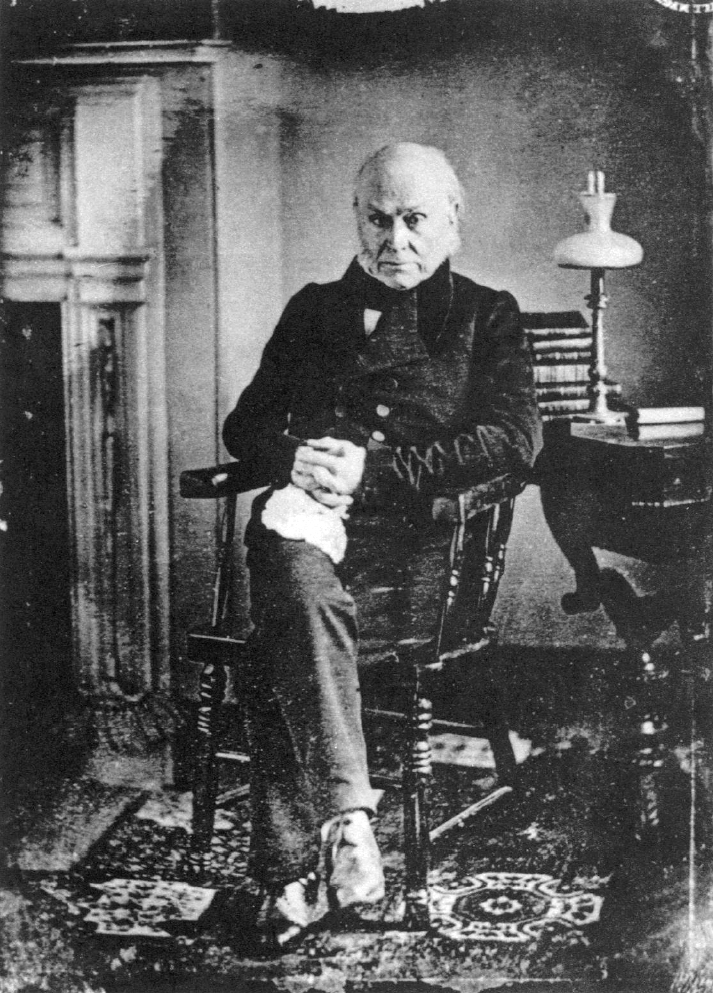
Image result for photos of john quincy adams

(John Quincy Adams, the 6th President of the United States)

At a time when most Americans believe they are witnessing the most divisive political campaign they have ever experienced, they need only to turn the clock back to the 1828 presidential campaign when Andrew Jackson, angry because he believed the previous election had been stolen because of a “corrupt bargain” between John Quincy Adams and Henry Clay, launched a nasty and personal attack against Adams as early as his inauguration resulting in Jackson’s eventual victory.  This political clash is just one component of James Traub’s excellent new biography, JOHN QUINCY ADAMS: MILITANT SPIRIT.  Adam’s the son of our second president was a rather enigmatic and recalcitrant figure who seemed to always answer to principle, not political expediency.  His diplomatic career consisted of ministerial posts in the Netherlands, Prussia, Russia, England, as well as serving as Secretary of State.  His political offices included the Massachusetts State Senate, the U.S. House of Representatives, and the Presidency.  Adams’ life is a compendium of late 18th and 19th century events where he usually was a focal point in any important situation.  This amazing career is skillfully portrayed by Traub as he dissects his subjects’ life and concludes that despite numerous achievements and failures, he never wavered from the moral convictions instilled in him by his parents, John and Abigail Adams.

Image result for John and Abigail Adams photo

(Abigail and John Adams, John Quincy’s parents)

The success of Traub’s effort lies in mining the 15,000 pages of Adams’ journal that he kept over his entire life.  The fact that the journal has been digitized allows the author easy access and assisted in creating a window into his subject’s mind that is fascinating.  Traub explores every aspect of Adams’ life, especially his close relationship with both of his parents.  The reader can eavesdrop on conversations between the father and son where we see why Adams’ became the man he did.  Not quite a reincarnation of his father, but strikingly similar.  Many of the letters and conversations between mother and son are also available and we are exposed to the rigid moral principles and advice that Abigail offered. The type of father Adams’ became later in life is directly related to his own upbringing as he pursued the same method of childrearing as his parents.  As far as his relationship with his wife Louisa it does not measure up to the closeness between John and Abigail Adams.  He was a distant husband and Louisa and John Quincy spent many years apart.

At a very young age he “followed a set of standards, moral, and intellectual, to which people should be held, and he found much of the world wanting,” particularly women.  The pressure on Adams because of his parents was immense and this led to feelings of guilt and depressive episodes.  Many times he felt conflicted as he passed back and forth between aspiration and resignation.  Traub has the knack of interweaving Adams’ private life with his career in an interesting fashion.  We get a glimpse of all aspects of Adams be it in the family, years of diplomacy overseas, and his political career.  Traub’s careful devotion to detail creates an accurate portrayal of life on the family farm in Quincy, MA, Washington, DC, or the many countries that he served as a diplomat.

Image result for photo of louisa adams

(Louisa Adams, wife of John Quincy Adams who would outlive him by four years)

Adams was a much more pragmatic politician for his time and tried to stay away from rigid ideologues.  For example, he refused to join the Federalists in their attacks on Thomas Jefferson, a man he admired, and supported the purchase of Louisiana because for Adams, unlike today, country came first, not political partisanship.  Adams even supported Jefferson’s Embargo Acts (1807) when the New England region that he represented opposed it.  As Traub states “he would become an honorable outcast like his father.”

Traub does a masterful job explaining how Louisa endured her domineering husband.  The author’s narrative reflects a great deal of empathy toward Louisa as she tries to live apart from her sons for long periods of time while her husband was posted overseas.  This in conjunction to the many disappointments the couple endured, from separation, countless miscarriages, and the death of their daughter Louisa, and their two sons John and George, but as their marriage endured John Quincy and Louisa would grow somewhat closer.

Image result for photo of Charles Francis Adams

(Charles Francis Adams, the son of John Quincy that was most similar to his father)

Traub delves into all aspects of Adams’ diplomatic career.  His most important postings dealt with negotiations to end the War of 1812, as minister to England, and his work in St. Petersburg as he established a close and friendly relationship with Alexander I which proved very important during the period of Napoleon’s defeat and the establishment of the Holy Alliance.  Adams’ stint as Secretary of State is covered completely and the chapter devoted to negotiations with the British and concerns over the rise of Republics in the former Spanish colonies that led to the Monroe Doctrine in 1823 is one of Traub’s best.

Adams’ journal contains copious details of negotiations, social observations, and acute analysis.  Adams’ mindset, particularly as it related to the intellectual underpinnings of his foreign policy is incisive.  What emerges is a man whose belief system is somewhere between a realist and an idealist who spent his entire career trying to enhance American prestige and territory while avoiding what he considered reckless adventures, i.e.; recognition of Spanish Republics, whether to invade Cuba, the seizure of West Florida among others.  The intellectual core of Adams’ belief system rested on “the crucial distinction he made between freedom as a donation or grant from a sovereign and freedom as an act of mutual acknowledgement among equals.  This was America’s gift to mankind—a gift [that Adams] hoped to spread across the globe.”

Image result for photo of andrew jackson

(Andrew Jackson, the seventh president of the United States and a political foil to John Quincy)

Traub correctly points out that Adams’ was not a politician and would not seek office and do the necessary lobbying and cajoling to gain support for his own candidacy, and after assuming the presidency, to gain support for his legislative goals, particularly that of internal improvement and creating an infrastructure linking the expanding country.  The machinations involving the 1824 and 1828 presidential elections, his relationship with men like Henry Clay, John C. Calhoun, and Andrew Jackson, and especially his term as president can best summed up by the British historian George Dangerfield, here was “a rather conspicuous example of a great man in the wrong place, at the wrong time with the right motives and a tragic inability to make himself understood.”

Adams’ later career is presented in a clear and concise manner as he enters the House of Representatives, the only president to do so.  For Adams the issue of slavery was paramount and he saw the problem of states’ rights over tariffs as nothing more than a cover for the “peculiar institution.”  In the 1840s Adams found himself in the midst of many heated debates dealing with slavery.  At times he refused to label himself as an abolitionist, and would argue before the Supreme Court representing the men who had seized the slave ship, Amistad.  Further, he would become a thorn in the side of states’ rights supporters of slavery in the House of Representatives by repeatedly arguing against the “gag rule,” introducing petitions against slavery, and defending himself as attempts to censure him for his opposition to the “slavocracy” were introduced.  Adams would become a man without a party as he would support no faction in the House and found a unique role for himself, “the solitary vote of conscience.”

John Quincy Adams was the last link to the founding generation which in part makes his life so important.  In addition, he is also the last link between the creation of the United States and its near destruction by Civil War.  In a sense Traub argues that Adams’ time in the oval office was an unsuccessful interlude in a remarkable career that saw principle over expediency as the guiding light of one of the most remarkable figures in American history.  For Adams, no matter what the situation, Washington’s message in his Farewell Address to remain neutral abroad, achieve unity at home, and create the consolidation of the continent were his guiding principles and Traub does an excellent job explaining how his subject went about trying to achieve them.

Image result for photos of john quincy adams

(John Quincy Adams, the sixth president of the United States)

67 SHOTS: KENT STATE AND THE END OF AMERICAN INNOCENCE by Howard Means

(Mary Ann Vecchio kneeling over the body of Jeffrey Miller, May 4, 1970-the most iconic photo of the tragedy)

On May 4th, 1970, 28 people died in actions related to the war in Vietnam; 24 on the actual battlefield, and 4 on the campus of Kent State University.  My memories of that day are quite clear as I was a student at Pace University in New York City.  A day or two later I joined a demonstration against the war as Mayor John Lindsay ordered the flag at City Hall Park to be flown at half-staff in remembrance of the 4 student who died at Kent State.  Almost immediately construction workers who were working on the World Trade Center site marched up Broadway beating anyone who seemed to be against the war, while New York City’s finest did nothing to stop them.  The next day my US Army Reserve unit was activated on the St. John’s University campus in Queens to deal with demonstrations.  My experience reflects the split in American society at the time and the total deterioration that existed between generations, and the attitude of many toward the Nixon administration.  Howard Means’ new book 67 SHOTS: KENT STATE AND THE END OF AMERICAN INNOCENCE captures that time period as he reevaluates events leading up to the shootings, the actual shootings themselves, and how people reacted and moved forward following the resulting casualties.

(National Guard use of tear gas on May 4, 1970 at Kent State)

The climate at Kent State was heated long before President Richard Nixon went on television on April 30, 1970 to announce the American “incursion” into Cambodia to root out North Vietnamese sanctuaries that were used to attack American troops.  This announcement exacerbated tensions between the administration and the anti-war movement that was labeled as “bums” by Nixon and his Vice President Spiro T. Agnew.  Means was able to reconstruct events at Kent State through numerous interviews of many of the actual participants as well as conducting research at Kent State’s archive.  This allowed Means to weave his narrative encompassing the actions of students and members of the National Guard and try and determine whether the Guardsmen were under enough of a threat to open fire on the students, or did the climate that existed on campus from May 1-4 make the tragedy inevitable.

Tension on campus was brought to a head when students burned down the ROTC building on May 2nd, and later that day the National Guard was summoned by Governor James Rhodes and deployed on campus.  One of the most important questions that Means explores was why was the Guard was called upon when it lacked the training in crowd control, and the use of M1 rifles, when the Ohio Highway Patrol was trained and ready to intervene.  Means places a great deal of the blame for events on Governor James Rhodes who was running for the US Senate against Congressman Robert Taft, Jr. and wanted to strike a tough persona to enhance his election bid as he stated on the morning of 5/3 when things seemed to be calming down, that he “would eradicate the disease of student unrest, not merely treat the symptoms.”

(National Guard shoot a Kent State student, May 4, 1970)

The inevitability of a crisis at Kent State resulted from disparate forces-the high spirits of the student body (about 4,000 of 21,000 students who participated in the demonstrations), the spring like weather, the war in Vietnam, Nixon’s Cambodia speech, campus radicalism (about 300 students), the exhortations of Jerry Rubin, local anxiety, the generational divide, and growing tensions between the town and the university.  Means argues effectively that outside agitators were not responsible for May 4th, as events were fostered by Kent State’s student body.  Supporters of the National Guard argue that SDS was responsible for organizing students which was not true.  Means presents a frame by frame picture of May 4th and concludes that the shootings did not have to take place.  The National Guard spokespersons argued that there was a snipper who threatened the soldiers, but there was no evidence that one existed.  Further, the students did not rush the soldiers who claimed their lives were in danger.  The problem throughout the crisis was the lack of communication and coordination between the National Guard, the university, and town officials.  Means based his conclusions on evaluating the statements of the main participants and the interviews he conducted over many years.  For Means it is clear that the National Guard was not protecting itself from “imminent danger, instead, there seems to have been a strange mix of intentionality, horrific judgement, terrible luck, preventability and inevitability.”  The generation gap, the Age of Aquarius, all came together on May 4, 1970.

(The 4 students killed at Kent State)

Means describes the moods of students and guardsmen and the shock and outrage that followed the shootings.  He points to the heroes, like Major Don Manley of the Ohio Highway Patrol who convinced the National Guard commander, General Robert Canterbury to allow faculty marshals additional time to convince students to disperse, before further damage could be done.  Other heroes include Geology professor Glenn Frank, a former marine who convinced students to leave when the National Guard reformed and were getting ready to fire again.  However, most townspeople and guardsmen felt that the students brought the shootings on themselves and they got what they deserved.  It is amazing that the actual firing took 13 seconds to unleash 67 bullets!

Means does an excellent job describing the actions and statements of the Nixon administration as well as taking the reader into the White House.  He argues that Nixon became unmoored by events at Kent State that led to his famous 2:00am visit to the Lincoln Memorial to engage young people.  Means also examines the culpability of all the major players in this drama; from university president, Robert White; Kent mayor, Leroy Satron; Governor James Rhodes, and National Guard Commander Robert Canterbury and his officers.  Means explores the legal actions that followed and the Scranton Commission that investigated the shootings.  What emerges is that the death of 4 students and 9 wounded should not have occurred.  It was due to poor training, a lack of communication, and a political climate that was on edge.  Means has written a well-documented account of events and for anyone interested in one of the most iconic tragedies of the Vietnam era, this book is well worth consulting.

(Mary Ann Vecchio leaning over the body of Jeffrey Miller, May 4, 1970)

BOBBY KENNEDY: THE MAKING OF A LIBERAL ICON by Larry Tye

(Robert Francis Kennedy)

Early in the morning on June 6, 1968 I got out of bed and turned on the news and learned that Robert F. Kennedy had been assassinated.  Kennedy had just won the California primary and as a college freshman I was convinced that had he lived he would have been elected president.  For me, the “what ifs” of American history applied, particularly because of the path taken by the Nixon administration.  I often wonder what would have been the course of American history had Bobby Kennedy lived – Civil rights?  Vietnam?  Income equality?  But counterfactuals are an intellectual exercise, not reality.  There have been numerous books written about Robert Kennedy and one must be careful to look at the entire picture, not just the last few years of his life when he evolved into a liberal icon.    A new biography by Larry Tye entitled, BOBBY KENNEDY: THE MAKING OF A LIBERAL ICON is a major contribution to the RFK literature as it is a very nuanced analysis of the former Attorney General and relies on a vast array of materials, interviews, and newly released documents from the Kennedy Library that results in a fresh approach to examining the life of the third Kennedy brother.

The key to Tye’s narrative is that he is able to effectively chart Robert Kennedy’s transformation from a rabid cold warrior who had been counsel to Senator Joseph McCarthy, plotted the elimination of Fidel Castro, wiretapped Martin Luther King, supported the war in Vietnam to the liberal hero who was on the precipice of the Democratic Party presidential nomination in 1968 when he was struck down by Sirhan Sirhan in Los Angeles.  The question that emerges is could he “have stitched back together a divided land whose vision seems at best as resonant in today’s polarized America?”  It is hard to forget the violence and hatreds that the upheavals of the 1960s wrought with Robert Kennedy at its center; as Attorney General and his brother’s main advisor on domestic and foreign policy, and as a senator from New York.  Many argue had he lived the latter part of the 20th century would have been quite different, but it was not to be. Tye’s work is impactful because of the attention he devotes to the earliest, hardest-edge part of Kennedy’s career and how his conservative roots fostered his later transformation.  In addition, the author has the ability to unearth, then describe the senator’s unabashed humanity and empathy for others no matter the color of their skin or their religious beliefs.

Of all the Kennedy children, Bobby was most like his father, Joseph P. Kennedy.  He took to heart his father’s adage that family came first, and in a crunch, it was only your parents and siblings that you could count on.  Like his father he would see life in terms of “black and white,” and eventually he was able to prove to his father that he had another able son who could carry on the work of his brothers.  Tye’s organizes his book into a series of chapters highlighting the most important aspects of Bobby’s career.  Beginning with his service on McCarthy’s Permanent Sub-Committee on Investigations we see evidence of how his reputation as a ruthless and vindictive operative developed, a reputation that would stay with him for most of his life.  Tye describes the relationship with the Wisconsin senator in detail and we see how the concept of loyalty developed in Kennedy’s mind.  Tye provides incisive analysis of their relationship and why they remained friends until the senator’s death in 1957.

(Jimmy Hoffa flips off Robert Kennedy during hearings into Teamsters and organized crime)

Tye examines the often told story of the Kennedy-Jimmy Hoffa feud.  He relies on the usual documentation as well as a new book by James Neff, VENDETTA that explores the war between the two men in detail.  What is interesting is that Tye argues that part of the reason the war between the two men intensified over the years was their similar personalities, i.e., tenaciousness, competitiveness, and the refusal to lose.  What is also interesting is that over the three years of hearings Robert Kennedy received more press that his brother Jack, and more importantly it allowed him to emerge from behind his father’s shadow as well as his brother.  Employing many of the tactics he used working with McCarthy, the Hoffa hearings were extremely beneficial to Bobby’s career.  The feud will remerge once Bobby becomes Attorney General and Tye provides numerous anecdotes based on his research of conversations between the two men, as well as legal transcripts.  The Hoffa war was integral to Bobby’s expansion of the Justice Departments war on organized crime.  This expansion also carried over into the Civil Rights division, adding lawyers and federal marshalls which became the basis of the Kennedy administration’s attempt to harness the civil and voter rights issues that exploded in the early 1960s.  Tye covers the standard material dealing with events in Mississippi and Alabama, but what makes his approach unique is that we see events through the prism of the President’s brother and the strategy they pursued.  In the end the events in the south would be so impactful that it helped Kennedy further understand the poverty and lack of rights that black American citizens suffered.

Robert Kennedy’s evolution in foreign policy is on full display as he was his brother’s most trusted advisor.  This is abundantly clear during the Bay of Pigs fiasco and the Cuban Missile Crisis as Bobby becomes obsessed with getting even with Fidel Castro, a major error that he would come to realize later as he let his vendetta against the Cuban dictator get in the way of broader goals and values, just as he had done with his Hoffa campaign.  Further, Tye is correct to point out that the book THIRTEEN DAYS, an account by Robert Kennedy of the missile crisis is not an honest appraisal of Bobby’s role, but what is really important is that Kennedy gained a new perspective on the nuclear world he lived in, and how accommodation was just as important as sabre rattling to achieve the nation’s national security goals.

For Tye, Robert Kennedy does not emerge as a complete person until the assassination of his brother.  Having earned the respect of his father during the 1960 presidential campaign, he would begin to evolve into being his own man during the Cuban crisis, but it took the death of John F. Kennedy for him to complete the process.  He would assume greater family responsibilities for his own children and those of his brother.  He became the person the family could lean on, but he himself grew depressed and lost his focus concerning his future.  He was able to recover in part by jumping into the New York senatorial race in 1964 and his burgeoning political and personal war with Lyndon Johnson.  Bobby viewed the president as the usurper of the Kennedy throne, and Johnson who suffered from an Adlerian inferiority complex when it came to the Kennedys, despised the man he referred to as that “grandstanding little runt.”  The relationship would only spiral downward as past slights and two extremely divergent personalities dominated the relationship as is described in greater detail in Jeff Shesol’s book MUTUAL CONTEMPT: LYNDON JOHNSON, ROBERT KENNEDY AND THE FEUD THAT DEFINED A DECADE.

(Freedom Rider bus attacked in Mississippi in 1961)

Robert Kennedy’s reputation was enhanced during the 1963 Freedom Rides summer and his election to the Senate, a move that would provide the therapy to deal with the loss of his brother.  Once ensconced on Capitol Hill he threw himself into his work as he traveled to the Mississippi Delta and experienced the ills of poverty first hand.  Further he took a major interest in the Bedford-Stuyvesant section of Brooklyn, NY where he witnessed the effects of white flight from urban areas and the resulting racial tension and poverty.  Though he was a senator, it was the Kennedy name that allowed him to confront the federal bureaucracy to try to mitigate social, economic, and racial problems that he confronted.  The key to burnishing his new found liberal reputation was his changing opinion on Viet Nam.  Tye examines the evolution of Kennedy’s cold warrior view of the war in Southeast Asia, beginning in 1951 and sees the change in his perception coinciding with Johnson’s expansion of the war in 1965.  At the outset Bobby was careful not to alienate the President, because so many Kennedy appointees were part of the Johnson administration.  However, after witnessing the corruption of the South Vietnamese regime by February, 1967 he called for a middle way when he was informed by a French diplomat that Hanoi was open to negotiation in return for an unconditional bombing halt.  Tye includes a number of LBJ-RFK conversations in his narrative and it is clear that their relationship had hit rock bottom, particularly when Bobby went public with his views.  From this point on Tye takes the reader inside Kennedy’s thought process as he enters the 1968 presidential race.   Kennedy’s motivations become clear as the campaign unfolds and the reader will begin to feel that they are a part of a new crusade to alleviate poverty in America and end the war in Vietnam.

(Robert Kennedy and Lyndon Johnson campaigning together in New York in 1964 despite their extreme distaste for each other)

Tye confronts all the major myths and rumors associated with the Kennedys and Bobby in particular in a reasoned and thoughtful manner.  Be it their proclivity toward affairs, getting even with people who opposed them, or just plain everyday matters, he breaks each controversy down into what is real and what is imagined and comes to acceptable conclusions or argues what could be possible, and what never happened.  However, Tye’s evolutionary theme as to how Robert Kennedy grew as a person is clear and accurately portrayed.  For Tye, the “good Bobby,” outweighs the “bad Bobby,” in this important new biography of a man, who had he lived might have greatly altered the world in which we live today.

(Robert Francis Kennedy)

VALIENT AMBITION: GEORGE WASHINGTON, BENEDICT ARNOLD, AND THE FATE OF THE AMERICAN REVOLUTION vy Nathaniel Philbrick

(Benedict Arnold and George Washington)

By May of 1780 the Continental Army under the command of George Washington had reached a point of no return.  According to Joseph Plumb Martin, the son of a minister from Milford, CT, and a soldier who seems to appear at most major Revolutionary War battles, “here was the army starved and naked.”  The situation had evolved because of the horrendous winter in Morristown, NJ, the lack of support and funding by the Continental Congress, and the weak infrastructure that plagued Washington’s army.  Most Americans were unaware how poorly the American military was outfitted and how the men were forced to live and fight under intolerable conditions for a good part of the American Revolution.  This theme is one of the many that Nathaniel Philbrick argues in his new book VALIENT AMBITION: GEORGE WASHINGTON, BENEDICT ARNOLD, AND THE FATE OF THE AMERICAN REVOLUTION.  Those who are familiar with Philbrick’s earlier works like the MAYFLOWER AND IN THE HEART OF THE SEA will not be disappointed with his latest effort.  Philbrick continues his narrative works dealing with the American Revolution and has written another evocative and fascinating historical monograph that should be attractive to the general public and professional historians.  Philbrick’s approach rests on the exploration of the personalities, military capabilities, and the “valiant ambitions” of George Washington and Benedict Arnold.  In addition, Philbrick weaves into the narrative the economic hardships, societal relationships, and battlefield experiences of the lower classes who fought the war.

(The young Benedict Arnold)

The book builds up to a situation where one of Washington’s greatest generals came to decide that the cause to which he had given almost everything no longer deserved his loyalty.”  Of course that general is Benedict Arnold, a brilliant military tactician on land and sea, but also a person who possessed an ego that surpassed most people of his age.  His sense of entitlement knew no bounds and after his leg was shattered in battle and many of his investments did not bear fruit he contemplated how he could recoup much of his wealth that he claimed was lost in support of the revolution.  Further exacerbating his psyche was his infatuation and love for Peggy Shippen, whose father Edward was a wealthy loyalist and to win her hand in marriage he had to create the wealth that she had grown accustomed to.  Politics also played into Arnold’s bitterness toward the colonial government in that Joseph Reed, the President of Pennsylvania’s Supreme Executive Council and the most powerful man in the state launched an investigation into Arnold’s conduct as military governor of Philadelphia.  This would lead to Arnold’s trial which on top of previous episodes of fighting for his proper rank made Arnold ripe for treason.  Philbrick does a masterful job following Arnold’s path to becoming a spy and integrated many primary documents to highlight all aspects of Arnold’s overblown sense of his own importance and the resulting trial and court-martial.

(Peggy Shippen, the love of Benedict Arnold’s life!)

Philbrick effectively contrasts General Arnold with George Washington a man who did not measure up to Arnold as a military tactician, but was the type of individual who eventually would learn from his mistakes.  The Washington that Philbrick presents is a man who must fight his “inner demons” which were his naturally aggressive tendencies.  By the spring of 1777 Washington argued for a “War of Posts,” a defensive strategy that made perfect sense against the British.  However, he would repeatedly violate this strategy by assuming the offensive at Brandywine and Germantown which resulted in the British occupying Philadelphia for eight months.  As a result Washington finally learned to control his offensive instincts and do what was best for his army and country.  Washington had been placed in the untenable position by the Continental Congress that put him in command of the army to prosecute the war, but would not allow him to choose his own officers, on which he had to depend on most.  To his credit Washington realized the limitations that were placed on him were due to the politicization of the war and decided to deal with the situation as best he could.  On the hand Arnold was emotional and impulsive at times, but was a sound military thinker who, unlike his commander, had the ability to outthink his opposition and take advantage of the topography available to him.  I agree with Philbrick that Arnold’s “narcissistic arrogance that enabled him to face the gravest danger on the battlefield without a trace of fear had equipped him to be a first-rate traitor.”  It is interesting to note that had the Continental Congress headed Washington’s advice concerning Arnold’s promotion and seniority he might have gone down in history as one of the immortals, not someone who has been labeled a traitor.

Joseph Reed by Pierre Eugène du Simitière.jpg

(Joseph Reed, whose evaluation of Arnold was dead on!)

Philbrick’s narrative is not a complete history of the American Revolution, but he assimilates the most important battles into the narrative, the strategies employed by Generals Burgoyne, Howe, and others for the British, in addition to Generals Horatio Gates, Philip Schuyler and others for the Americans.  The book is enriched by the competition between these men, in particular Gates’ attempt to seize command of the army from Washington.  Further, the reader is exposed to sectional political machinations between the New England, Atlantic, and southern states that fostered much of the domestic and internal military hostility that existed during the fighting.  Philbrick is a meticulous researcher and this is reflected in his unique story telling ability and novelistic detail.  However, if there is an area that Philbrick could have developed further, it is the lack of interactions between Washington and Arnold, particularly during the first half of the book.   The author could have spent less time describing battle details, though highlighted with excellent maps, and devoted greater emphasis on the two main characters in the narrative, how they interacted with each other, and the ramifications of those interactions.

Philbrick reaches an interesting conclusion in that Arnold did the young nation a tremendous service through his treason.  During almost five years of fighting the Continental Congress was rather disjointed, rivalries between regions detracted from any hope of unity, and the military situation was poor.  Arnold’s treason galvanized the American people against him and created a sense of common purpose.  Though the people had come to revere George Washington as a hero, it was not sufficient to bring the people together, but now they had a despised villain to accomplish that goal.  The real enemy for the young nation was not Great Britain but those Americans who sought to undercut their fellow citizens’ commitment to one another.  Philbrick’s argument is rather interesting and a bit overstated, but he argues it quite well.  VALIENT AMBITION is a fascinating study and will make a wonderful addition to any library of the American Revolution.

(George Washington and Benedict Arnold)

ALTER EGOS: HILLARY CLINTON, BARACK OBAMA, AND THE TWILIGHT STRUGGLE OVER AMERICAN POWER by Mark Landler

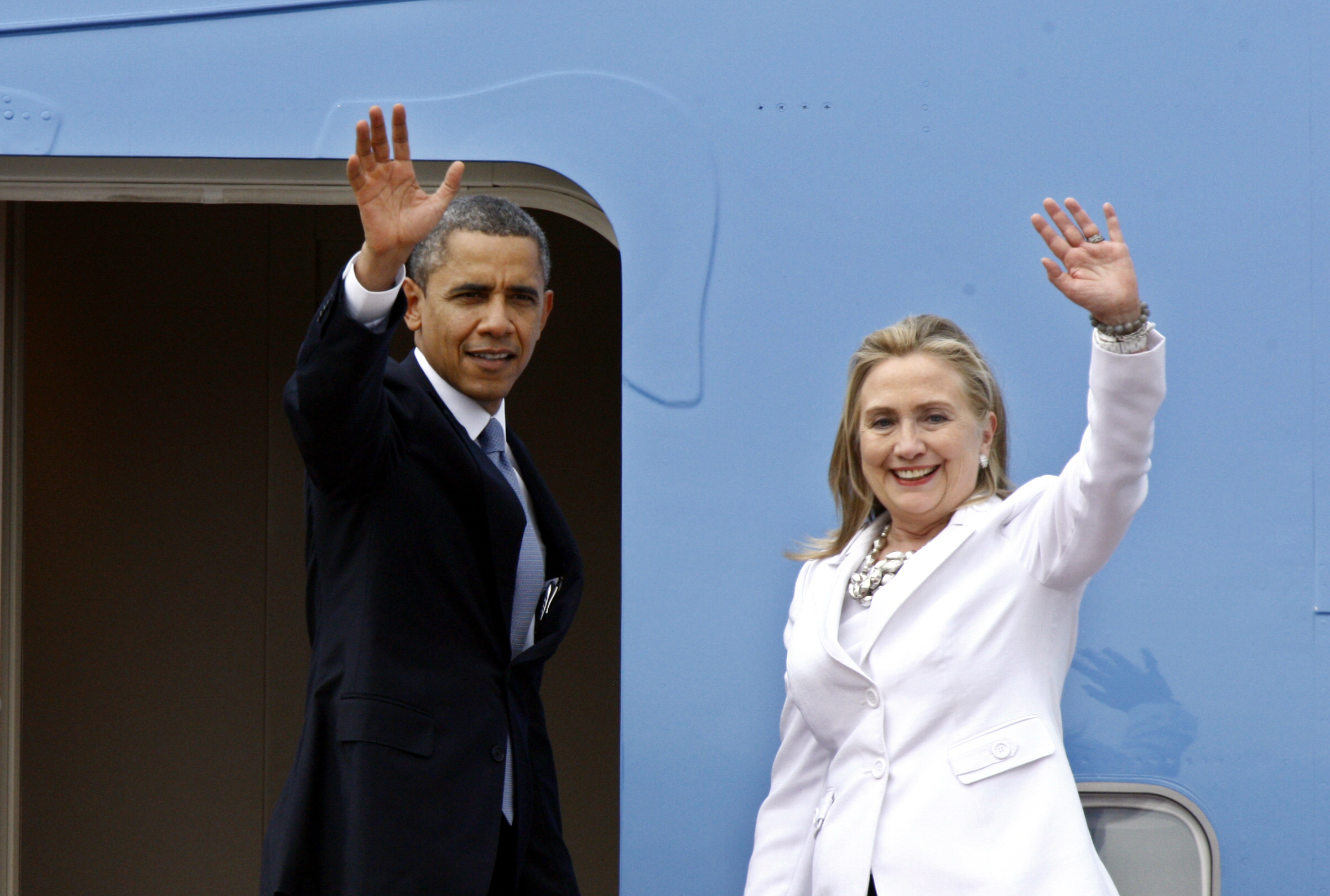
(President Barack Obama and Secretary of State Hillary Clinton)

Following his victory in the 2008 presidential election Barack Obama chose Hillary Clinton as his Secretary of State.  Many pundits conjectured as to why Obama made this selection.  They argued that he was following the path of Abraham Lincoln by placing his opponents in his cabinet so he could keep an eye on them and control any opposition.  This view is wonderfully presented in Doris Kearns Goodwin’s TEAM OF RIVALS: THE POLITICAL GENIUS OF ABRAHAM LINCOLN, but one must ask could Goodwin’s thesis actually represent Obama’s motivation.  In his new book, ALTER EGOS: HILLARY CLINTON, BARACK OBAMA, AND THE TWILIGHT STRUGGLE OVER AMERICAN POWER Mark Landler, a New York Times reporter compares Obama and Clinton’s approach to the conduct of foreign policy and how it has affected America’s position in the world.  In do so Landler explores in detail their relationship on a personal, political, and ideological level.  Landler delves into the differences in their backgrounds that reflect how they came to be such powerful figures and why they pursue the realpolitik that each believes in.  In so doing we learn a great deal about each person and can speculate on why Obama chose what really can only be characterized as his political enemy throughout the 2008 campaign trail as his Secretary of State.  What is even more interesting is their differences that can be summed up very succinctly; for Obama the key to conducting a successful foreign policy was “Don’t do stupid shit,” for Clinton, “great nations need organizing principles…don’t do stupid stuff is not an organizing principle.”

Since we are in the midst of a presidential election and it appears that Hillary Clinton will be the Democratic nominee it is important to evaluate and understand her approach to foreign relations.  Landler does the American electorate a service as his book is a useful handbook in understanding and getting an idea how she would approach the major foreign policy issues that America currently faces should she assume the oval office.   By comparing her with Obama we gain important insights into her thinking and how she would implement her ideas.  It is clear during Obama’s first term that Clinton was the “house hawk” within his administration as she supported increases in troop deployments to Afghanistan which Obama reluctantly agreed to, but only with a set time limit; she wanted to leave a large residual force in Iraq after American withdrawal which Obama did not do; she favored funneling weapons to rebels in Syria fighting Assad as well as the creation of a no fly zone which Obama opposed; and lastly, she favored the overthrow of Muammar al-Qaddafi and the bombing of Libya when he threatened to destroy Benghazi which Obama reluctantly agreed to.  Their difference are clear, Obama believes that the United States is too willing to commit to military force and intervene in foreign countries, a strategy that has been a failure and has led to a decline in America’s reputation worldwide, a reputation he promised to improve and has been partly successful with the opening to Cuba and the nuclear deal with Iran.  For Clinton the calculated employment of American military power is important in defending our national interests, and that our intervention does more good than harm, especially in exporting development programs and focusing on human rights.  Obama arrived on the scene as a counterrevolutionary bent on ending Bush’s wars and restoring America’s moral standing.  He no longer accepted the idea that the U.S. was the world’s undisputed “hegemon” and shunned the language of American exceptionalism.  Clinton has a much more conventional and political approach, “she is at heart a ‘situationist,’ somebody who reacts to problems piecemeal rather than fitting them into a larger doctrine.”  Her view is grounded in cold calculation with a textbook view of American exceptionalism.

(President Obama, an Illinois State Senator in 2002 speaking against the war in Iraq)

Landler describes the difficulties that Clinton had adapting to the Obama White House that is very centralized in decision-making and she had difficulty penetrating Obama’s clannish inner circle.  The author also does an excellent job explaining the main players in Hillaryland and the Obama world that include Obama’s whiz kids, Denis McDonough and Ben Rhodes, and Clinton’s staffers Jake Sullivan and Huma Abedin.  Since Obama was a self-confident president who had a tight grip on foreign policy, Clinton spent most of her time implementing the strategy set by the White House.  During the first two years of the Obama administration Clinton pursued a global rehabilitation tour to patch up the mess that Bush left.  During her second two years she did more of the heavy lifting on sensitive issues like Syria, Libya, Iran, China, and Israel which Landler dissects in detail.  From her UN women’s conference address in Beijing during her husband’s administration, her lackluster attempts at bringing peace between the Palestinians and Israel, developing and implementing sanctions against Iran, her support for the rebels in Syria, and the overthrow of Qaddafi, we get unique insights into Clinton’s approach to foreign policy.

The fundamental difference or fault line between Obama and Clinton was Clinton’s vote in favor of the invasion of Iraq on October 2, 2002, a vote that Obama opposed as a state senator in Illinois.  Landler does a marvelous job comparing their backgrounds and the influence of their personal experience on their worldview.  Obama’s divided heritage of Hawaii, Kenya, and especially Indonesia defined him from the outset.  For him Indonesia highlighted the ills of the oil companies, western development programs, and American power as it supported repressive military dictatorships to further its Cold War agenda.  Obama was an anti-colonialist and could put himself in the place of third world cultures in his decision-making.  Clinton on the other hand was rooted in Midwestern conservatism and her interests after law school was to try and alleviate poverty and defend the legal rights of children.  Landler is correct when he states that “Clinton viewed her country from the inside out; Obama from the outside in.”

(Special envoy Richard Holbrooke)

Landler presents a number of important chapters that provide numerous insights into the Obama-Clinton relationship.  Particularly important is the chapter that focuses on Richard Holbrooke, a career diplomat that dated back to Vietnam and ended with his death in 2010.  A swash buckling man who did not fit into the Obama mold was brilliant, self-promoting and usually very effective, i.e., the Dayton Accords in 1995 that ended the fighting in Bosnia.  He hoped as Clinton’s special envoy for Pakistan and Afghanistan to help mediate and bring some sort of closure to the conflict with the Taliban.  Holbrooke rubbed Obama the wrong way and was seen as the epitome of everything Obama rejected in a diplomat and Clinton who had a very strong relationship with Holbrooke going back many years spent a great deal of time putting out fires that he caused.  Another important chapter focuses on administration attempts to mediate the Palestinian-Israeli conflict.  For Clinton it was a no win situation for a person who represented New York in the Senate and planned to seek the presidency on her own.  Obama would force her to become engaged in the process along with special envoy, George Mitchell, and she spent a great deal of time trying to control the animosity between Obama and Israeli Prime Minister Benjamin Netanyahu.  Landler’s discussion of the Obama-Netanyahu relationship is dead on as the Israeli Prime Minister and his right wing Likud supporters represented the colonialism that Obama despised.  For Netanyahu, his disdain for the president was equal in kind.  In dealing with the Middle East and the Arab Spring Clinton argued against abandoning Egyptian President Hosni Mubarak as she believed in the stability and loyalty to allies, Obama wanted to be “on the right side of history,” and in hindsight he was proven to be totally wrong.  These views are polar opposites and helps explain Obama and Clinton’s frustration with each other that form a major theme of Landler’s narrative.

Obama’s drone policy was another source of disagreement between the President and Secretary of State.  For Obama “targeted killings” was a better strategy that the commitment of massive numbers of American troops.  The primacy of employing drones is the key to understanding Obama’s foreign policy.  For Clinton regional stability, engagement, and the United States military is the key to a successful foreign policy.  As Vasil Nasr states, Obama believes that “we don’t need to invest in the Arab Spring.  We don’t need to worry about any of this; all we need to do is to kill terrorists.  It’s a different philosophy of foreign policy.  It’s surgical, it’s clinical, and it’s clean.”

Perhaps Landler’s best chapter deals with the evolution of Syrian policy.  Internally Clinton favored aid to the Syrian rebels which Obama opposed during the summer of 2012.  However, when Obama decided to walk back his position on the “Red Line” that if crossed by Assad through the use of chemical weapons, the US would respond with missile attacks.  Once this policy changed to seeking Congressional approval for any missile attack, the United States gave up any hope in shaping the battlefield in Syria which would be seized by others eventually leading to ISIS.  Obama needed Clinton’s support for this change.  Though privately Clinton opposed the move, publicly at her own political risk she supported the president.  This raises the question; how much difference was there in their approach to foreign policy?  It would appear that though there were differences, Clinton was a good team player, even out of office, though as the 2016 presidential campaign has evolved she has put some daylight between her and the president.  From Obama’s perspective, though he disagreed with his Secretary of State on a number of occasions he did succumb to her position on a series of issues, particularly Libya, which he came to regret.  The bottom line is clear, Clinton kept casting around for solutions for the Syrian Civil War, however unrealistic.  Obama believed that there were no solutions – at least none that could be imposed by the U.S. military.  Another example of how the two worked together was in dealing with Iran’s nuclear program.  They both agreed on the approach to be taken, a two track policy of pressure and engagement.  Clinton played the bad cop enlisting a coalition of countries to impose punishing sanctions while the President sent letters to the Supreme Leader and taped greetings to the Iranian people on the Persian New Year as the good cop!  But, once again they appeared to be working in lock step together.

(Secretary of State Hillary Clinton and Burmese pro-democracy leader, Aung San Suu Kyi in 2012)

The question proposed at the outset of this review was whether President Obama chose Hillary Clinton so he could keep her within the “tent” as Abraham Lincoln did.  After reading ALTER EGOS there is no concrete conclusion that one can arrive at.  Even at the end of Clinton’s term as Secretary of State two major diplomatic moves were made; the groundwork that would lead to a restoration of relations with Havana and an opening with Burma took place.  In both cases the President and Clinton were on the same page, therefore one must conclude that though there were some bumps in the road, publicly, Obama and Clinton pursued a similar agenda and  were mostly in agreement.  As a result, it would appear that they are more similar than different and that the “team of rivals” concept may not fit.  It seems the title ALTER EGOS could give way, perhaps to THE ODD COUPLE, a description that might be more appropriate.

(President Barack Obama and Secretary of State Hillary Clinton)

THE GEORGETOWN SET: FRIENDS AND RIVALS IN COLD WAR WASHINGTON by Greg Herken

(Joseph and Stewart Alsop,  journalists who greatly impacted American foreign policy during the Cold War)

When one discusses the value of real estate one usually encounters the phrase “location, location, location.”  This could be the theme of Greg Herken’s THE GEORGETOWN SET: FRIENDS AND RIVALS IN COLD WAR WASHINGTON, a book centered on a Georgetown, Washington, D.C. neighborhood after World War II, whose residents included the Alsop brothers, Jack and Jaqueline Kennedy, Ben and Tony Bradlee, Allen and Clover Dulles, Dean and Alice Acheson, Philp and Katherine Graham, Averill and Marie Harriman, Frank and Polly Wisner among others.  Within the group you had a future president and Secretary of State, the head of the CIA and other operatives, two ambassadors to the Soviet Union, influential journalists, and the owner and editor of the Washington Post. The neighbors who were known as the “Georgetown Set,” were at the forefront of American policy as the Cold War began and evolved, as Dean Acheson entitled his memoirs, they were PRESENT AT CREATION, and a few of them lived to see the curtain fall on the conflict with the communist world.  These individuals were not only neighbors, for the most part, they were close friends.  They had attended the same boarding schools and universities and “believed that the United States had the power—and the moral obligation—to oppose tyranny and stand up of the world’s underdogs.”  They held a sense of duty and the belief in the “rightness of the country and its causes—which were, more often than not, their own.”

Unlike today, it was a time of consensus in foreign policy in dealing with the Soviet Union, partisanship was an afterthought.  The outset of the Cold War produced the Marshall Plan, the Truman Doctrine, Point Four, and NATO, but the mindset of these individuals would also lead to mistakes embodied in the disastrous coups of the Eisenhower era, the Bay of Pigs, and the Vietnam War.  Greg Herken tells the story of these influential people, how their ideas dominated American policy, and what the ramifications of that influence were.  The reader is exposed to intimate details and tremendous insights as these power brokers are examined, and it makes for a fascinating read.

(Katharine Graham, owner and editor of the Washington Post)

The narrative focuses on the most important foreign policy debates of the 20th century, where the residents of Georgetown aligned themselves, and how their views affected the success or failure of presidential decision making.  Once the Nazis and the Japanese were defeated in 1945, the foreign policy debate focused on the communist threat and the motives of the Soviet Union.  The debate was symbolized by George Kennan, who at one point was head of the Policy Planning Staff in the State Department as well as stints as ambassador to the Soviet Union and Yugoslavia; and Paul Nitze, former Secretary of the Navy, and author of NSC-68 which along with Kennan’s “X Article” formed the basis of American policy toward Russia for well into the 1980s.  The debate centered on “whether it was America’s moral example or material power that kept the Russians at bay” during the Cold War.   Many other individuals draw Herken’s discerning eye during the period, the most important of which were Joseph and Stewart Alsop, the journalism brothers who advised presidents, and helped articulate positions on Vietnam and Cuba that some would argue pushed our nation’s chief executives into making unwise policy choices.

At times the book reads like a biography of the Alsop brothers as Herken develops their careers as the centerpiece of the monograph.  Of the two, Joseph Alsop dominated their relationship and developed numerous sources within the national security apparatus in presidential administrations from Truman through Nixon.  Joseph Alsop had his own agenda and his columns created enough pressure on Lyndon Johnson that many believe forced him to consider Alsop’s readership when making decisions about Vietnam, a subject that Alsop seemed obsessed with and had difficulty accepting any information that contradicted what he believed.  The Alsops hosted numerous dinner parties that were used as conduits to different presidential administrations as conversations yielded information that turned up in their newspaper columns.  Herken almost makes the reader as if they are invited guests to the Sunday night gatherings among the “Georgetown Set” and at times the reader might feel like a “fly on the wall” as you witness history being made.  In addition to the Alsops, the inner sanctum of the Washington Post is laid bare as great events are reported.  We see the newspaper under the stewardship of Philip Graham at the outset of the Cold War until his suicide, when his wife Katharine takes the reigns of the paper and turns it into a strong competitor to the New York Times. Reporting on Watergate, My Lai and other issues reflected Katharine Graham’s growth as the head of a major newspaper and her dominant role in Washington politics.

(Frank Wisner II, the son of an OSS and CIA operative who developed and implemented numerous covert operations during the Cold War.  Wisner II developed his own diplomatic career and did not follow the career path of his father)

The book also centers on the evolution of the American intelligence community from the Office of Strategic Services (OSS) during World War II to the creation of the Central Intelligence Agency (CIA).  Herken focuses most of his attention on Allen W. Dulles, who worked under Wild Bill Donavan who headed the OSS, and would later head the CIA under President Eisenhower and for a short time under John F. Kennedy; and Frank Wisner, an OSS and CIA operative who was known for his outlandish covert plans, i.e.; trying to overthrow the government of Albania, dropping propaganda leaflets and intelligence operatives behind the “iron curtain” among many of his projects.  CIA involvement in Vietnam, Iran, Cuba, and Guatemala are dissected in detail and Herken correctly points to current issues that date back to Dulles, Wisner, and numerous other individuals in the intelligence community, and how they negatively affected American foreign policy for decades.

(President John F. Kenndy and First Lady Jacqueline Kennedy were frequent visitors in the “salons” of Georgetown)

The books serves as an important window into the lives of people who dominated the American foreign policy establishment throughout the Cold War.  Herken seems to assess all of the major decisions that were made during the period, as well as evaluating each of the characters presented and how their lives affected the course of American history.  Many of the individuals that Herken discusses are well known, but others are brought out of the shadows.  One of the most interesting aspects of the book is when Herken muses about the lives of the children of the “Georgetown Set,” and how the generation gap that developed in response to the civil rights and anti-war movements of the 1960s affected the next “Georgetown” generation.

Herken writes with flair and has exceptional command of his material and sources and has offered a unique approach to the causes and results of the Cold War that should satisfy academics as well as the general reader.

DISCIPLES: THE WORLD WAR II MISSIONS OF THE CIA DIRECTORS WHO FOUGHT FOR WILD BILL DONOVAN by Douglas Waller

(William Donovan, the man who headed the Office of Strategic Services  during World War II)

At a time when people are concerned with government spying on its citizens, it is useful to examine how two world wars and the Cold War led to the creation of the Central Intelligence Agency.  Douglas Waller, a former correspondent for Time and Newsweek, and the author of WILD BILL DONOVAN: THE SPYMASTER WHO CREATED THE OSS AND MODERN AMERICAN ESPIONAGE has revisited the origins of the CIA by examining the men that William Donovan trained as intelligence operatives who went on to head America’s foremost spy agency.  In his new book, DISCIPLES: THE WORLD WAR II MISSIONS OF THE CIA DIRECTORS WHO FOUGHT FOR BILL DONOVAN, Waller follows the careers of Allen W. Dulles, William Casey, Richard Helms, and William Colby, and their interactions with Donovan as their careers  culminated in Langley, Va.  When I first picked up the book I was concerned that Waller would rehash a great deal of the same material he covered in his biography of Donovan.  To my satisfaction this is not the case.  There is some repetition, but the book can stand on its own merits as Waller has written a wonderful adventure story that weaves together the experiences of the “disciples.”  Based on archival material, the most prominent secondary sources, and pertinent memoirs the book is an excellent read for spy buffs and the general public.

Waller begins the book with short biographical sketches of each individual and the similarities in their backgrounds.  Waller points out that there was a common thread that ran through Dulles, Casey, Helms, and Colby.  Each was smart, intellectual, and “voracious readers, thoughtful, and creatures of reason….these were strong, decisive, supremely confident men of action, doers who believed they could shape history rather than let it control them.”  When one follows their careers Waller’s description appears extremely accurate.  Though their personalities differed; Dulles comes across with a much larger ego who rubbed many in power the wrong way; Casey, more of an introvert who worked behind the scenes and new how to navigate the bureaucratic morass of government; Helms and Colby, more adventurous and hands on, the result of which was they all would ascend the intelligence ladder at different rates to finally emerge as leaders in their own right.  All had important relationships with Donovan; some more testy, particularly Dulles who wanted Donovan’s job as head of the Organization of Strategic Services (OSS) during World War II, but in the end they worked together and laid the foundation for America’s post war intelligence operations.

(Allen W. Dulles, headed American intelligence operations against Germany during WWII and as CIA Director under Eisenhower launched numerous covert operations)

Waller traces the career of each of the disciples and what stands out is their roles during World War II.  Donovan was charged by President Franklin D. Roosevelt to create an espionage operation during the war by choosing him as the Coordinator of Information, a position that would morph into the head of the OSS.  Waller examines the rise of Allen Dulles first, tracing his career from World War I, his experiences as a diplomat at Versailles, and his relationship with his brother, John Foster, and their law firm Sullivan and Cromwell.  Dulles emerges as a self-confident individual who sought total control of all operations. Posted to Berne, Switzerland during the war, Dulles developed important sources though he was at times over the top with his predictions.  On a number of occasions he resented Donovan, but in the end went along with his boss.  William Casey’s education as a spy began as a lawyer in the 1930s where he became an expert on the tax code dealing with War Department contracts.  This attracted Donovan interest and he would recruit Casey for the OSS in 1943.  Casey, an organizational expert was sent to London where he worked under David Bruce, and implemented a management style that would lead him to oversee intelligence assets and commando operations in France and Germany.  Richard Helms joined the navy after Pearl Harbor and worked on strategies to deal with German submarine warfare.  By 1943 he was forced into OSS Psyops and by the end of the war he was sent to London to organize operations in Germany for the post war period.  William Colby, the most liberal of the four and a supporter of FDR, studied in France in the late 1930s, witnessed the Spanish Civil War, and developed a hatred for communism.  He would become a commando during the war and showed tremendous physical courage behind enemy lines in France and Norway.

(Richard Helms after a career in intelligence dating back to WWII became CIA Director in the 1960s and was eventually fired by President Nixon)

One of the most interesting aspects of the book is how Waller introduces individuals who interacted with the OSS, and in particular the “disciples” during the war.  FBI Head, J. Edgar Hoover despised Donovan seeing him as a threat and unleashed his own agents to spy on the OSS.  We meet Julia Child, later known as “the cooking guru” for woman in the 1950s.  Along the way Arthur Goldberg emerges as a link to European labor movements, who would later serve on the Supreme Court.  British spymasters come and go throughout the book, particularly William Stephenson who at one time had an office next to Dulles in Rockefeller Center.  Fritz Kolbe, the OSS’ most important agent who allowed Dulles to penetrate the German Foreign Office in Berlin and whose work saved the lives of many allied soldiers takes a prominent role.  These and many other individuals and their own stories lend a great deal to Waller’s narrative.

(William Colby was a trained commando during World War II and parachuted into France and Norway who later became CIA Director under Richard Nixon and Gerald Ford)

Waller does a nice job showing how the careers of the “disciples” intersected with Donovan during the war.  For example, Donovan’s visitations to commando training, witnessing Colby’s preparation for parachuting into France.  Dulles and Casey intersected as both were smuggling agents into France to link up with and supply the French resistance.  Casey was in charge of monitoring commando drops like Colby’s into France.  Casey also funneled Dulles’ intelligence reports to Washington, and in a number of cases felt that they were highly exaggerated. Helms finally left for London in early 1945 and was supposed to organize Dulles’ mission for Germany, but because of Hitler’s last ditch effort in France in the Ardennes, he never carried out the assignment and wound up with Casey overseeing agents in Germany.  In fact Casey and Helms shared an apartment in London at the time!   Colby and Casey would meet at General George S. Patton’s headquarters in September, 1944 as Casey became Donovan’s eyes in Europe and eventually would replace David Bruce as head of London operations, an appointment that Dulles greatly resented.  Donovan felt that Dulles was a poor administrator and lacked the leadership skills that Casey possessed.

Waller spends a great deal of time on the actions of American commandos behind German lines.  He describes Colby’s training in detail and takes the reader along with these men as they parachute into France and Germany, exhibiting courage and discipline as they try to reinforce the French resistance, and later gather intelligence in Germany to try and bring the conflict to a faster conclusion.  Waller also spends a great deal of time discussing the infighting among the “disciples” and their private lives.  By doing so the reader gains insights into each of these men and it helps explains how their post-World War II careers would evolve into directorships of the CIA.

The final section of Waller’s narrative focuses on American intelligence policies and actions during the Cold War as the OSS evolves into the CIA and focuses its attention on the communist threat.  Once President Truman forces Donovan into retirement Dulles takes over the newly created CIA and his reputation for mismanagement will result in what Blanch Wiesen Cook, in her book DECCLASSIFIED EISENHOWER, refers to as the “coup presidency.”  Dulles would launch covert operations in Iran, Guatemala, Cuba, and the disastrous U-2 Incident, all resulting in his eventual downfall.  Dulles was succeeded by Helms, who unlike his predecessor believed in tight organizational control.  His mantra was “that there should be no surprises on his watch” and he was very popular within the agency.  Helms would be fired by Richard Nixon in part because he refused to cooperate with break-ins and cover ups associated with Watergate.  Colby’s tenure as director is most remembered for his testimony before the Church Committee in 1974 as leaked CIA documents called for congressional action.  Colby was the most politically liberal of all the “disciples” and this played a role in his cooperation with Congress which he was vilified for by Helms and Casey.  But, as Waller correctly points out his testimony probably saved the CIA from a wholesale reorganization that would have ruined its effectiveness.  The last of the “disciples,” William Casey took over the agency under Ronald Reagan and he tried to create the atmosphere that existed under his hero, William Donovan, who like his mentor “kept the door open to all ideas for operations, even the wacky ones.”  Casey wanted to recreate the can do culture of the OSS from WWII for the 1980s, focusing on the communist menace instead of the Nazis.  This would result in repeated machinations in dealing with Afghanistan, Central America, and the Iran-Contra scandal in particular.

(William Casey was a successful “spy master” during World War II who became CIA Director under Ronald Reagan)

Waller has written a fascinating account of the men who followed Donovan as leaders in American intelligence, and current implications for some of the policies they pursued.   Today we are faced with the ramifications of Edward Snowden’s leaks and issues over NSA and other surveillance.  It would be interesting to speculate how these gentlemen would respond to these issues.

(Major General William J. Donovan who led America’s intelligence operations during World War II)