ONCE IN A GREAT CITY: A DETROIT STORY by David Maraniss

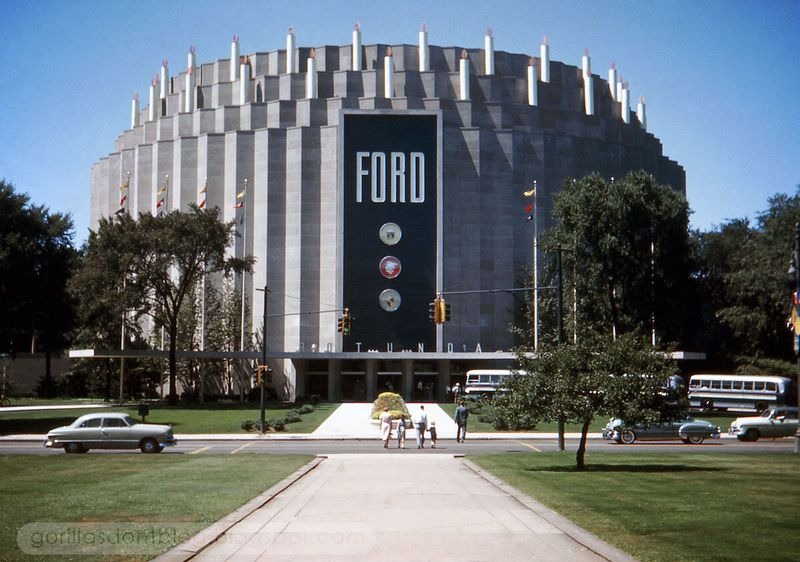
Image result for photos of Ford rotunda

(Ford Rotunda, Dearborn, MI)

David Maraniss’ ONCE IN A GREAT CITY: A DETROIT STORY is almost a love story or at the very least an ode to a city that has slowly fallen from the heights it had reached in the 1950s.  Maraniss focuses on the 1962-1964 period when the city was about to confront white flight to suburbia, the loss of manufacturing jobs, and the ever present issue of racism.  Maraniss who is an excellent writer whose works include sports biographies of Vince Lombardi and Roberto Clemente, the foremost study of Bill Clinton’s pre-presidential years, a wonderful book on Vietnam and the anti-war movement among a number of others.  Maraniss takes on the city of his birth, an urban colossus held together by the automobile industry and manufacturing after World War II that is in the midst of a severe decline.  The decaying city is like a boxer who has been knocked down and is trying desperately to get off the canvas.  In 1962 a reform mayor, Jerome Cavanaugh comes to office and launches a courageous campaign to root out racism in the city’s police force.  Others including Walter Reuther, the powerful head of the United Automobile Workers Union, who saw segregation through the lens of the Cold War and a threat to increasing progressive unionism worldwide is examined.  Reuther was a man of action who tried to create programs and investment to rekindle Detroit’s glory.  It was an uphill fight, and a timely story as today, Detroit, now much smaller and with a more varied economic approach is still trying to rise from the ashes.

Image result for photo of berry gordy, jr.

(the founder of Motown Records, Berry Gordy, Jr.)

Maraniss begins in a symbolic fashion as he describes two events that took place on November 9, 1962.  First, the fire that destroyed most of the Ford Rotunda one of the city’s most important symbols – America’s love affair with the automobile, never to be rebuilt.   Secondly, the police and federal agents raid of the Gotham Hotel, the center of black culture for many years, to break up a significant gambling racquet, and as a result the hotel was demolished in the name of urban renewal, or as others remarked “negro removal!”

Image result for pictures of walter reuther

The book conveys a number of interesting biographical sketches of important individuals of the period.  Maraniss ranges from the automobile industry concentrating on Ford, and the music industry zeroing in on Motown and the empire Berry Gordy, Jr. built providing the reader the feel of the mid-1960s.  The reader is also exposed to the grimy side of Detroit as Police Commissioner George Edwards goes after the mob and its gambling ties to the city.  His investigation, along with the FBI establishes links to National Football League players and the Giacalone mob family that involves Detroit Lions defensive tackle Alex Karras who will be suspended from playing, and eventually through a sting he arrests Tony Giacalone.   Mayor Jerome Cavanagh, a JFK liberal and his quest to bring the summer Olympic Games to Detroit in 1968 is discussed in detail as he tries to implement his progressive agenda.

Image result for photo of Henry Ford II

(Henry Ford II)

Maraniss used the rise of Martha Reeves and the Vandellas as a template to explain why Detroit was at the perfect storm to develop the Motown sound.  From the availability of pianos to middle class black families, the migration from the south of gospel and blues as people came in search of jobs during World War II, the reach of Grinnell’s, the music store that made affordable instruments available, the luck and proximity of random talents like Aretha Franklin, Diana Ross and Smokey Robinson living so close to each other during childhood, and the music education provided by Detroit public school teachers.  The role of the Reverend Clarence La Vaugh Franklin is analyzed as he moved from being a theatrical circuit preacher around the country to that of a civil rights leader in Detroit as he organizes a civil rights march, “the Walk to Freedom” in Detroit supported by Reuther and the UAW among others. The march was highlighted by an address by Martin Luther King, and it was at this Detroit rally that he laid the basis for his “I had a Dream Speech” given later that summer in Washington.  Overall, the black community throughout the time frame of the book is beset by a power struggle and division as Franklin is not able to maintain the unity of the rally and Reverend Albert Cleague moves toward a black liberation theology bent on dealing with the problems faced in Detroit.  Cleague will go so far as inviting Malcom X to speak to his supporters providing evidence of the total rift that existed as King was derided, and that there was no way to close the factionalism that emerged.
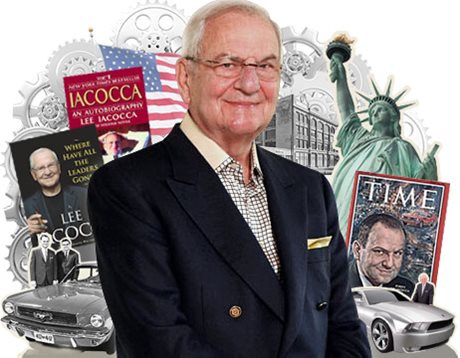
Image result for photo of lee iacocca

(Lee Iacocca)

Maraniss also explores the relationship between Lee Iacocca, the head of Ford and J.Walter Thompson, the advertising firm that was to modernize Ford’s image as 1963 approached.  The campaign would be headed by William D. Laurie, the head of the agency in Detroit and the epitome of the “Mad Men” mystique.  The project was T-5, and after the bust called the Edsel, Iacocca needed a success.  The success would become the Ford “Mustang,” whose development Maraniss details concentrating on the relationship between Henry Ford II and Iacocca.  Maraniss also conveys the importance of Ford and Walter Reuther focusing on their ability to negotiate and reach agreements that allowed workers to think of themselves as middle class as they received pensions, health insurance, and wages connected to an inflation index.  The work of these two men was important to the labor peace of the mid-sixties and their impact was throughout the industrial universe.

Picture of 1965 Ford Mustang Standard Coupe, exterior`

(1965 Ford Mustang)

Perhaps the most evocative topic is that of the development of Motown and the music industry and how it was spawned.  Concentrating on the Gordy family and its contributions, Maraniss focuses on Berry Gordy, Jr. and the Motown review, a stage show of some of the future stars of music including Smokey Robinson and the Miracles, Diana Ross and the Supremes, Marvin Gaye, and Martha Reeves and the Vandellas.  The review left Detroit on a 56 day tour on the day the United States instituted its embargo of Cuba during the missile crisis of October, 1962.  Maraniss effectively transforms the trip into a discussion of race in America as the group experiences segregation throughout its journey.  Traveling all over the Midwest, south, and winding up in New York City Maraniss integrates the black migration north for jobs beginning in the 1930s, the reaction of whites who felt they were taking their jobs, race based actions by white police forces, and the violence of black youth.  Racial fearmongering was a dominant theme and the issues that were prevalent during and after World War II were ever present as the tour wound on while the Civil Rights Movement was in full gear.   What emerges from the tour is that music is another Detroit export that impacted America second only to the auto industry.

Maraniss is careful to point out at a time when Detroit was booming a Wayne State University study in February, 1963 predicted the collapse of the city as it declared bankruptcy in 2013.  The study pointed to the reduction of the city’s population from 1,670,414 in 1960 to a projected 1,259,515 in 1970.  It also highlighted the white flight to the suburbs as blacks made up 28.9% of the city’s population in 1960 and a projected 44.4% in 1970.  The result of which would be a population whose tax base could not pay for its needs as by 2013 the population would be 688,000.  But what is fascinating at the time of the report automobiles were selling at record levels and the city was selling itself as the home for the 1968 Summer Olympic Games.

“By the close of Mr. Maraniss’ book, dreams of hosting the Olympics have been scuttled; urban renewal has uprooted many traditional, predominantly black neighborhoods; police reforms that might lead to greater racial harmony have stalled; and efforts to transform the city through Model Cities and War on Poverty programs have run aground, fueling tensions that would explode in the 1967 riot.” (NYT, September 14, 2015)   A riot that would kill 43 people, injure another 1189, result in 7200 arrests, with the destruction of over 2000 buildings.

Image result for pics of detroit today

(the symbol of Detroit today, an abandoned building)

If you want to relive the essence of the mid-1960s, Maraniss’ new book, with its emphasis on Motown, the Ford Motor Company, race relations and the civil rights movement, politics and much more is an excellent synthesis of the period.  It reflects Maraniss’ approach to narrative history, impeccable research and mastery of topic that will not disappoint.  Read it and enjoy.

Image result for photo of the supremes

A MATTER OF HONOR: BETRAYAL, BLAME AND A FAMILY’S QUEST FOR JUSTICE by Anthony Summers and Robbyn Swan

Image result for pearl harbor attack photos in color

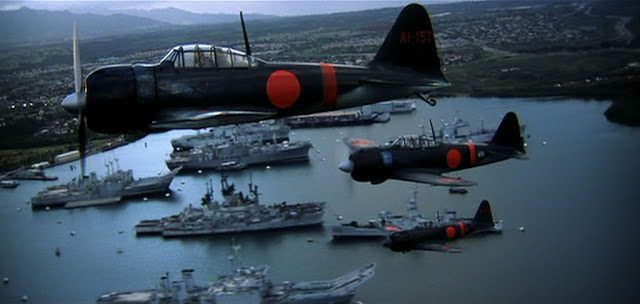
December 7 , 1941, Japanese attack on Pearl Harbor)

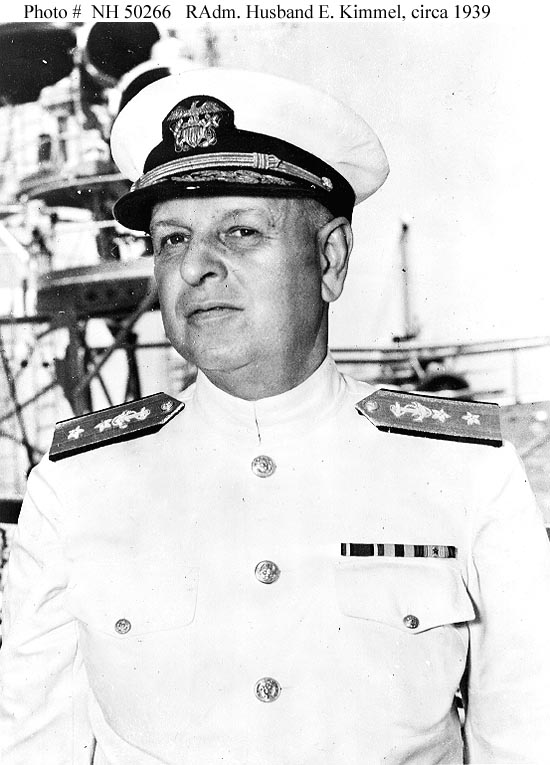
This week Americans commemorate the 75th anniversary of the December 7, 1941 bombing of Pearl Harbor and the United States’ official entrance into World War II.  The date has fostered the appearance of a number of recent books dealing with the Japanese attack and its repercussions.  Among these monographs are JAPAN 1941: COUNTDOWN TO INFAMY by Eri Hotta, PEARL HARBOR: FROM INFAMY TO GREATNESS, by Craig Nelson, COUNTDOWN TO PEARL HARBOR: THE TWELVE DAYS TO THE ATTACK by Steve Twomey, SEVEN DAYS OF INFAMY: PEARL HARBOR ACROSS THE WORLD by Nicholas Best that concentrate on the overall attack, what lay behind it, its repercussions, and A MATTER OF HONOR: BETRAYAL, BLAME AND A FAMILY’S QUEST FOR JUSTICE by Anthony Summers and Robby Swan which focuses in on the role of Admiral Husband Kimmel who was relieved of his command and accused of dereliction of duty due to the success of the Japanese attack.  The focus of this review is the narrative exploration and defense of Admiral Kimmel who Washington officials made one of the major scapegoats for the losses at Pearl Harbor, and his fight, during his lifetime to clear his name, and the continued battle with the Washington bureaucracy by his sons to absolve their father and restore his reputation.  The book is presented in two parts.  The first section, about two thirds of the book explores events, decisions, intelligence, and personalities leading up to the attack.  The last third deals with the charges against Kimmel, his defense, and the families attempt to restore his reputation and absolve him of total responsibility for the failures that led to December 7th.

Image result for photo of Husband Kimmel

After putting to bed some of the conspiracy theories pertaining to the reasons behind the Japanese success at Pearl Harbor the authors move on to deal with the issue of culpability that stands on firmer ground.  In terms of whether the accusations leveled at Kimmel hold water Summers and Swan point to the change in US strategy for the Pacific in January, 1941.  Under Admiral Harold R. Stark’s direction “Plan Dog” was implemented to restrain Japan by using the fleet operating out of Pearl Harbor as a bulwark against Japanese aggression.  Stark was very concerned that a sudden attack in Hawaiian waters would be very problematical and he asked the War Department to provide additional equipment and protective measures, i.e., increased air-born patrols, augment anti-aircraft patrols, newer and more efficient aircraft, increase the lack of aircraft detection devices among a number of requests.  It was clear that the naval command at Pearl Harbor felt its defenses were inadequate.  In February, 1941, Kimmel who was made Commander and Chief of the Pacific Fleet also made requests to Army Chief of Staff General George C. Marshall who was not forthcoming with materials and planes as he remarked that the country was “tragically lacking in material…we cannot perform a miracle.”  Letters to Secretary of War Henry L. Stimson and Navy Secretary Henry Knox reflected the position that the army would be unable to assist at Pearl Harbor and that materials were not available.  This at a time, based on earlier exercises going back to 1928, as well as a number of other warnings from well-placed individuals who claimed to know Japan’s plans, it seems obvious that the US military was fully aware of the Japanese threat, including an accurate prediction by Knox as to what could occur in the future.

Image result for Photo of Henry L. Stimson

(Secretary of War Henry L. Stimson)

Summers and Swan discuss many facets of the attack on Pearl Harbor.  They have mined the communications between London and Washington, including the political and intelligence sharing components.  They explore the important meetings in Washington involving the president, his cabinet and military officials as they evaluated intelligence information, negotiations with the Japanese, and military readiness and strategy should Tokyo strike.  The coverage of a number of interesting components of intelligence operations, human and non-human are excellent, in addition to the dissemination of information learned.  Portraits of the key characters and decision makers are integrated into the narrative, i.e., President Franklin D. Roosevelt, Secretary of the Navy Henry Knox, Secretary of State Cordell Hull, Chief of Staff George C. Marshall, Secretary of War Henry L. Stimson, Chief of Naval Operations Harold R. Stark, US Military Commander responsible for Hawaii Walter C. Short, FBI Head, J. Edgar Hoover, Japanese Ambassador to the United States Kichisaburo Nomura, and the Japanese Admiral in command of the attack on Pearl Harbor Isoroku Yamamoto, among many more.

Image result for photo of Harold Stark

(Chief of Naval Operations Admiral Harold R. Stark)

There were many interesting aspects to Summers and Swan’s description leading up to December 7th.  Their discussion of spies such as Ulrich von der Osten, a German spy stationed in Shanghai who ran a leather goods salesman, Kurt Ludwig in gathering intelligence for Japan is fascinating.  The role of British double agent, Dusko Popov and Hoover and other officials refusal to take his warnings seriously sheds light on the dysfunctional relationship between US and British spymasters before the attack on Pearl Harbor.  The authors zero in on the negotiations between the US and Japan the last week of November, 1941, including MAGIC and PURPLE intercepts since the US had broken Japanese codes. Other intercepts include the November 27th warning to US bases overseas and the intelligence assessments as of November 30, all pointing to a number of conclusions.  First, the Japanese were acting out a charade in conducting negotiations, Kimmel was not party to intelligence and the analysis of the ongoing talks that had reached a standstill, and Hawaii/Pearl Harbor was left out of any warnings and intelligence pertaining to a Japanese attack.  It was pretty clear that officials were much more concerned with the Philippines than Pearl Harbor.

The first damning action taken was the creation of the Roberts Commission a week after the attack.  The commission headed by Supreme Court Justice Owen Roberts provided its report on January 24, 1942 and concluded that Marshall and Stark had sent appropriate warnings to Hawaii.  Further, it vindicated senior members of the government including naval and army commanders.  It argued that Kimmel and Short did not respond appropriately and charged them with “dereliction of duty,” a failure to “properly evaluate the seriousness of the situation,” and errors in judgement.”  Interestingly, Kimmel was never asked if he received MAGIC intercepts, and the senior officials who said he received them were not under oath at the time.  The result Kimmel was relieved of command on December 16, 1941, was coerced into retiring, and was the subject of hate mail, death threats, denunciations in Congress, and was told that a court martial could take place in the future.  This for a man who gave over forty years to his country.  First he was not allowed to have a lawyer present with him before the commission, and secondly, he was not allowed to question his accusers.  According to commission member William Standley, a retired admiral the result was a self-fulfilling prophecy as the investigation “precluded any investigations into the activities of high civilians in Washington….Army and naval officers and high civilian officials equally more culpable.”  In addition, he points out based on the information available to them Marshall and Stark did not serve with distinction to say the least.  The only way to exonerate Kimmel was to make parts of MAGIC intercepts public, but that would be a threat to American national security.  Finally, a congressional investigation did take place in late 1945 after FDR’s death and it concluded that MAGIC intercepts should have been sent to Kimmel.  He may have been guilty of “errors in judgement,” but not “dereliction of duty.”  This was not enough and Kimmel would spend the rest of his life trying to restore his honor.

Image result for pictures of george c. marshall

(Chief of Staff, General George C. Marshall)

Following his death, Kimmel’s sons, grandchildren, and other family members worked to restore his correct place in history by trying to get the the Defense Department, Congress and the President to restore his naval rank as it existed before December 7, 1941.  The authors examine this effort and its results, a quest that continues to this day.  A MATTER OF HONOR is a fascinating look at the inner workings of our defense, diplomatic, and intelligence policies leading up to the war and its effect on one person who is aptly described as “an American Dreyfuss” because of what he went through.  Summers and Swan have written a cogent narrative and their conclusions dealing with FDR, Marshall, Stark and other government officials are dead on.

Image result for pearl harbor attack photos in color

(December 7, 1941, Japanese attack on Pearl Harbor)

HITLER: ASCENT 1889-1939 by Volker Ullrich

Image result for photos of hitler

The public’s fascination with Adolf Hitler remains strong even sixty years after his suicide in the Fuhrer bunker in April, 1945.  To date over 120,000 books have been written about Hitler and Volker Ullrich’s new biography, HITLER: ASCENT 1889-1939 is a welcome addition to this ever increasing bibliography.  Up until now Ian Kershaw’s two volume work was the recognized standard in this genre replacing earlier volumes by Alan Bullock, and Joachim Fest as the most comprehensive works on Hitler.  Kershaw argued that Hitler was motivated by two obsessions as he pushed Germany toward war; the removal of the Jews, and German expansion to the east.  Overall, Ullrich agrees with Kershaw’s thesis, but what makes his book so important is his ability to synthesize the vast material that has already exists, his access to a great deal of new primary materials, and it has been almost twenty years since Kershaw’s work was published.  Ullrich should be commended for his voluminous research supported by his extensive endnotes.  These endnotes contain a treasure-trove of information for scholars of the Nazi regime, their leaders, and their rise to power.

Image result for photo of Kristallnacht

(A burned out synagogue during Krystallnacht, November, 1938)

Many wonder what the keys were to Hitler’s success.  Ullrich correctly depicts a man who was able to conceal his real intentions from friends and foes alike as one of the keys to his success.  He had the ability to instantly analyze political situations and exploit them, including his political opposition.  His success rests on his improvisational style of leadership where he created numerous internal conflicts from which he emerged as the indispensable man.  Ullrich breaks the myth that Hitler lacked personal relationships arguing that he was able to separate his political and private spheres which impacted his pursuit of power greatly.  Another key that Ullrich stresses in understanding Hitler is examining the reciprocal nature of his relationship with the German people that contributed to his enormous popularity.  It was not a forgone conclusion that Hitler would come to power, but domestic opposition leaders underestimated his abilities, as would foreign leaders after he consolidated power in 1934.  Ullrich’s aim “is to deconstruct the myth of Hitler, the ‘fascination with monstrosity’ that has greatly influenced historical literature and public discussion of the Fuhrer after 1945.  In a sense, Hitler will he ‘normalised’—although this will not make him seem more ‘normal.’  If anything, he will emerge as even more horrific.”

Ullrich’s study is extremely comprehensive.  He does not spend a great deal of time concerning Hitler’s childhood and upbringing, just enough to explore a few myths associated with Hitler’s childhood which he debunks, i.e.; he did not grow up in poverty as his father Alois had a good pension; he did not blame the Jews for the death of his mother from cancer; and he did not blame the Jews for his inability to be admitted to the Academy of Fine Arts  The biography becomes detailed as the Ullrich explores the effect  Fin-de-Siècle Austria on Hitler and the author does an excellent job reviewing the historiography pertaining to Hitler’s intellectual development.  Hitler is presented as an autodidact who was self-educated which explains how he acquired his anti-Semitic prejudices and German nationalist ideas.  But it is Hitler’s experience in World War I that shaped the man, without which he would have remained “a nobody” with pretensions of being an artist.

Image result for photos of hitler

(Adolf Hitler with his second in command, Hermann Goering)

Ullrich’s work successfully shifts the focus of his study on to Hitler the person as is evidenced by an excellent chapter, “Hitler the Human Being.”  It is here that Ullrich delves into Hitler’s behavior and personality and tries to lift the mask that makes it difficult to penetrate Hitler’s shifting persona.  Hitler’s personality is a compilation of dichotomies.* He was a dictator who kept people at a distance, but sought company to avoid being alone with himself.  He could be caring and empathetic at times, but at the same time he could commit or order brutal acts.  Ullrich is correct in pointing out that Hitler was an actor and chameleon who was able to manipulate others who did not see through him as he overcame his personal insecurities and was able to shift many of them on to the German people in order to seize power.

Other important chapters include “Month of Destiny: January 1933,” where Ullrich details Hitler’s path to the Chancellorship by taking the reader through the numerous elections, the strategies pursued by Hitler and his cohorts, the approach taken by the opposition, and the political infighting on all sides of the political spectrum.  January 30, 1933 became the turning point in the history of the twentieth century, but at the time Ullrich correctly points out leaders and the German public were not totally aware of its significance because most power brokers believed that the Franz von Papen-Paul von Hindenburg-Alfred Hugenberg alliance would be able to control Hitler.  As is repeatedly pointed out in the narrative it was just another example of people underestimating the new German Chancellor.  When examining if there were opportunities to stop Hitler’s ascent, Ullrich recapitulates the ideas of Karl Dietrich Bracher’s THE GERMAN DICTATORSHIP published in 1972.  Further, no one should have been surprised by Hitler’s actions after he rose to power, because his speeches, other public utterances, and his book MEIN KAMPF carefully delineated what he proposed to do.

Image result for photo of joseph goebbels

(Nazi Minister of Propaganda, Joseph Goebbles)

In the realm of what he did do it is carefully reconstructed in the chapters, “Totalitarian Revolution,” and “Eviscerating Versailles.”  After achieving power on January 30, 1933 over the next year we witness the Nazi consolidation of power through the creation of the first concentration camp at Dachau; the passage of the Enabling Act, or “The Law to Remedy the Distress of the People and the Reich,” which was used to create a dictatorship in the hands of the Chancellor as Hitler could now formulate laws without the approval of the Reichstag; and lastly, The Night of the Long Knives which destroyed the SA and the last vestige of political opposition.   As far as Hitler’s foreign policy was concerned the enemy was the Bolshevik-Jewish conspiracy and the key to its destruction was the step by step dismantling of the Treaty of Versailles.  Ullrich takes us through this process and the tactic Hitler employed throughout the period was to simultaneously appear as conciliatory and presenting his adversaries with a fait accompli, i.e., German military rearmament and the occupation of the Rhineland in March, 1936.   The response of the west was one of appeasement and Hitler recreated a strategy that worked so effectively domestically – implementing policy that fostered foreign diplomats to underestimate him.   Overall, there is little that is new in this part of the narrative, but Ullrich’s clear analysis and Jefferson Chase’s excellent translation make events and policies easy to understand, particularly the historical implications that would result in World War II.

After reading Ullrich’s narrative I am not certain he has met his goal of “humanizing” Hitler because no matter how the material is presented he remains the historical monster that his actions and belief system support.  To Ullrich’s credit he has written a carefully constructed biography that should be seen as the most comprehensive biography of Hitler to date, and I look forward to the second volume that will carry us through the end of World War II.

*To explore Hitler from a psychological perspective you might consult:

Binion, Rudolph. HITLER AMONG THE GERMANS

Langer, Walter. THE MIND OF ADOLF HITLER

Waite, Robert. HITLER THE PSYCHOPATHIC GOD

Image result for photos of hitler

HERO OF THE EMPIRE:THE BOER WAR, A DARING ESCAPE AND THE MAKING OF WINSTON CHURCHILL by Candice Millard

Image result for photos of Winston Churchill and the Boer War

(Winston Churchill as a war correspondent)

Author Candice Millard’s recent successes include RIVER OF DOUBT: THEODORE ROOSEVELT’S DARKEST JOURNEY which chronicles the former president’s exploration of the Amazon River, and DESTINY OF THE REPUBLIC: A TALE OF MADNESS, MEDICINE AND THE MURDER OF A PRESIDENT that categorizes the life and assassination of President James A. Garfield.  She has followed these works with her latest book, HERO OF THE EMPIRE: THE BOER WAR, A DARING ESCAPE AND THE MAKING OF WINSTON CHURCHILL that introduces the reader to Churchill’s early career exploits during the Boer War, a war which brought Churchill to the attention of a British public that was shocked by the difficulties that Her Majesty’s soldiers experienced in fighting the Boers.  Churchill found himself in South Africa hoping to achieve the military fame that had eluded him previously in Cuba, India, and the Sudan.  He was driven by an insecure ego that hoped to make a name for himself so he would not only be known as the scion of a rich of an aristocratic family.  Early on, Churchill would inform others that soon he would soon earn a seat in Parliament, and eventually would become Prime Minister.  In England at the time he was considered a “self-promoter par excellence.”

Image result for photos of Winston Churchill and the Boer War

Churchill’s sense of his own destiny is well known and was reinforced by his experiences in witnessing British troops fighting the Pashtuns in what today is Pakistan, and Madhists in the Sudan.  Churchill used family connections to be placed in whatever colonial war England was engaged in at the time, and was able to build a resume as an important figure in British politics as he felt the weight of his ancestor, John Churchill, the First Duke of Marlborough who throughout the last 17th and early 18th century never left a battlefield unless he was victorious.  After being defeated in his run for a seat in Parliament at the age of twenty-five, Churchill realized he needed a “good war” to propel his career and events in South Africa presented a unique opportunity with its reserves of gold and diamonds.  Storm clouds in the region gathered throughout the second half of the 19th century and by October, 1899 the Boer (a combination of Dutch, German, and British people who had migrated to the area since the 17th century) had enough of London’s encroachment into what they deemed to be their “republics” and war became official on October, 11, 1899.

Millard is a wonderful stylist who provides enough detail that the reader gains a true understanding of the makeup of Boer society and politics, along with an accurate portrayal of local topography, Boer villages, and culture.  The author captures British military arrogance from the outset of the first Boer attack in Dundee, an attack that was designed by Boer commander, Louis Botha to shake British confidence. For the British the goal of defeating the Boer by Christmas was no longer a forgone conclusion.  Millard’s comparison of Boer and British fighters is priceless as she described the British as moving at a “glacial pace,” and the Boer being “astonishingly mobile.”

Image result for map of anglo boer war

Millard explains the background history of the region before Churchill’s arrival from the Dutch extermination and removal of local tribes, the British settlement of the Cape Colony, and the Boer “trek” to the Transvaal, and wars against the Xhosa and Zulu.  The importance of the war against the Zulu cannot be underestimated because it provided the Boer with military lessons and strategy which allowed them to fight like no Europeans had previously and gave the British such difficulties.  Once Churchill zeroed in on South Africa he had to use family connections to gain an appointment as a journalist to enter the war zone since he was no longer a member of the military.  It is interesting that the future First Lord of the Admiralty hated to travel by sea which was how he reached Cape Town!

The author provides a number of mini-biographies of the major players in her narrative.  Aside from Churchill and his coterie of friends like Adam Brockie and Aylmer Haldane, she explores the lives of important Boer figures like Louis Botha, the Boer commander, and Boer President Paul Kruger.  Her discussion of Boer leadership is especially important because her discussion of their leadership and strategic skills takes the reader inside their movement and when she compares it to the British approach it explains the poor showing of Her Majesty’s forces.  Further, if one projects into future Boer methodology, it is useful to imagine the decline of the “Empire” beginning between 1899 and 1902 in South Africa.

Image result for photo of Boer soldier

(Two Boer soldiers)

The narrative recounts Churchill’s experiences and exploits during the Boer War and its implications for Churchill’s future career and the effect on Britain’s political and military history.  Millard explores Churchill’s captivity and treatment and how he was able to acquire the many amenities that he had been used to as a member of the aristocracy.  Churchill’s argument with the Boers rested on his “status” as a journalist for the Morning Mail, demanding that he be released immediately.  When the Boers realized the type of prisoner they possessed there was no way they would restore his freedom.  The Boer reaction to his escape was one of obsession and the need to recapture him, and humiliate him to the point that for a period his recapture was more important than the war itself.  We witness the planning that went into his escape, his life as a fugitive, and his final arrival in Portuguese East Africa, a trek of over 300 miles to freedom.

Image result for photo of lord kitchener

(Lord Horatio Herbert Kitchener)

Millard lists the advantages that Boers had at the outset of combat and the desperate measures the British employed, (i.e.; concentration camps that resulted in the death of 22,000 women and children out of a total of 26,000 total death) to finally bring about an end to the war in 1902.  The Boers had felt no shame in conducting a war based on staying hidden, not pursuing personal glory, fighting to the death, applying superior knowledge of the veld, and their ability as sharpshooters.  For the British, war was about romance and gallantry as they viewed guerilla tactics as cowardly, and believed they were engaging in an adventure until they realized their approach was a failure.  Their arrogance had been self-defeating and proved very detrimental to their cause until Lord Horatio Herbert Kitchener introduced an unprecedented level of savagery to the conflict.

In the end Churchill achieved the level of heroism he sought and gained election to Parliament soon after the war.  A war that taught him many important lessons that he would employ during his marvelous career that followed.  Millard has written a stirring narrative that should interest the general reader and students of Winston Churchill equally.  This is her third straight successful literary venture, and I look forward to the fourth no matter what subject she chooses to tackle.

Image result for photos of Winston Churchill and the Boer War

(Winston Churchill as a war correspondent)

JOHN QUINCY ADAMS: MILITANT SPIRIT by James Traub

Image result for photos of john quincy adams

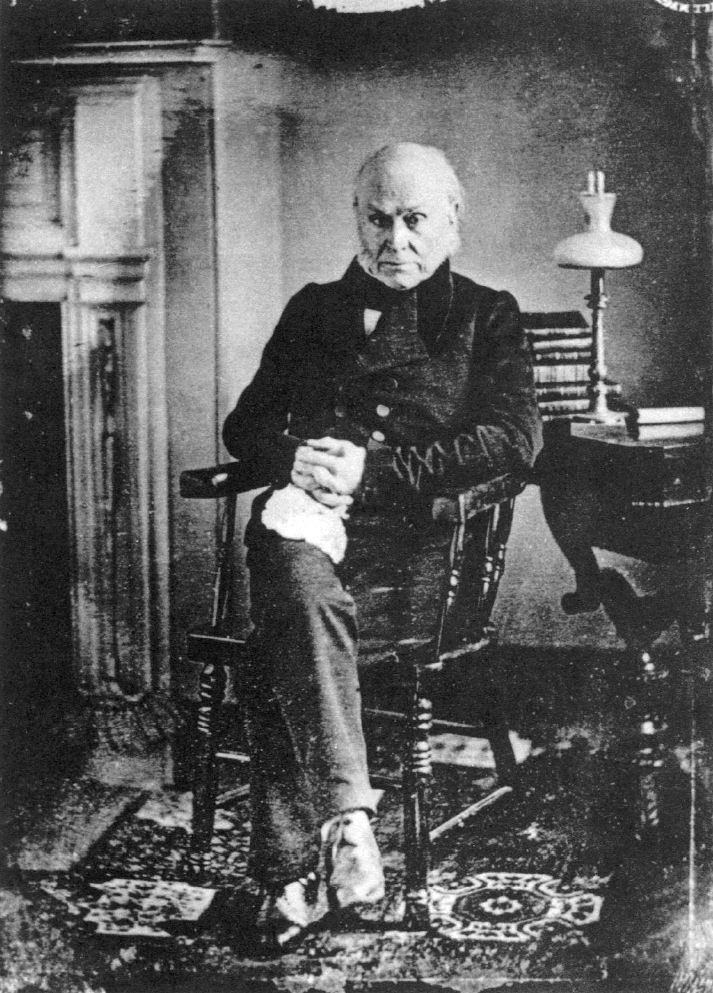
(John Quincy Adams, the 6th President of the United States)

At a time when most Americans believe they are witnessing the most divisive political campaign they have ever experienced, they need only to turn the clock back to the 1828 presidential campaign when Andrew Jackson, angry because he believed the previous election had been stolen because of a “corrupt bargain” between John Quincy Adams and Henry Clay, launched a nasty and personal attack against Adams as early as his inauguration resulting in Jackson’s eventual victory.  This political clash is just one component of James Traub’s excellent new biography, JOHN QUINCY ADAMS: MILITANT SPIRIT.  Adam’s the son of our second president was a rather enigmatic and recalcitrant figure who seemed to always answer to principle, not political expediency.  His diplomatic career consisted of ministerial posts in the Netherlands, Prussia, Russia, England, as well as serving as Secretary of State.  His political offices included the Massachusetts State Senate, the U.S. House of Representatives, and the Presidency.  Adams’ life is a compendium of late 18th and 19th century events where he usually was a focal point in any important situation.  This amazing career is skillfully portrayed by Traub as he dissects his subjects’ life and concludes that despite numerous achievements and failures, he never wavered from the moral convictions instilled in him by his parents, John and Abigail Adams.

Image result for John and Abigail Adams photo

(Abigail and John Adams, John Quincy’s parents)

The success of Traub’s effort lies in mining the 15,000 pages of Adams’ journal that he kept over his entire life.  The fact that the journal has been digitized allows the author easy access and assisted in creating a window into his subject’s mind that is fascinating.  Traub explores every aspect of Adams’ life, especially his close relationship with both of his parents.  The reader can eavesdrop on conversations between the father and son where we see why Adams’ became the man he did.  Not quite a reincarnation of his father, but strikingly similar.  Many of the letters and conversations between mother and son are also available and we are exposed to the rigid moral principles and advice that Abigail offered. The type of father Adams’ became later in life is directly related to his own upbringing as he pursued the same method of childrearing as his parents.  As far as his relationship with his wife Louisa it does not measure up to the closeness between John and Abigail Adams.  He was a distant husband and Louisa and John Quincy spent many years apart.

At a very young age he “followed a set of standards, moral, and intellectual, to which people should be held, and he found much of the world wanting,” particularly women.  The pressure on Adams because of his parents was immense and this led to feelings of guilt and depressive episodes.  Many times he felt conflicted as he passed back and forth between aspiration and resignation.  Traub has the knack of interweaving Adams’ private life with his career in an interesting fashion.  We get a glimpse of all aspects of Adams be it in the family, years of diplomacy overseas, and his political career.  Traub’s careful devotion to detail creates an accurate portrayal of life on the family farm in Quincy, MA, Washington, DC, or the many countries that he served as a diplomat.

Image result for photo of louisa adams

(Louisa Adams, wife of John Quincy Adams who would outlive him by four years)

Adams was a much more pragmatic politician for his time and tried to stay away from rigid ideologues.  For example, he refused to join the Federalists in their attacks on Thomas Jefferson, a man he admired, and supported the purchase of Louisiana because for Adams, unlike today, country came first, not political partisanship.  Adams even supported Jefferson’s Embargo Acts (1807) when the New England region that he represented opposed it.  As Traub states “he would become an honorable outcast like his father.”

Traub does a masterful job explaining how Louisa endured her domineering husband.  The author’s narrative reflects a great deal of empathy toward Louisa as she tries to live apart from her sons for long periods of time while her husband was posted overseas.  This in conjunction to the many disappointments the couple endured, from separation, countless miscarriages, and the death of their daughter Louisa, and their two sons John and George, but as their marriage endured John Quincy and Louisa would grow somewhat closer.

Image result for photo of Charles Francis Adams

(Charles Francis Adams, the son of John Quincy that was most similar to his father)

Traub delves into all aspects of Adams’ diplomatic career.  His most important postings dealt with negotiations to end the War of 1812, as minister to England, and his work in St. Petersburg as he established a close and friendly relationship with Alexander I which proved very important during the period of Napoleon’s defeat and the establishment of the Holy Alliance.  Adams’ stint as Secretary of State is covered completely and the chapter devoted to negotiations with the British and concerns over the rise of Republics in the former Spanish colonies that led to the Monroe Doctrine in 1823 is one of Traub’s best.

Adams’ journal contains copious details of negotiations, social observations, and acute analysis.  Adams’ mindset, particularly as it related to the intellectual underpinnings of his foreign policy is incisive.  What emerges is a man whose belief system is somewhere between a realist and an idealist who spent his entire career trying to enhance American prestige and territory while avoiding what he considered reckless adventures, i.e.; recognition of Spanish Republics, whether to invade Cuba, the seizure of West Florida among others.  The intellectual core of Adams’ belief system rested on “the crucial distinction he made between freedom as a donation or grant from a sovereign and freedom as an act of mutual acknowledgement among equals.  This was America’s gift to mankind—a gift [that Adams] hoped to spread across the globe.”

Image result for photo of andrew jackson

(Andrew Jackson, the seventh president of the United States and a political foil to John Quincy)

Traub correctly points out that Adams’ was not a politician and would not seek office and do the necessary lobbying and cajoling to gain support for his own candidacy, and after assuming the presidency, to gain support for his legislative goals, particularly that of internal improvement and creating an infrastructure linking the expanding country.  The machinations involving the 1824 and 1828 presidential elections, his relationship with men like Henry Clay, John C. Calhoun, and Andrew Jackson, and especially his term as president can best summed up by the British historian George Dangerfield, here was “a rather conspicuous example of a great man in the wrong place, at the wrong time with the right motives and a tragic inability to make himself understood.”

Adams’ later career is presented in a clear and concise manner as he enters the House of Representatives, the only president to do so.  For Adams the issue of slavery was paramount and he saw the problem of states’ rights over tariffs as nothing more than a cover for the “peculiar institution.”  In the 1840s Adams found himself in the midst of many heated debates dealing with slavery.  At times he refused to label himself as an abolitionist, and would argue before the Supreme Court representing the men who had seized the slave ship, Amistad.  Further, he would become a thorn in the side of states’ rights supporters of slavery in the House of Representatives by repeatedly arguing against the “gag rule,” introducing petitions against slavery, and defending himself as attempts to censure him for his opposition to the “slavocracy” were introduced.  Adams would become a man without a party as he would support no faction in the House and found a unique role for himself, “the solitary vote of conscience.”

John Quincy Adams was the last link to the founding generation which in part makes his life so important.  In addition, he is also the last link between the creation of the United States and its near destruction by Civil War.  In a sense Traub argues that Adams’ time in the oval office was an unsuccessful interlude in a remarkable career that saw principle over expediency as the guiding light of one of the most remarkable figures in American history.  For Adams, no matter what the situation, Washington’s message in his Farewell Address to remain neutral abroad, achieve unity at home, and create the consolidation of the continent were his guiding principles and Traub does an excellent job explaining how his subject went about trying to achieve them.

Image result for photos of john quincy adams

(John Quincy Adams, the sixth president of the United States)

BOBBY KENNEDY: THE MAKING OF A LIBERAL ICON by Larry Tye

(Robert Francis Kennedy)

Early in the morning on June 6, 1968 I got out of bed and turned on the news and learned that Robert F. Kennedy had been assassinated.  Kennedy had just won the California primary and as a college freshman I was convinced that had he lived he would have been elected president.  For me, the “what ifs” of American history applied, particularly because of the path taken by the Nixon administration.  I often wonder what would have been the course of American history had Bobby Kennedy lived – Civil rights?  Vietnam?  Income equality?  But counterfactuals are an intellectual exercise, not reality.  There have been numerous books written about Robert Kennedy and one must be careful to look at the entire picture, not just the last few years of his life when he evolved into a liberal icon.    A new biography by Larry Tye entitled, BOBBY KENNEDY: THE MAKING OF A LIBERAL ICON is a major contribution to the RFK literature as it is a very nuanced analysis of the former Attorney General and relies on a vast array of materials, interviews, and newly released documents from the Kennedy Library that results in a fresh approach to examining the life of the third Kennedy brother.

The key to Tye’s narrative is that he is able to effectively chart Robert Kennedy’s transformation from a rabid cold warrior who had been counsel to Senator Joseph McCarthy, plotted the elimination of Fidel Castro, wiretapped Martin Luther King, supported the war in Vietnam to the liberal hero who was on the precipice of the Democratic Party presidential nomination in 1968 when he was struck down by Sirhan Sirhan in Los Angeles.  The question that emerges is could he “have stitched back together a divided land whose vision seems at best as resonant in today’s polarized America?”  It is hard to forget the violence and hatreds that the upheavals of the 1960s wrought with Robert Kennedy at its center; as Attorney General and his brother’s main advisor on domestic and foreign policy, and as a senator from New York.  Many argue had he lived the latter part of the 20th century would have been quite different, but it was not to be. Tye’s work is impactful because of the attention he devotes to the earliest, hardest-edge part of Kennedy’s career and how his conservative roots fostered his later transformation.  In addition, the author has the ability to unearth, then describe the senator’s unabashed humanity and empathy for others no matter the color of their skin or their religious beliefs.

Of all the Kennedy children, Bobby was most like his father, Joseph P. Kennedy.  He took to heart his father’s adage that family came first, and in a crunch, it was only your parents and siblings that you could count on.  Like his father he would see life in terms of “black and white,” and eventually he was able to prove to his father that he had another able son who could carry on the work of his brothers.  Tye’s organizes his book into a series of chapters highlighting the most important aspects of Bobby’s career.  Beginning with his service on McCarthy’s Permanent Sub-Committee on Investigations we see evidence of how his reputation as a ruthless and vindictive operative developed, a reputation that would stay with him for most of his life.  Tye describes the relationship with the Wisconsin senator in detail and we see how the concept of loyalty developed in Kennedy’s mind.  Tye provides incisive analysis of their relationship and why they remained friends until the senator’s death in 1957.

(Jimmy Hoffa flips off Robert Kennedy during hearings into Teamsters and organized crime)

Tye examines the often told story of the Kennedy-Jimmy Hoffa feud.  He relies on the usual documentation as well as a new book by James Neff, VENDETTA that explores the war between the two men in detail.  What is interesting is that Tye argues that part of the reason the war between the two men intensified over the years was their similar personalities, i.e., tenaciousness, competitiveness, and the refusal to lose.  What is also interesting is that over the three years of hearings Robert Kennedy received more press that his brother Jack, and more importantly it allowed him to emerge from behind his father’s shadow as well as his brother.  Employing many of the tactics he used working with McCarthy, the Hoffa hearings were extremely beneficial to Bobby’s career.  The feud will remerge once Bobby becomes Attorney General and Tye provides numerous anecdotes based on his research of conversations between the two men, as well as legal transcripts.  The Hoffa war was integral to Bobby’s expansion of the Justice Departments war on organized crime.  This expansion also carried over into the Civil Rights division, adding lawyers and federal marshalls which became the basis of the Kennedy administration’s attempt to harness the civil and voter rights issues that exploded in the early 1960s.  Tye covers the standard material dealing with events in Mississippi and Alabama, but what makes his approach unique is that we see events through the prism of the President’s brother and the strategy they pursued.  In the end the events in the south would be so impactful that it helped Kennedy further understand the poverty and lack of rights that black American citizens suffered.

Robert Kennedy’s evolution in foreign policy is on full display as he was his brother’s most trusted advisor.  This is abundantly clear during the Bay of Pigs fiasco and the Cuban Missile Crisis as Bobby becomes obsessed with getting even with Fidel Castro, a major error that he would come to realize later as he let his vendetta against the Cuban dictator get in the way of broader goals and values, just as he had done with his Hoffa campaign.  Further, Tye is correct to point out that the book THIRTEEN DAYS, an account by Robert Kennedy of the missile crisis is not an honest appraisal of Bobby’s role, but what is really important is that Kennedy gained a new perspective on the nuclear world he lived in, and how accommodation was just as important as sabre rattling to achieve the nation’s national security goals.

For Tye, Robert Kennedy does not emerge as a complete person until the assassination of his brother.  Having earned the respect of his father during the 1960 presidential campaign, he would begin to evolve into being his own man during the Cuban crisis, but it took the death of John F. Kennedy for him to complete the process.  He would assume greater family responsibilities for his own children and those of his brother.  He became the person the family could lean on, but he himself grew depressed and lost his focus concerning his future.  He was able to recover in part by jumping into the New York senatorial race in 1964 and his burgeoning political and personal war with Lyndon Johnson.  Bobby viewed the president as the usurper of the Kennedy throne, and Johnson who suffered from an Adlerian inferiority complex when it came to the Kennedys, despised the man he referred to as that “grandstanding little runt.”  The relationship would only spiral downward as past slights and two extremely divergent personalities dominated the relationship as is described in greater detail in Jeff Shesol’s book MUTUAL CONTEMPT: LYNDON JOHNSON, ROBERT KENNEDY AND THE FEUD THAT DEFINED A DECADE.

(Freedom Rider bus attacked in Mississippi in 1961)

Robert Kennedy’s reputation was enhanced during the 1963 Freedom Rides summer and his election to the Senate, a move that would provide the therapy to deal with the loss of his brother.  Once ensconced on Capitol Hill he threw himself into his work as he traveled to the Mississippi Delta and experienced the ills of poverty first hand.  Further he took a major interest in the Bedford-Stuyvesant section of Brooklyn, NY where he witnessed the effects of white flight from urban areas and the resulting racial tension and poverty.  Though he was a senator, it was the Kennedy name that allowed him to confront the federal bureaucracy to try to mitigate social, economic, and racial problems that he confronted.  The key to burnishing his new found liberal reputation was his changing opinion on Viet Nam.  Tye examines the evolution of Kennedy’s cold warrior view of the war in Southeast Asia, beginning in 1951 and sees the change in his perception coinciding with Johnson’s expansion of the war in 1965.  At the outset Bobby was careful not to alienate the President, because so many Kennedy appointees were part of the Johnson administration.  However, after witnessing the corruption of the South Vietnamese regime by February, 1967 he called for a middle way when he was informed by a French diplomat that Hanoi was open to negotiation in return for an unconditional bombing halt.  Tye includes a number of LBJ-RFK conversations in his narrative and it is clear that their relationship had hit rock bottom, particularly when Bobby went public with his views.  From this point on Tye takes the reader inside Kennedy’s thought process as he enters the 1968 presidential race.   Kennedy’s motivations become clear as the campaign unfolds and the reader will begin to feel that they are a part of a new crusade to alleviate poverty in America and end the war in Vietnam.

(Robert Kennedy and Lyndon Johnson campaigning together in New York in 1964 despite their extreme distaste for each other)

Tye confronts all the major myths and rumors associated with the Kennedys and Bobby in particular in a reasoned and thoughtful manner.  Be it their proclivity toward affairs, getting even with people who opposed them, or just plain everyday matters, he breaks each controversy down into what is real and what is imagined and comes to acceptable conclusions or argues what could be possible, and what never happened.  However, Tye’s evolutionary theme as to how Robert Kennedy grew as a person is clear and accurately portrayed.  For Tye, the “good Bobby,” outweighs the “bad Bobby,” in this important new biography of a man, who had he lived might have greatly altered the world in which we live today.

(Robert Francis Kennedy)

GOING TO EXTREMES by Joe McGinniss

Recently I was in a bookstore in Anchorage, Alaska and came across a book by Joe McGinniss entitled, GOING TO EXTREMES. Having read his THE SELLING OF THE PRESIDENT 1968 about the attempt to repackage Richard Nixon for the 1968 presidential campaign, and CRUEL DOUBT which centers on a society murder in a small North Carolina town in 1988, I was intrigued.  After reading the introduction to the new edition written in 2010, as the original was published in 1981, I learned that McGinniss had thanked Sarah Palin for the inspiration to revisit Alaska after the 2008 Republican Convention and how the state had impacted him in the mid-1970s.  The book itself is part memoir, geographical guide, and history of the 49th state that was admitted to the United States sixteen years before what McGinniss describes in his own thought provoking and humorous style as the transformation of Alaska due to the domination of “big oil.”

A few weeks ago while standing below a section of the Alaska pipeline outside Fairbanks I learned that 85% of the state’s revenue is a result of oil and that each Alaskan resident receives a check for $2-3,000 a year as a tax rebate depending on the whims of politicians and oil production.  The money pays college tuition and numerous other costs for Alaska’s citizens and one cannot imagine where Alaska would be today without the money stream from “big oil.” McGinniss’ main motivation in visiting Alaska in 1975 was to experience the awesome beauty of its primal wilderness and mountains, for what he feared might be the last days of the last frontier America would ever have.

(Denali, over 20,000 feet above sea level, the highest peak in North America)

McGinniss would spend a year traveling and living among the native Eskimos and local citizens trying to get to the core of what it meant to be an Alaskan native, and those characters who settled in Alaska by choice for many diverse and unusual reasons.  The book describes a state that in many parts seems to be a world where things remain just as they had been forty or four hundred years before.  However, with the political and economic pressures fostered by the Alaskan pipeline they were about to change radically as I witnessed on my recent visit a few weeks ago.

The reader accompanies the author as he crosses the state from an amazing trek through the Brooks Range as he describes the Oolah Pass, part of the Continental Divide not between east and west, but the Arctic Divide.  Below this point water flowed south, emptying into the Pacific Ocean.  Beyond the Pass it drained into the Arctic Ocean!  We meet many fascinating characters who lived in the wilderness, towns, villages, and cities, from the state capitol in Juneau which cannot be reached by road, to Barrow which lies 330 miles above the Arctic Circle in the north, Seward in the south, and Denali* in the center.  Alaska’s topography make it a necessity for people to have pilot’s license if they are to survive the state’s rugged terrain, and in fact one out of every six residents do.  The need for air transport also serves as a time machine as you fly from Anchorage to Fairbanks to the north and on to coastal areas that seem fifty years behind.

(Oolah Pass, the Arctic Divide)

McGinniss spends a great deal of time exploring the impact of western technology and the coming of the white culture.  It has had a particularly devastating effect on younger Eskimos who were not set in the ways of the older generation.  What emerges is that Eskimo culture is being destroyed as they confront the Americanization of Alaska brought on by the wealth produced by the oil pipeline.  They are migrating to cities in great number seeking welfare aid, taking jobs on the pipeline earning money that they have no clue on how to deal with, or trying to survive in their villages.

In his trek throughout state, McGinniss meets a cavalcade of individuals unique in character and possess outlandish life stories that seem to culminate in Alaska.  World War II veterans abound, Grateful “Deadheads,” policemen from Denver, former businessmen and educators, writers, bureaucrats, and many who are recently divorced and trying to put their lives back together.  Others are seeking freedom, adventure, or just to get rich quick from the oil boom.  We meet people who arrive from Seattle on a barge in what appears to be a “hippie coup” of a small village as they take over the radio station, newspaper, and school library.  The descriptions and stories abound like Duncan Pyle, a former bestselling Canadian author who for a time was the Chairman of the Language Department at the Inupiat University of the Arctic, a university housed in a shack.  As Olive Cook who grew up in Bethel which is located at the confluence of the Bering Sea and the Yukon River who left for a job in Washington, D.C., but she could never reconcile her Eskimo culture and white technological society.  We also meet Eddie the Basque, a pipefitter from Idaho who hoped to make enough money from the pipeline to retire, however, by the time he arrived the pipeline was almost completed.

(The Alaska Oil Pipeline outside Fairbanks)

It seems that everyone that the author meets left the lower forty eight states for Alaska without any knowledge of what they were getting themselves into.  A case in point is Tom and Marie Brennan who left newspaper jobs in Worcester, MA and set out in their International Harvester Travel All pulling a houseboat on wheels.  After traveling 5000 miles they eventually reached Anchorage were they got jobs on the Anchorage Times and witness the spectacular growth of Alaska’s largest city, and Tom, who escaped Massachusetts, would soon become the Public relations Head for Atlantic Richfield and the oil pipeline!

McGinniss’ description of Fairbanks is as if it did not exist on earth, “but on a distant planet; a planet that was much farther from the sun.”  In fact, many of the author’s descriptions have that out of the earth’s universe feel to it as Alaska is not like any other area in our union, particularly the winters.  Many stark descriptions of the landscape are offered, but despite these comments, the sheer beauty of Alaska’s bareness comes through, from the Kahiltna Glacier 7200 feet above sea level which is the staging area for hikers to climb Denali or the Yukon River that flows from the Bering Sea all the way across Alaska into Canada.

GOING TO EXTREMES is a unique look at our 49th state, a view that is hard to accept for many natives because of the way their lives have changed.  However, for the Alaska novice like myself in conjunction with my recent visit it was eye opening what the oil boom has done to the state and its people.  Whether you are a conservationist, an individual who believes in the development of Alaska’s natural resources, or someone who wishes that the government would just leave Alaskans alone there is something worthwhile to be taken from McGinniss’ narrative.

*The name of the highest mountain in North America became a subject of dispute in 1975, when the Alaska Legislature asked the U.S. federal government to officially change its name from Mount McKinley to Denali. The mountain had been unofficially named Mount McKinley in 1896 by a gold prospector, and officially by the United States government in 1917 to commemorate William McKinley, who was president of the United States from 1897 until his assassination in 1901. (Wikipedia)

CHASING THE LAST LAUGH: MARK TWAIN’S RAUCOUS AND REDEMPTIVE ROUND-THE-WORLD COMEDY TOUR by Richard Zacks

(Mark Twain)

In 1896 Mark Twain faced a debt of $79,704.80 to assorted creditors with his publishing firm Charles L. Wilson and Company and his investment in a new style of typesetting as being his most egregious.  The debt was substantial and would calculate to roughly $2,220,474.90 in today’s dollars.  This large amount served as the motivating force behind Twain’s round-the-world stand-up comedy tour between 1895 and 1896.  In the appendix of Richard Zacks’s new book, CHASING THE LAST LAUGH: MARK TWAIN’S RAUCOUS AND REDEMPTIVE ROUND-THE WORLD COMEDY TOUR Twain’s debts are listed individually and one gets the feeling that this iconic and brilliant observer of the human condition was a rather poor investor.   Twain would travel across the American west, Australia, New Zealand, Tasmania, India, Ceylon, and South Africa in an attempt to take his fees and eradicate as much of the debt as possible.  This global journey which at times reads like a Rick Steeves travelogue is described in delicious detail by Richard Zacks who allows Twain’s own words, recorded in letters, newspaper accounts, and his own notebooks tell the story of their journey.  The journey concluded in England where he wrote a travel book about his experiences in another attempt to reduce his debt.

(Mark Twain and Olivia Livey Twain and their daughters, Susy, Clara, and Jean)

Twain who hated to perform on stage was America’s highest paid author and one of America’s biggest investment losers.  He would perform 122 nights in 71 different cities, in addition to spending 98 nights at sea of which he was afflicted with a myriad of illnesses including repeated bouts with painful carbuncles during his tour as he used a number of pre-modern and modern conveyances to earn enough money to “talk his way out of hell and humiliation” of losing his entire fortune and a good part of his wife Livy, a coal heiress’ wealth also.

Zacks describes the initial success of his publishing company publishing the memoirs of Ulysses S. Grant and other works, but this profitability succumbed to embezzlement, poor choices of publications, and the death of Henry Ward Beecher before he could complete his memoirs.  Compounding Twain’s problem was that the United States was in the gripe of the Depression of 1893 creating the fear that Twain could not only loose his publishing house, but also the copyrights to his writings, his life’s blood.  Twain also faced loses on Wall Street after sinking money into inventions that proved to be expensive failures.

Zacks does a nice job reviewing Twain’s financial machinations and his relationship with H.H. Rogers, a partner in Standard Oil who befriended the insolvent author and tried to “bring Mr. Clemens” to some sort of financial solvency, the key to which was declaring bankruptcy for his publishing company, and transferring his copyrights and other assets to his wife Olivia Livy as a means of hanging on to his life’s work.

After spending the first part of the book describing Twain’s financial travails Zacks prepare what appears to be an annotated travelogue of Twain, his wife Olivia and their daughter Clara as they work their way across the western United States and board ship for Australia and beyond.  Twain’s humiliation was complete before he left on his journey as the New York State Supreme Court pronounced a judgement against him of $31, 986, and Twain grew ill from the idea that he was a pauper and thanked god that no laws against the indigent existed in the Empire State.  Once the journey commences Zacks does a commendable job integrating Twain’s written material and comments into the narrative as he performs on tour.*  Twain grew stressed when certain audiences expected a comedy routine as opposed to his normal literary and societal aspects of his presentations.  Though negative comments and reviews were few and he was broadly praised throughout, Twain was very sensitive to criticism though his approach of just “chatting” with his audiences as technique was very successful.  Throughout the journey Twain grew depressed he would never be able to repay his debts, but his wife Livy and Rogers were able to temper his feelings and control his finances.

The best description of Twain during his journey was offered by Carlyle Smythe, his agent in India, he states that Twain is “a sedate savant who has been seduced from the path of high seriousness by a fatal sense of the ridiculous.”  When the arduous tour finally came to an end, Twain was overjoyed stating “that the slavery of it….is so exacting and so infernal’ and hoped never to experience it again.


(Mark Twain and his benefactor, H.H. Rogers)

Twain’s observations throughout the book are interesting as his comments range from the ecology of Australia, the wonders of India, especially their “colorful costumes,” to the Anglo-Boer conflict raging in South Africa.  What is surprising is that Twain, known in the United States as an anti-imperialist had nothing but praise for the British Empire, particularly as it related to India causing him to be blind to the oppressions and the humiliations of English rule.  To Twain’s credit he did comment negatively concerning the machinations of Cecil Rhodes and British policy in South Africa.  The book also served as a form of therapy for Twain when his daughter Susy died of spinal meningitis in the United States while he was writing and he could not be with her or attend the funeral.  He castigated himself for creating the debt that forced the family to separate for the world tour to earn enough money to rectify the family’s financial situation.

Overall the book makes for a fascinating read about one of America’s most important humorists and literary figures and zeroes in on the trials and tribulations that Twain and his family suffered very late in his career.  Twain was able to overcome his debt situation thanks to his good friend H. H. Rogers, an executive for Standard Oil, and in the end pay he would pay off all of his debts and live a life free of financial worries.

*For those interested in researching Twain’s life in detail the University of California press has published over 2000 pages of Twain’s daily dictations written between 1907 and 1909 encompassing his entire life in the form of an autobiography.  The three volumes are edited by Benjamin Griffin and Harriet Elinor Smith and are the first comprehensive edition of all Mark Twain’s work fully annotated by the editors of the Mark Twain Project at the University of California.

(Mark Twain)

CHASING THE LAST LAUGH: MARK TWAIN’S RAUCOUS AND REDEMPTIVE ROUND-THE-WORLD COMEDY TOUR by Richard Zacks

(Mark Twain)

In 1896 Mark Twain faced a debt of $79,704.80 to assorted creditors with his publishing firm Charles L. Wilson and Company and his investment in a new style of typesetting as being his most egregious.  The debt was substantial and would calculate to roughly $2,220,474.90 in today’s dollars.  This large amount served as the motivating force behind Twain’s round-the-world-stand-up comedy tour between 1895 and 1896.  In the appendix of Richard Zacks’ new book, CHASING THE LAST LAUGH: MARK TWAIN’S RAUCOUS AND REDEMPTIVE ROUND-THE WORLD COMEDY TOUR Twain’s debts are listed individually and one gets the feeling that this iconic and brilliant observer of the human condition was a rather poor investor.   Twain would travel across the American west, Australia, New Zealand, Tasmania, India, Ceylon, and South Africa in an attempt to take his fees and eradicate as much of the debt as possible.  This global journey which at times reads like a Rick Steeves travelogue is described in delicious detail by Richard Zacks who allows Twain’s own words, recorded in letters, newspaper accounts, and his own notebooks tell the story of their journey.  The journey concluded in England where he wrote a travel book about his experiences in another attempt to reduce his debt.

Twain who hated to perform on stage was America’s highest paid author and one of America’s biggest investment losers.  He would perform 122 nights in 71 different cities, in addition to spending 98 nights at sea of which he was afflicted with a myriad of illnesses including repeated bouts with painful carbuncles during his tour as he used a number of pre-modern and modern conveyances to earn enough money to “talk his way out of hell and humiliation” of losing his entire fortune and a good part of his wife Livy, a coal heiress’ wealth also.

Zacks describes the initial success of his publishing company publishing the memoirs of Ulysses S. Grant and other works, but this profitability succumbed to embezzlement, poor choices of publications, and the death of Henry Ward Beecher before he could complete his memoirs.  Compounding Twain’s problem was that the United States was in the gripe of the Depression of 1893 creating the fear that Twain could not only loose his publishing house, but also the copyrights to his writings, his life’s blood.  Twain also faced loses on Wall Street after sinking money into inventions that proved to be expensive failures.

Zacks does a nice job reviewing Twain’s financial machinations and his relationship with H.H. Rogers, a partner in Standard Oil who befriended the insolvent author and tried to “bring Mr. Clemens” to some sort of financial solvency, the key to which was declaring bankruptcy for his publishing company, and transferring his copyrights and other assets to his wife Olivia Livy as a means of hanging on to his life’s work.


(Mark Twain, Olivia Livy Twain and their three daughters, Clara, Jean, and Susy)

After spending the first part of the book describing Twain’s financial travails Zacks prepare what appears to be an annotated travelogue of Twain, his wife Olivia and their daughter Clara as they work their way across the western United States and board ship for Australia and beyond.  Twain’s humiliation was complete before he left on his journey as the New York State Supreme Court pronounced a judgement against him of $31, 986, and Twain grew ill from the idea that he was a pauper and thanked god that no laws against the indigent existed in the Empire State.  Once the journey commences Zacks does a commendable job integrating Twain’s written material and comments into the narrative as he performs on tour.*  Twain grew stressed when certain audiences expected a comedy routine as opposed to his normal literary and societal aspects of his presentations.  Though negative comments and reviews were few and he was broadly praised throughout, Twain was very sensitive to criticism though his approach of just “chatting” with his audiences as technique was very successful.  Throughout the journey Twain grew depressed he would never be able to repay his debts, but his wife Livy and Rogers were able to temper his feelings and control his finances.

The best description of Twain during his journey was offered by Carlyle Smythe, his agent in India, he states that Twain is “a sedate savant who has been seduced from the path of high seriousness by a fatal sense of the ridiculous.”  When the arduous tour finally came to an end, Twain was overjoyed stating “that the slavery of it….is so exacting and so infernal’ and hoped never to experience it again.


(Mark Twain and his friend and benefactor, H.H. Rogers)

Twain’s observations throughout the book are interesting as his comments range from the ecology of Australia, the wonders of India, especially their “colorful costumes,” to the Anglo-Boer conflict raging in South Africa.  What is surprising is that Twain, known in the United States as an anti-imperialist had nothing but praise for the British Empire, particularly as it related to India causing him to be blind to the oppressions and the humiliations of English rule.  To Twain’s credit he did comment negatively concerning the machinations of Cecil Rhodes and British policy in South Africa.  The book also served as a form of therapy for Twain when his daughter Susy died of spinal meningitis in the United States while he was writing and he could not be with her or attend the funeral.  He castigated himself for creating the debt that forced the family to separate for the world tour to earn enough money to rectify the family’s financial situation.

Overall the book makes for a fascinating read about one of America’s most important humorists and literary figures and zeroes in on the trials and tribulations that Twain and his family suffered very late in his career.  Twain was able to overcome his debt situation thanks to his good friend H. H. Rogers, an executive for Standard Oil, and in the end pay he would pay off all of his debts and live a life free of financial worries.

*For those interested in researching Twain’s life in detail the University of California press has published over 2000 pages of Twain’s daily dictations written between 1907 and 1909 encompassing his entire life in the form of an autobiography.  The three volumes are edited by Benjamin Griffin and Harriet Elinor Smith and are the first comprehensive edition of all Mark Twain’s work fully annotated by the editors of the Mark Twain Project at the University of California.

(Mark Twain)

WHEN LIONS ROAR: THE CHURCHILLS AND THE KENNEDYS by Thomas Maier

(US Ambassador to England, Joseph P. Kennedy, and English Prime Minister, Winston Churchill)

The 20th century was greatly affected by a number of prominent families, but aside from the Roosevelts, few stand out more than the Churchills and the Kennedys, and their relationship with each other.  The interactions between these two families forms the core of Thomas Maier’s recent book, WHEN LIONS ROAR: THE CHURCHILLS AND THE KENNEDYS.  The book explores the different dynamics that existed between the two families and the world around them, be it political, financial, personal, and too often, sexual.  The result is a historical work that at times seems peppered with a bit too much gossip.

As I examined the book I wondered if the author had unearthed anything of substance.  Tackling a topic that has been mined by many excellent historians, it seemed to be a difficult task.  Concentrating on the relationship between fathers and sons; Winston Churchill and his son Randolph, and Joseph P. Kennedy and his sons Joe Jr. and John, the author provides a glimpse into both families and the intensity of their relationships.  The most interesting facet of the book involves how both fathers had such grandiose hopes for their sons, but in both cases, the fathers were to be disappointed.  Randolph spent much of his life trying to emerge from the shadow of his famous father, while remaining loyal to him.  At times father and son would grow to resent each other, Winston disappointed by his somewhat alcoholic and womanizing son who would never reach the heights that were expected of him.  Joseph Kennedy’s disappointment revolved around the agony of losing his eldest son Joe Jr., whose naval bomber was shot down over England.  Unlike Winston, the senior Kennedy, would be rewarded when his second youngest son, John Fitzgerald would become a war hero, and successful politician who would be elected president in 1960.

(The Kennedy Patriarch and his family)

Maier provides the background story of each family that has been told many times before.  His biographical sketches of Winston and Joseph Sr. present nothing substantially new, but it should prove helpful for the general reader.  The most important component is how the two families become dependent on each other.  Maier begins in 1933 with the first meeting of Winston and Joseph Sr., as both men were allies when it came to prohibition.  The senior Kennedy hoped to procure a deal to acquire the distribution rights for English gin and other liquors in the United States as prohibition was coming to an end.  Kennedy would use his close relationship with Franklin D. Roosevelt’s son, James as a conduit to his father and a budding relationship with Churchill to achieve his goals.  Kennedy achieved an economic coup as he set up a company called Somerset importers and landed the contract to distribute Dewar’s scotch, Gordon’s gin and other important liquors.   Maier reviews the instability of Churchill’s income in comparison to Kennedy, particularly when he was out of power.  Churchill had to rely on his writing and the “gifts” of rich friends to survive a lifestyle he could not afford.  One wonders if the future Prime Minister benefited in any way from the future Ambassador to the United Kingdom.  For a wonderful discussion of Churchill’s finances see the new book NO MORE CHAMPAGNE: CHURCHILL AND HIS MONEY by David Lough.

(John F. Kennedy, Joseph P. Kennedy, and Joseph Kennedy, Jr.)

Maier examines the different responses taken by both families to the rise of Adolph Hitler to power in Germany.  Both Churchill and Kennedy offspring follow the leads of their fathers.  Randolph would mimic his father’s preparedness views and the fear that war with the Nazis was inevitable.  Joseph Jr., then a student at the London School of Economics conformed to his father’s views about the Nazis, even expressing a certain amount of anti-Semitism.  John F. didn’t toe the line as much as his elder brother and more and more he came around to Churchill’s viewpoint.  A tendentious problem developed between the fathers as how to approach the militarization and expansion of Nazi Germany.  Once the war broke out and both men were in positions of power, the diplomatic rift between the two was exposed as Kennedy seemed to rely on Charles Lindbergh’s opinion of the Nazis, and his own fears of war and how it could affect his son’s futures.   Kennedy’s overt support for appeasement throughout his stay in London created a great deal of tension between the two men.  Churchill was careful of not pushing Kennedy too far because he realized how dependent he was on the creation of a “special relationship” with the United States, especially after the Nazi seizure of Holland, Belgium, and France in 1940.  Behind the scenes we are told the story of how FDR manipulated both men and how the president could no longer tolerate an ambassador who was undermining his foreign policy, a story that Michael Bechloss has told very effectively in his book, KENNEDY AND ROOSEVELT.

(Randolph Churchill, Winston Churchill, and his grandson Winston)

The one major criticism of the book I would raise is the amount of racy information Maier either states or suggests.  The reader is presented with a series of love triangles, affairs, and the sexual needs of the different characters that appear in the narrative.  Randolph Churchill’s wife Pamela is involved with FDR’s personal liaison to Churchill and later Ambassador to the Soviet Union Averell Harriman, Edward R. Morrow of CBS news, among a number of prominent historical figures.  The affairs of Clare Booth, writer, politician and future husband of Time magazine magnate, Henry Luce, with Joseph P. Kennedy, Randolph Churchill, the American financier Bernard Baruch and numerous others is over the top.  In addition, Sarah Churchill’s relationship with Joseph Kennedy’s replacement as ambassador to the United Kingdom, John G. Winant, and of course Maier cannot leave out the dalliances of John F. Kennedy and after a while, I wondered what purpose this information plays, if not just to spice up a historical narrative that should stand on its own merits.

To his credit Maier distills a number of situations that have remained obscure over the years.  Perhaps the most interesting is that of Tyler Kent, a code clerk in the American Embassy in London under Kennedy’s ambassadorship.  Kent was stealing documents and funneling them to a right wing group in England, conservative pro-Nazi politicians, and the Nazi government.  Documents included sensitive communications between Churchill and Roosevelt among others.  Scotland Yard and MI5 surveilled Kent and Kennedy for over seven months.  Once Kent was arrested, Maier, quite accurately describes Kennedy as an inept administrator who worried more about how things affected the “Kennedy Brand” as opposed to the damage the fiasco caused the war effort.  Kennedy would emerge totally discredited, which reinforced FDR’s negative view of him.  Another tidbit that Maier explores is that of Churchill’s health that resulted in two heart attacks and the belief that his son Randolph who surprisingly exhibited tremendous courage despite his reputation needed to be kept in a safe area as not to overly stress his father, since the Prime Minister was a key to holding out against the Nazis until victory.

(Winston Churchill and his daughter Mary, Lady Soames)

Maier does a competent job tracing the rise of Jack Kennedy from his election to Congress in 1946 to the presidency fueled by the wealth of his father.  Kennedy Sr. lived vicariously through his second son as he wanted him to gain the respect and success he could never attain.  Though there is nothing new in his discussion of Jack Kennedy’s rise to power, Maier does bring to the fore Churchill’s adamant position visa vie the Soviet Union following the war.  After giving his “Iron Curtain Speech” in Fulton, MO delineating the Soviet threat he would follow up by advocating the use of the atomic bomb against the Russians, taking advantage of the nuclear option before the Soviets developed their own which he was convinced they would employ.  Using little known FBI records, Churchill urged Senator Styles Bridges of New Hampshire, “that if and atomic bomb could be dropped on the Kremlin wiping it out, it would be an easy problem to handle the balance of Russia, which would be without direction.” (433)

(Randolph and Pamela Churchill)

Maier provides the reader with interesting portraits of a number of important historical figures.  Chief among them was Max Aiken, or Lord Beaverbrook, a close friend and companion of Churchill, and the senior Kennedy, who at times professed his own agenda.  Other portraits include; Clementine Churchill, the spouse of the Prime Minister, as well as Rose Kennedy.  The English writer Evelyn Waugh, the financier and FDR confidant, Bernard Baruch, Clare Booth Luce, Kay Halle, a beautiful Cleveland journalist who worked with William Donovan at the OSS and at one time was the paramour of Randolph Churchill, George Gershwin, Averell Harriman, the columnist, Walter Lipmann, and Robert F. Kennedy, among others.  FDR and his advisors, particularly Harry Hopkins are portrayed fairly, as are certain important members of the British parliament.  Overall, Maier’s portrayals captures numerous individuals, and the author is even handed in his approach as he presents his breezy narrative.

Maier’s writing is easy to follow and each component of his story seems to flow into the next in a pattern that maintains the reader’s interest.  His story is carried into the 21st century following the death of Senator Edward M. Kennedy, as Maier repeatedly seems to conjecture as to what might have been.  Whatever the case, Maier’s work is quite appealing and should interest those who have questions about two remarkable political dynasties.

(Joseph P. Kennedy and Winston Churchill outside 10 Downing Street)